The Monroe Doctrine

You don't have to be a rocket scientist to know what the Monroe Doctrine means, do you? I mean, everyone knows that
 JFKennedy got indoctrinated by Marilyn Monroe, who told him, "If you get those horrible Russian missiles out of Cuba, I'll sing for you on your birthday". Right?
OK, enough sarcasm. Obviously, the Monroe Doctrine means that the Americas, North and South (except Canada?) is declared to fall within
 the "sphere of influence" of the USA, and that the USA can and will do whatever it deems in its best interest within that sphere. (Right??)
Well, not intially, at least. Monroe had no such grandiose plan in mind when he proclaimed the doctrine in 1823.
"Essentially, the United States was informing the powers of the Old World that the American continents were no longer open to European colonization, and that any effort to extend European political influence into the New World would be considered by the United States "as dangerous to our peace and safety." The United States would not interfere in European wars or internal affairs, and expected Europe to stay out of American affairs." http://usinfo.state.gov/usa/infousa/facts/democrac/50.htm
But later presidents had greater opportunities and ambitions, particularly Teddy Roosevelt and another great republican, Ronald Reagan.
"The greatest extension of the doctrine's purview came with Theodore  Roosevelt's famous corollary. He announced that henceforth European nations would not be allowed to use force to collect debts owed to them by Latin American countries. In Roosevelt's mind, however, the biggest problem he faced was not European intervention but the need to establish governments in Latin America that would maintain "order within their boundaries and behave with a just regard for their obligations toward outsiders." But the Roosevelt Corollary soon became the justification for interventions in Central America and the Caribbean, and the creation of a series of semiprotectorates on the order of the American-imposed Platt Amendment to the Cuban-American Treaty of 1903... Roosevelt's "Big Stick" Latin American policy became synonymous with the Monroe Doctrine...."
 Roosevelt's famous corollary. He announced that henceforth European nations would not be allowed to use force to collect debts owed to them by Latin American countries. In Roosevelt's mind, however, the biggest problem he faced was not European intervention but the need to establish governments in Latin America that would maintain "order within their boundaries and behave with a just regard for their obligations toward outsiders." But the Roosevelt Corollary soon became the justification for interventions in Central America and the Caribbean, and the creation of a series of semiprotectorates on the order of the American-imposed Platt Amendment to the Cuban-American Treaty of 1903... Roosevelt's "Big Stick" Latin American policy became synonymous with the Monroe Doctrine...."
 "...careful tiptoeing around the interventionist legacy of the Monroe Doctrine came to an end in the administration of Ronald Reagan. Taking advantage of  the backlash of the Vietnam War, and determined to affect the outcome of guerrilla wars and revolutions in El Salvador and Nicaragua, Reagan referred to the doctrine early in his first term. And Congress passed a resolution in 1982 declaring that arms should be used to prevent the spread of Marxism-Leninism in the Americas. In 1984, Defense Secretary Caspar Weinberger redefined the principles of the doctrine as meaning "that there should be no interference, no sponsorship of any kind of military activity in this hemisphere by countries in other hemispheres." Weinberger's pronouncement had an ironic tinge, however, for in the 1982 Falklands War, when Argentina attempted to "reclaim" the nearby islands it called the Malvinas, Reagan threw his support behind successful British military efforts to retain its colonial foothold in the hemisphere.
"George Bush did not invoke the Monroe Doctrine in 1989 in order to justify his intervention in Panama and the hunting down of the dictator Manuel Noriega, but the groundwork had been laid by Reagan. Instead of European colonization, or even the spread of Marxism-Leninism, the doctrine now covered, by implication, almost anything that Washington felt should be removed from the hemisphere, or at least from Central America. Perhaps the territorial coverage had shrunk to that area. But what had begun in 1823 as a prohibition on European colonization—in practice, never used or needed—became in the twentieth century a fully generalized rationalization for American unilateralism." http://college.hmco.com/history/readerscomp/rcah/html/ah_060800_monroedoctri.htm
the backlash of the Vietnam War, and determined to affect the outcome of guerrilla wars and revolutions in El Salvador and Nicaragua, Reagan referred to the doctrine early in his first term. And Congress passed a resolution in 1982 declaring that arms should be used to prevent the spread of Marxism-Leninism in the Americas. In 1984, Defense Secretary Caspar Weinberger redefined the principles of the doctrine as meaning "that there should be no interference, no sponsorship of any kind of military activity in this hemisphere by countries in other hemispheres." Weinberger's pronouncement had an ironic tinge, however, for in the 1982 Falklands War, when Argentina attempted to "reclaim" the nearby islands it called the Malvinas, Reagan threw his support behind successful British military efforts to retain its colonial foothold in the hemisphere."George Bush did not invoke the Monroe Doctrine in 1989 in order to justify his intervention in Panama and the hunting down of the dictator Manuel Noriega, but the groundwork had been laid by Reagan. Instead of European colonization, or even the spread of Marxism-Leninism, the doctrine now covered, by implication, almost anything that Washington felt should be removed from the hemisphere, or at least from Central America. Perhaps the territorial coverage had shrunk to that area. But what had begun in 1823 as a prohibition on European colonization—in practice, never used or needed—became in the twentieth century a fully generalized rationalization for American unilateralism." http://college.hmco.com/history/readerscomp/rcah/html/ah_060800_monroedoctri.htm
But George W. Bush felt constrained by a doctrine of unilateralism that restricted his actions to the Americas. He felt both compelled and justified to take revenge for the September 11, 2000 atrocities wherever the terrorists were, in what has become known as his Preemption Doctrine. See http://www.cfr.org/publication.html?id=5251 and http://www.brookings.edu/views/op-ed/daalder/20040530.htm
As you already probably know all of this, what's my point? Well, some presidential hopefulls take this stuff pretty seriously, to the point where they think they have carte blanche right to "take out" just about anybody, even elected leaders who have not supported Al-qaeda (well, ok, maybe Saddam didn't support them, either, but that isn't the point here nor something I want to debate):
"Pat Robertson, host of Christian Broadcasting Network's The 700 Club and founder of the Christian Coalition of America, called for the assassination of Venezuelan President Hugo Chavez." http://mediamatters.org/items/200508220006 "This is in our sphere of influence, so we can't let this happen. We have the 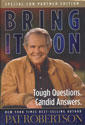 Monroe Doctrine, we have other doctrines that we have announced. And without question, this is a dangerous enemy to our south, controlling a huge pool of oil, that could hurt us very badly. We have the ability to take him out, and I think the time has come that we exercise that ability. We don't need another $200 billion war to get rid of one, you know, strong-arm dictator. It's a whole lot easier to have some of the covert operatives do the job and then get it over with."
 Monroe Doctrine, we have other doctrines that we have announced. And without question, this is a dangerous enemy to our south, controlling a huge pool of oil, that could hurt us very badly. We have the ability to take him out, and I think the time has come that we exercise that ability. We don't need another $200 billion war to get rid of one, you know, strong-arm dictator. It's a whole lot easier to have some of the covert operatives do the job and then get it over with."
Labels: US politics, World power
posted by Guambat Stew at Tuesday, August 23, 2005



1 Comments:
Always wanted to visit Australia.
Post a Comment
<< Home