Wednesday, April 16, 2008

Restless leg-up syndrome

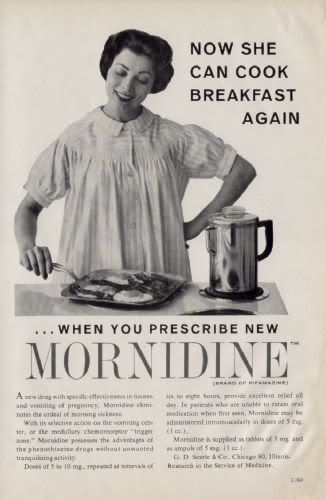
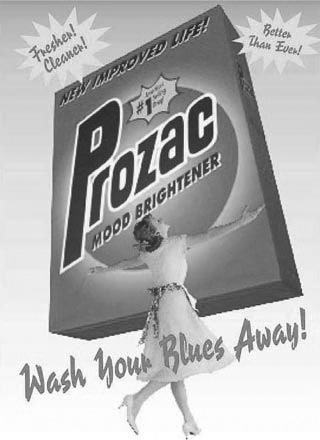
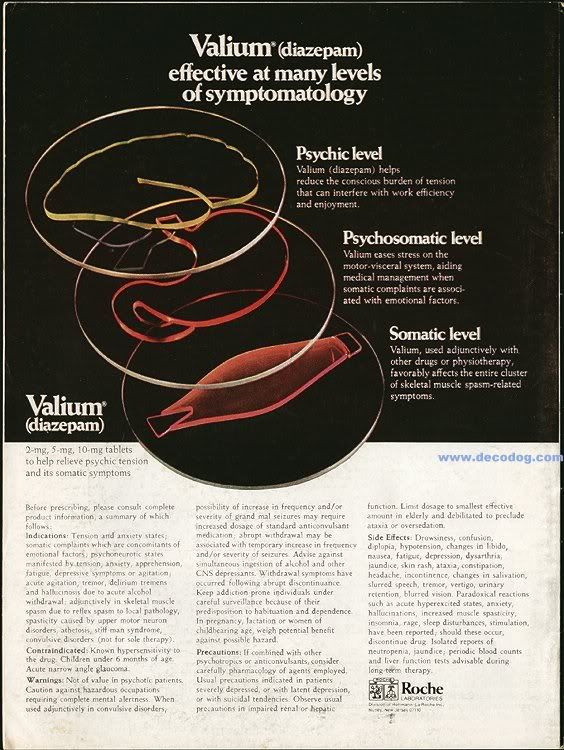
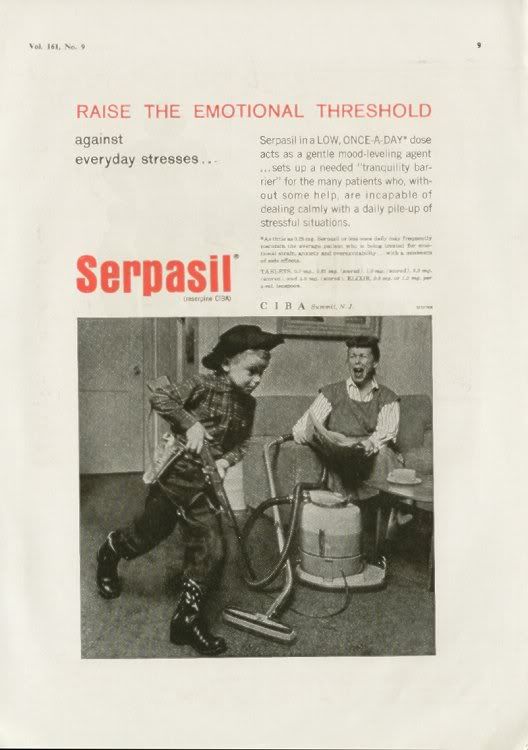
Do you suffer from hypochondria? Of course you do, and Big Pharma is here to help.

Whether your favourite CEO suffers from Leg-up Syndrome or your favourite jazz musician has a bad case of Deeply Vain Trombonesis, Big Pharma is here to help.

And Justin Rohrlich, at Minyanville, shows us how.
Big Pharma’s latest innovations aren’t new drugs, they’re new syndromes and disorders.... the pharmaceutical industry currently spends more on advertising than they do on research and development.

pharmaceutical companies are “fostering the creation of a condition and aligning it with a product.” Like Restless Legs Syndrome (RLS). GlaxoSmithKline’s (GSK) Requip was a drug used to treat Parkinson’s disease – and the infinitesimal number of people who suffered from RLS, an extremely rare condition discovered in 1945 by Swedish doctor Karl Ekbom.

Consumers hear a roll call of symptoms and become convinced they’ve got them, whatever they are. That’s why, these days, RLS “affects” nearly 12 million people in the United States alone.

Does feeling sleepy mean you’re ill? According to Cephalon (CEPH) it does. It’s helping people combat Excessive Sleepiness (ES) with a drug called Provigil, prescribed to “improve wakefulness.” Seriously.

[And then there's] Intermittent Explosive Disorder, sometimes called Road Rage Syndrome, characterized by recurring outbursts of extreme anger and violence. Luckily, Dr. Daniel Deutschmann, a psychiatrist and clinical professor at Case Western Reserve University, found success medicating IED patients with existing anti-epileptic drugs....

[And] Oppositional Defiance Disorder (ODD) [, sometimes called Rebellious Youth]. ODD is described as an ongoing pattern of disobedient, hostile and defiant behavior by children toward authority figures. Joe Biederman, M.D., a leading pediatric psychopharmacologist at Massachusetts General Hospital and Harvard Medical School, recommends “atypical antipsychotics,” like Risperdal, Clozaril, Abilify and Seroquel.

Steven Woloshin and Lisa M. Schwartz of the Dartmouth Medical School had this to say: “Helping sick people get treatment is a good thing. Convincing healthy people that they are sick is not. Sick people stand to benefit from treatment, but healthy people may only get hurt: they get labeled “sick,” may become anxious about their condition, and, if they are treated, may experience side effects that overwhelm any potential benefit.”


BUT WAIT THERE'S MORE ...

Guambat received this Legal Alert of date 24 April from a large-ish law firm:

Welcome to the April edition of Pharma Insights. In this edition, we consider tips and tricks for sponsors of prescription medicines when designing educational campaigns for the general public, bearing in mind Medicines Australia's Code of Conduct.

Educator or promoter - Are you at risk of an identity crisis?

The US and New Zealand are currently the only industrialised countries that allow Direct to Consumer advertising ("DTC"). As most of you will be aware, DTC advertising of prescription-only products is prohibited in Australia. The prohibition is achieved via the Therapeutic Goods Act 1989 ("TG Act") and Medicines Australia's ("MA") Code of Conduct.

Critically however, there is a distinction between "promotion" and "education" as the latter is permitted by the Code provided it meets certain requirements, for example, the need for educational material to be "current, accurate and balanced". Issues also exist in relation to "ask your doctor" advertising which fall outside of the scope of this article.

It is obviously within a company’s best interests to rigorously pursue its marketing interests within the scope of the "educational material" allowance under the Code. The business advantages of active marketing must however be balanced against compliance with the Code and general legal risk. Code compliance is important because breaches can have significant ramifications: fines of up to $200 000 apply for severe breaches, and the reputational risk is also significant.


Etc., etc.

Thursday, March 10, 2011

Premature ejection costs Medicaid big time after Big Pharma gets involved

Guambat's second grandchild was ejected yesterday on time, if only a few days earlier than the St Paddy's Day ETA. He is healthy and whole.

Some mothers, though, have very serious problems keeping baby in until safe to eject. The serious medical problem was not a serious financial problem until a Big Pharma player got official approval for a preemie prescription. Before, the cost of medication was $20/shot. Now it is $1,500/shot. And the shot doesn't go to the bottom of the baby, it goes to the bottom line of Big Pharma, and the top line of Medicaid and other insurance costs.

Price of drug to prevent preemies jumps from $20 to $1,500 after FDA approval
Since 2003, the American Congress of Obstetricians and Gynecologists has recommended that doctors offer the progesterone shots to high-risk women. But because there has not been a commercial product available, women have obtained the drug from so-called compounding pharmacies, which make it to order. The pharmacies have typically charged about $10 to $20 per shot for the drug, which is given weekly.

Last month, however, the FDA approved a commercial form of the drug, called Makena, manufactured by K-V Pharmaceutical Co. of St. Louis. The company said Wednesday that the drug will be available for shipping March 14 and that it will cost $1,500 per dose.

Meanwhile, women are unlikely to be able to continue to get the drug at compounding pharmacies. K-V sent letters to the pharmacies warning them of potential FDA action if they keep distributing the drug.

The burden for many will fall on insurance companies, which may have to raise rates. The increase will also affect already strapped Medicaid programs.

Labels:

Friday, April 21, 2006

Another case of undisclosed conflicts of interest by research analysts


But this time it's not stock brokers; it's doctors, medical journalism, Big Pharma and the medical services industry.

Top mental health guide questioned
By Judith Graham, Chicago Tribune staff reporter, Published April 20, 2006
Most of the experts who prepared the world's leading medical guide to mental illness had undisclosed financial relationships with drug companies that presented potential conflicts of interest, according to a new report published Thursday in the journal Psychotherapy and Psychosomatics.

The study is the first to document extensive monetary connections between drug companies, psychiatrists and other scientists responsible for the American Psychiatric Association's Diagnostic and Statistical Manual of Mental Disorders.

The DSM, as it's commonly called, defines all the mental illnesses recognized by psychiatry and outlines the criteria used to determine whether a person has one of these conditions. Medical professionals refer to it as the "bible of mental health" in the U.S. The current version, the DSM-IV, was published in 1994 and modified in 2000.

The manual is of enormous importance to pharmaceutical firms, as the Food and Drug Administration will not approve a drug to treat a mental illness unless the condition is in the DSM. Drug companies then can market approved medications to physicians and consumers.

"This is one of the most important medical documents we have in this country, yet the public doesn't have relevant information about the experts involved in developing and revising it," said Sheldon Krimsky, a Tufts University professor and co-author of the new paper.

His study found that 56 percent of 170 panel members responsible for overseeing the DSM-IV had some type of financial tie to the drug industry--including getting research grants from drug companies (42 percent), serving as consultants (22 percent) and participating in speakers bureaus (16 percent). These relationships weren't revealed publicly.

The risk is that financial relationships might directly or indirectly bias panel members to make decisions favorable to the drug industry. Relationships formed after the DSM-IV's publication also can be problematic in that panel members could appear to be "cashing in" on their influence, Krimsky noted.

The enormous growth in prescriptions for psychiatric drugs also raises concerns about the potential impact on consumers.

Dr. Darrel Regier, director of research at the American Psychiatric Association, said disclosure of potential conflicts of interest "wasn't the standard in the field" at the time the latest edition came out. "For the next revision," due in 2011, "we will have full disclosure," he said.

Of particular concern, Krimsky suggested, is his study's finding that 100 percent of the experts on DSM-IV panels overseeing mood disorders and schizophrenia/psychotic disorders were financially involved with the drug industry. These are the largest categories of psychiatric drugs in the world--2004 sales of $20.3 billion and $14.4 billion respectively.

"The more lucrative the drug market, the higher the percentage of experts with financial ties--that has to raise serious questions about these panels' objectivity," said David Rothman, professor of social medicine at Columbia University's College of Physicians and Surgeons.

"We have not had an opportunity to review the study, but it is important to note that the physicians and other health-care professionals who sat on expert medical advisory panels have impeccable integrity," said Ken Johnson, senior vice president for Pharmaceutical Research and Manufacturers of America.

Others think drug industry practices are challenging the integrity of science. "The very vocabulary of psychiatry is now defined at all levels by the pharmaceutical industry," said Dr. Irwin Savodnik, an assistant clinical professor of psychiatry at the University of California, Los Angeles.

According to his calculations, the original 1952 DSM manual contained 107 mental health disorders. By the fourth edition in 1994, the number had more than tripled to 365.
See, too:
Case studies of Big Pharma’s sharp practice
Big Pharma: the reality
Patently wealthy, etc.

Saturday, June 19, 2010

A government of the dollar, by the dollar and for the dollar

The banking industry, especially Big Banking, isn't very popular amongst the voters, yet Congress is "finding" it difficult to pass through any meaningful and effective reform that targets the excesses and deregulation that nearly made the Great Depression seem not so great as the Big Dipper Recession we're now experiencing in all industrialized countries world wide.

Similarly, the Drill Baby Drill crowd and the fossil fuel industry, especially Big Oil, isn't very popular at the moment amongst the voters, yet Congress and the administration is "finding" it difficult to say or do much to take any meaningful and effective measures to target the free reign and sham regulation of the oil industry that made the Exxon Valdez look like spilled milk compared to the Deepwater Doodoo.

But if the disgusted voters are not able to make their sentiments known, what is holding them back?

Big Money.

Lotsa Big Money from Big Banks, Big Oil, and Big Pharma, spread, like farmers fertilizing their fields, by lobbyists and their phony phinancial phronts. That and the Business-as-Usual state of governance that passes for our elected leadership in Congress.

Donations Create a Tricky Balance for Oil-State Politicians

For the last decade, the oil industry has been one of the most powerful lobbying constituencies in Washington. It has spent nearly a billion dollars on federal lobbying since 1998, according to the Center for Responsive Politics, making it the sixth-biggest industry in terms of expenditures.

In the current election cycle, the oil and gas industry has contributed $12.8 million to Congressional candidates, with 71 percent of it going to Republicans.

The outburst by Representative Joe L. Barton of Texas in support of BP underscored the potential peril for lawmakers forced to respond to crises involving industries vital to their regions, and whose bountiful donations finance their political campaigns.

But in going after Republicans, the Democrats’ attacks gloss over a more complicated picture.

The largest beneficiary of campaign donations from BP in the 2008 election cycle, for instance, was President Obama, who took in $77,000 from company executives and its political action committee. This year, Senator Blanche Lincoln, Democrat of Arkansas and chairwoman of the Agriculture Committee, leads all candidates with $286,000 in donations from oil and gas companies.

And while Democrats have pounced on Mr. Barton for accusing Mr. Obama of conducting a “shakedown” by demanding that BP set up a $20 billion fund for oil spill claims, a number of Democratic lawmakers — especially those from oil-producing Gulf states — have struggled to balance their criticism of BP with support for the industry.

Officials like Senator Mary L. Landrieu and Representative Charlie Melancon, both Democrats of Louisiana, have demanded accountability for BP and reparations for individuals and businesses who may face financial catastrophe. But they have also fought to lift the moratorium on offshore drilling imposed by the Obama administration after the Deepwater Horizon rig explosion, saying it is crippling the local economy.

Both Ms. Landrieu and Mr. Melancon, who is running for a Senate seat, receive substantial donations from the oil and gas industry, which is hardly surprising given the industry’s big presence in Louisiana. For her campaigns, Ms. Landrieu has taken in $751,000 since 1996, while Mr. Melancon has received $312,000 since 2004.

To put this in the broader context that Guambat began this post, the NYT piece notes,
The tightrope walk faced by elected officials from oil and gas states is similar to the New York delegation’s struggles when it comes to legislation to regulate Wall Street banks, or the New Jersey delegation’s sensitivity on legislation related to the pharmaceutical industry.

“You’ve got this conflict for these folks where they acknowledge the spill is a problem but, with the significant support they get from the industry, are a heck of a lot more reluctant to take aggressive legislative action against the company,” said Tyson Slocum, who runs the energy program at Public Citizen, a political research and advocacy group.

In a democratic system of government, it's one person, one vote.

In the corporate world of "democracy", it's one dollar, one vote.

Big Money reflexively and diligently pursues its own sense of democracy on the People's government. For a while, the people had managed a very small curb on the Big Voice of Big money and its One Dollar, One Vote philosophy of commercial democracy.

But the Supreme Court nominees of the Bush family have now also cut back on the effectiveness of the One Person, One Vote philosophy of political democracy by giving the Big Money the vote. They've given the purely legally fictional corporate "persons" the equal protection of real, human beings.

Supreme Court's campaign finance ruling: just the facts
On Jan. 21, the US Supreme Court announced a landmark decision establishing for the first time that corporations enjoy the same First Amendment free-speech rights as individuals.

On one side, liberal reformers have sought to limit the influence of wealthy corporate interests by emphasizing the importance of maintaining a "level playing field." If American democracy is based on the principle of one person, one vote, they say, then corporations must be muzzled during political campaigns to prevent their amassed wealth from dominating and corrupting a political campaign.

Conservatives and libertarians, on the other hand, have countered that limiting the amount of money a corporation – or anyone – can spend to make their political point is censorship and a violation of the letter and spirit of the First Amendment's guarantee of free speech.

Lest we go down any path toward thinking this is just a Republican thing, consider this.

Did Democrats' deal with the NRA kill campaign finance reform?
The derailing this week of the House Disclose Act gave Republicans – still reeling from Rep. Joe Barton’s “apology” to BP CEO Tony Hayward this week – a rare chance to gloat about the pitfalls of cozying up to special interests.

“Van Hollen’s carve-out for special interests has proven about as popular as first-time World Cup ref Koman Coulibaly’s blown call today, which cost the United States a victory,” said House Republican whip Eric Cantor (R) of Virginia in a blog today. His barb was aimed at Rep. Chris Van Hollen (D) of Maryland, chair of the Democratic Congressional Campaign Committee.

At issue is a deal brokered by the House Democratic leadership to exempt the powerful National Rifle Association (NRA) and others from disclosure requirements in a new campaign finance law. The legislation aimed to restore campaign finance limits stripped away by a controversial 5-4 US Supreme Court decision in Citizens United vs. Federal Election Commission, which scrapped restrictions on when and how much corporations and unions can spend to influence elections.

The NRA initially backed the Supreme Court decision.

“This ruling is a victory for anyone who believes that the First Amendment applies to each and every one of us,” said NRA executive vice president Wayne LaPierre in a statement on Jan. 21. “This is a defeat for arrogant elitists who wanted to carve out free speech as a privilege for themselves and deny it to the rest of us; and for those who believed that speech had a dollar value and should be treated and regulated like currency, and not a freedom.

On May 26, the NRA had announced opposition to the bill as “intimidating speech,” but dropped opposition after the carveout.

The proposed law would ban some corporations from funding campaign ads and require others to disclose their top five donors in ads and on their websites.

“We believe voters have an absolute right to know who is spending money to try to influence their vote. And this will prevent big special interests from hiding behind front organizations, sham entities, to try and hide from the voter what they're doing. Nobody, nobody should be afraid of this transparency unless they have something to hide,” said Rep. Van Hollen in a press conference introducing the act on April 29.

But cribbing from President Obama’s playbook in cutting early deals with pharmaceutical companies and other potential opponents to move health care legislation, Democrats this week cut deals exempting the NRA as well as the Sierra Club, the Humane Society, and AARP from disclosure requirements in the bill.

“The political, special-interest nature of the legislation is reflected in the recent addition to the bill of the NRA exemption," says R. Bruce Josten, chief lobbyist for the US Chamber of Commerce.

“This ad hoc carve-out is specifically tailored to exempt the National Rifle Association from the bill’s key restrictions and burdens. The admitted purpose was to end the NRA’s opposition to the bill to secure passage,” he adds. “This is clear and unconstitutional discrimination in favor of one speaker and against others.”

Guambat was considering settling in with a warm cuppa tea to contemplate this when he realized how cozy he was beginning to get with the leanings of the Tea Party. So he grabbed a big jug of moonshine and went out onto the porch to watch the Green Flash of the sun setting over the Philippine Sea.

Labels: , ,

Friday, May 08, 2009

Like Big Pharma running FDA

After the WSJ ran an article earlier this week on the apparently conflicted trades of NY Fed Chief Stephen Friedman, a former Goldman Sachs head, today Friedman resigned, admitting no such conflict or misdeed.

Felix Salmon, now blogging at Reuters, says this is a good thing.

Jim Cramer and a few of the panelists at CNBC's Fast Money this morning lauded the "public service" attitude of those at Goldman. The minority exceptions on the panel saw it as more of a Trojan horse than a public service.

Guambat agrees. If it is a good public service for Goldman connections to run the country's public financial institutions, why don't we expand on that an encourage
Big Pharma boys and girls to do sabbaticals at FDA, and failing auto execs to run the agencies which regulate auto safety and standards?

It's preposterous. Geithner ought to be challenged as well. Surely there are other applicants for such positions.

Guambat blogged over two years ago about Goldie as a world-wide political hedge fund. Today we see other such posts:
Sacks of gold
Is Goldman Sachs Controlling Washington?
Guambat does not believe in an absolute prohibition against Goldies in government, but reckons they should be put through the most rigorous form of scrutiny from selection to every decision made to make sure the effective beneficiary is not the Goldman empire. Goldman gift horses must be looked at in the mouth.

Friday, June 05, 2009

Der Homeland

The notion of der Homeland was created in the Bush administration, and nurtured to do the bidding of the Cheney Patriots through relentless fearmongering.

But fear wasn't its only tool. The civic Patriots who lived large off the fears of the common Patriots also came up with grandiose schemes to siphon off the Federal treasury and the nation's savings, which ended up with the climactic crash of the global financial system.

One such group of civic Patriots was called the Homeland Investment Coalition. This group lobbied successfully to establish the Homeland Investment Act of 2004. Big supporters were Big Pharma and Big Tech.

The idea behind the Homeland Investment Act of 2004 was to allow America's largest companies to reduce the taxes that would have been due on their overseas earnings from 35% to about 5%, so they could then dole out that untaxed gain to their shareholders. Sweet.

But, of course, the Bush administration would find the going a bit ragged if they actually told Americans that that was the real purpose of the Homeland Investment Act. Americans generally have felt for at least a century that corporate income taxes should be fairly assessed and paid, and this was too obvious a means of making an end around such an ideal goal.

So, the spinmeisters sold this piece of Homeland largess for the Homeland security holders as a means of re-investing the untaxed profits in real Homeland improvements and jobs for the common Homeland Patriots. The Homeland Coalition used these talking points to advance their agenda:
* Increasing domestic investment in plant, equipment, R&D and job creation;
* Increasing investments in business ventures in emerging technologies,
* Increasing funding for pension plans depleted by declines in the stock market;
* Improving the long term financial strength of U.S.-based companies by reducing domestic debt loads, strengthening corporate balance sheets, and lowering corporate bond rates; increasing dividends to shareholders (which can be productively redeployed); and raising equity market valuations by increasing funds available for share repurchases.
Actually, that last point was rather right on the main purpose of the supporters, and perhaps too blatant.

Michaele L. Morrow did a PhD dissertation at Texas Tech University on the effect of corporate earnings repatriation of overseas earnings on taxes at the state level. In it he discusses the Homeland Investment Act (see from page 3 - 10, and again, from page 32 onward for an excellent account of its history, context and supporters). He notes the regulations associated with the Act "identified specific investments that were permitted and not permitted under the Act, [but] it provided no penalties for not complying with these directives".

He said that the final legislation had rather more limited conditions, intended to increase the effect of the first 3 talking points above and minimize the benefits of the 4th. He says,
to be eligible for the deduction, extraordinary dividends received from the controlled foreign subsidiaries had to be reinvested ―in the United States (other than as payment for executive compensation), including as a source for the funding of worker hiring and training, infrastructure, research and development, capital investments, or the financial stabilization of the corporation for the purposes of job retention or creation. (Page 32)
Back in the day (2005), the Wall Street Journal lauded the results of the Homeland Investment Act, in what it characterized as a "Homecoming Victory":
Supporters argued that this tax cut would lead to an "in-sourcing" of jobs by luring corporate income parked in foreign vaults back to America. Those repatriated dollars could then be put to work for R&D spending, plant expansions, capital and technology purchases, or merely to improve balance sheets to the benefit of American shareholders.

Well, here's what has happened: In nine months the law has increased the flow of repatriated foreign capital by a whopping $225 billion. J.P. Morgan estimates that another $75 billion will return to America in the fourth quarter. About half of these returning funds were profits from pharmaceutical companies and much of the rest from such high-tech firms as Dell, IBM and Intel. We can't resist noting that this $300 billion of repatriated capital is nearly double the estimate by Congress's hapless Joint Tax Committee, which had assured us this time last year that not a dime more than $165 billion would arrive.

Treasury has already collected some $12 billion directly from the 5.25% rate on the capital inflows, and the American Shareholders Association estimates that an extra $20 billion will be collected indirectly through the corporate income tax. So, just as supporters claimed, this act reduced the budget deficit and contributed to the boom of an estimated $274 billion in additional tax revenue in Fiscal 2005.
Guambat wonders how much more joy there would have been had the tax break been 50%, instead of the 85% break allowed. The deficit could have been reduced by 3 or 4 times more. But Guambat is known for being churlish.

And, speaking of churlish, the WSJ editorial finished thusly,
It's true that much of this cash has gone to clean up balance sheets, either buying back stock or retiring debt, but companies that are stronger financially tend to create more jobs. Intel CEO Paul Otellini says that some of the $6 billion that his company repatriated will finance expansions of semiconductor plants in Arizona, Colorado and Massachusetts, creating 1,600 new and high-paying jobs. Dell used $100 million of its capital to build a 1,500-worker factory in North Carolina.

We don't like temporary tax cuts, and we'd all be better off if Congress went to a territorial tax system that doesn't force companies to pay U.S. tax rates on profit earned overseas. Alas, all tax cuts in Washington these days are temporary, and the Homeland Investment Act will expire in January even though the new law aced its test: It raised revenues, lifted investment, and created thousands of jobs.
But not everyone back in that day of 2005 was so impressed. The NYT ran its own editorial calling the Homeland Investment Act "an unprecedented government giveaway", although Guambat would take issue with the "unprecedented" part:

So, now, looking back at the results of the Homeland Investment Act, did it do anything at all that it was cracked up to do, or did it do nothing much more than the original plan, to line the pockets of Homeland securities holders with tax free profits?

Well, the NYT has an article today reporting on a study at the National Bureau of Economic Research that finds the Homeland Investment Act did exactly as the supporters intended, and not at all as it was promoted:
Now the most detailed analysis of what actually happened — using confidential government data as well as corporate reports — has estimated what happened to the $299 billion companies brought back from foreign subsidiaries. About 92 percent of it went to shareholders, mostly in the form of increased share buybacks and the rest through increased dividends.

There is no evidence that companies that took advantage of the tax break — which enabled them to bring home, or repatriate, overseas profits while paying a tax rate far below the normal rate — used the money as Congress expected.

“The restrictions on how the money will be spent seem to have been completely ineffective,” Ms. Forbes [Kristin J. Forbes, a professor of economics at the Massachusetts Institute of Technology who was a member of the president’s council of economic advisers from 2003 to 2005] said in an interview this week.

“Dell was a great example,” she added, referring to Dell Computer. “They lobbied very hard for the tax holiday. They said part of the money would be brought back to build a new plant in Winston-Salem, N.C. They did bring back $4 billion, and spent $100 million on the plant, which they admitted would have been built anyway. About two months after that, they used $2 billion for a share buyback.”

One fact found by the study indicates that some of the repatriated money was not even really returned to the United States, contrary to the intent of the law. Companies knew of the tax holiday in 2004, and many of them chose to “invest” money that year in foreign subsidiaries that had profits subject to American taxes if they were brought back to the United States. They then brought the profits back in 2005, getting the tax break while not reducing the continuing foreign investment.

Ms. Forbes said about $100 billion left the United States and came right back, in a process the paper calls “round-tripping.”

The study might possibly be accessed here. The abstract of the paper claims,
Repatriations did not lead to an increase in domestic investment, employment or R&D -- even for the firms that lobbied for the tax holiday stating these intentions and for firms that appeared to be financially constrained. Instead, a $1 increase in repatriations was associated with an increase of almost $1 in payouts to shareholders.

Wednesday, October 20, 2010

Big Pharma-care

Drug Companies Hire Troubled Doctors As Experts
Drug companies say they hire the most-respected doctors in their fields for the critical task of teaching about the benefits and risks of the companies' drugs.

But an investigation by ProPublica has uncovered hundreds of doctors receiving company payments who had been accused of professional misconduct, were disciplined by state boards or lacked credentials as researchers or specialists.

To vet the industry's handpicked speakers, ProPublica created a comprehensive database that represents the most accessible accounting yet of payments to doctors. Compiled from disclosures by seven companies, the database covers $257.8 million in payouts since 2009 for speaking, consulting and other duties. The companies include Lilly, Cephalon, AstraZeneca, GlaxoSmithKline, Johnson & Johnson, Merck and Pfizer.

Although these companies have posted payments on their websites — some as a result of legal settlements — they make it difficult to spot trends or even learn who has earned the most. ProPublica combined the data and identified the highest-paid doctors, then checked their credentials and disciplinary records.

That is something not all companies do.

We're talking about big money. Just from these seven companies, they've paid out more than $257 million in the past 18 months, and remember not all of these companies have even disclosed their payments for that whole period of time, so it's likely going to be substantially more, just for these seven companies.

What do they get for it? They wouldn't be spending this kind of money if they weren't getting returns from the perspective of increasing their brand in the market, letting doctors know about it, encouraging them to prescribe it. They say that doctors' success at increasing prescriptions is not a means in which they're measured, but some of the lawsuits against the industry have said that prescriptions and return on investment absolutely play a role.

Over 17,000 US Doctors Paid By Drug Companies To Spread Their Message
Giving money to doctors in this way is not against the law. In fact, ProPublica admits that a strong relationship between doctors and companies that make medications can be good, and lead to innovation and better therapies.

However, according to studies, giving doctors payments and even small gifts can undermine their professional approach. A separate Consumer Reports poll revealed that 74% of the American public think doctors should not receive money from pharmaceutical companies which ask them to encourage their peers to prescribe certain drugs.

The authors of the report warn that the 17,000 figure could be significantly higher. The current total represents data on just 7 drug companies. Over 70 companies are keeping their cards close to their chest and not revealing their data.

There is much, much more to read and learn about in these two articles.

Labels:

Monday, October 04, 2010

Big Pharma still hyping hypocondria

Guambat mentioned this issue over two years ago in Restless leg-up syndrome.

But the latest hype also hypes newspapers, as the following samples illustrate.

Sex always sells.


Drugs companies 'hype-up female libido problems'
Writing in the British Medical Journal (BMJ), Ray Moynihan said pharmaceutical firms were guilty of wrongly giving the impression that "hypoactive sexual desire disorder" was widespread.

Mr Moynihan, a broadcaster and lecturer at Newcastle University in Australia, said companies funded surveys designed to suggest the problem affected large numbers of women, and also took a lead in "educating" professionals and the public about it.

For example, he said a Pfizer-funded course for US doctors claimed that up to 63 per cent of women had sexual dysfunction and it went on to suggest taking testosterone and Viagra as a treatment. But he said studies later showed that using Viagra for such a purpose had no effect.

He warned: "The drug industry shows no signs of abandoning plans to meet the unmet need it has helped to manufacturer."

Drugs giants cashing in by 'inventing' low libido label in women

Female sexual dysfunction 'excuse by drug firms to sell pills'

Is Female Sexual Dysfunction the Next Big Disease?

"La industria quiere retratar a los ciudadanos como enfermos"

Дигнозы придумывают, чтобы было что лечить?

Kadında 'Cinsel Bozukluk' İlaç Firması Uydurması mı?

Ženské problémy v sexu? Výmysl farmaceutických firem

Opfandt sygdom for at sælge Viagra

La Voce d'Italia: Viagra rosa, la menzogna farmaceutica

Yep. In any language.

Labels:

Saturday, August 13, 2005

Lump it

The US market indexes are under pressure, yet all Friday night long on sycom trading, Goldman Sachs is standing tall and firm buying big the Aussie SPI futures index, not budging at all. Now we get a clearer glimpse why the Aus ASX200 Index is setting record new highs daily while the Dow stays stuck in a rut. Total disconnect to the US markets?
Maybe not. For the last 3 months, whatdya reckon was the top perfoming Dow sector index?: tech, financials, oil, big pharma, health care, tellecoms?
Nope. Nothing I ever saw mentioned on CNBC.
Think low tech, think black. Think China. "How many more must die in perilous mines?" http://www2.chinadaily.com.cn/english/doc/2005-08/11/content_468067.htm
http://guambatstew.blogspot.com/2005/08/bulls-in-china-shop.html

Think coal: http://www.marketwatch.com/tools/industry/default.asp?siteid=mktw&dist=dropmenu

Labels:

Wednesday, January 17, 2007

Pro boner

Guambat's Mom is on this one, along with most of the intelligent media, from acrosst the political spectrum.

Well, it’s official now: Deputy Assistant Secretary of Defense for Detainee Affairs Charles “Cully” Stimson has made himself a household name virtually overnight with a comment that is beyond idiotic.
Interviewed by Federal News Radio on the fifth anniversary of the opening of the Guantanamo Bay prison, Stimson said, “It’s shocking . . . The major law firms in this country . . . are out there representing detainees.”
Then the former Navy lawyer went so far as to suggest a boycott of those firms, noting, “when corporate CEOs see that those firms are representing the very terrorists who hit their bottom line in 2001, those CEOs are going to make those law firms choose between representing terrorists or representing reputable firms.”

Many of the nation’s largest law firms are defending detainees pro bono, including Wilmer Hale, Covington & Burling, and Pillsbury Winthrop. It’s what good, public-spirited law firms - and lawyers - do and have done since the very founding of this nation. It was, after all, John Adams who defended the British soldiers accused of killing Americans in the Boston Massacre. What is it about that long and proud tradition that Stimson doesn’t get?

Clueless ‘Cully’ Stimson
Even as venerable and conservative a news source as the Wall Street Journal gets it (but requires a ticket to read):

Mr. Stimson and the American Way By CHARLES FRIED
Defense Department official Charles Stimson showed ignorance and malice in deploring the pro bono representation of Guantanamo detainees by lawyers in some of the nation's leading law firms, and in calling on their corporate clients to punish them for this work.

That some of the law firms Mr. Stimson singles out represent large employers defending discrimination and disability suits, major corporations accused of price fixing, securities fraud and pollution is not because the right hand -- so to speak -- does not know what the left is doing, nor because these firms are major-league hypocrites. On the contrary, they act in the best traditions of the profession -- traditions that are ignored in today's China or Putin's Russia.

It is the pride of a nation built on the rule of law that it affords to every man a zealous advocate to defend his rights in court, and of a liberal profession in such a nation that not only is the representation of the dishonorable honorable (and any lawyer is free to represent any person he chooses), but that it is the duty of the profession to make sure that every man has that representation. So, for instance, it is only the ideologically blinded who would criticize the great John W. Davis for having presented the case for school segregation to the Supreme Court in Brown v. Board of Education....

All that can be said in explanation, if not mitigation, of Mr. Stimson's egregious statements is that he may have been led on by the extravagant rhetoric of ideologues at the other end of the spectrum, who regularly inveigh against law firms which make their living by defending corporate interests accused of abusing employees, consumers and the environment.

And the hapless Mr. Stimson may also have fallen victim to that lawyers' occupational disease, Acquired Conviction Syndrome. It is too bad that lawyers in this country feel bound not only to submit the best possible arguments for their clients -- virtuous or deplorable -- but also to stump for them in the press, before legislative bodies and in professional organizations. Debate in the American Bar Association and American Law Institute, for instance, has been degraded in recent years by their members carrying their representation of their clients' interest into fora in which their best independent expert judgment is asked for. How unfortunate that in this country we have plaintiffs' lawyers and defendants' lawyers, lawyers who represent only unions and others who represent only management. One looks with nostalgia at the British bar, where barristers will prosecute one day and defend the next.

It may just be that Mr. Stimson is annoyed that his overstretched staff lawyers are opposed by highly trained and motivated elite lawyers working in fancy offices with art work in the corridors and free lunch laid on in sumptuous cafeterias. But it has ever been so; it is the American way. The right to representation does not usually mean representation by the best, brightest and sleekest. That in this case it does is just an irony -- one to savor, not deplore.

It is no surprise that firms like Wilmer Hale (which represents both Big Pharma and Tobacco Free Kids), Covington and Burling (which represents both Big Tobacco and Guantanamo detainees), and the other firms on Mr. Stimson's hit list, are among the most sought-after by law school graduates, and retain the loyalty and enthusiasm of their partners. They offer their lawyers the profession at its best, and help assure that the rule of law is not just a slogan but a satisfying way of life.

Mr. Fried teaches at Harvard Law School.


One of the real heroes of the Guantanamo Bay saga, though, is lawyer and Marine Major Michael Mori. Not his client, mind you, but his client's lawyer. He is the real life version of what Tom Cruise characteristically got all wrong in "A Few Good Men". As a rugby player, Major Mori knows the importance of playing the ball, not the man.

Sunday, October 12, 2008

All consuming financial mess

Guambat has begun to notice more voices being heard about the culture of over-consumption as one aspect of the over-all greed that has driven this current economic calamity we're witness to.

These voices were drowned out over the last decade or so under the buy, buy frenzy fed by cheap credit, direct-marketing, googled demographic segmentation and all the rest that has gone along with the idea that, perhaps, you can actually get all that you want, notwithstanding the Rolling Stones to the contrary. Indeed, you should. Indeed, it is your right and destiny.

Guambat spoke of this malady a few years back when he discovered the marketing geniuses had already put a name on it and were marketing it with the skills of Big Pharma. Said he three years ago in To market, to market, to sell to a fat pig ,

American business has been quick to jump on the "affluenza" condition (http://www.affluenza.org/) with all the charity of a snake oil salesman.
Well, one result of this current crisis is that the American Consumer has just had emergency surgery in the nature of an involuntary Lap-Band (® Mark owned by Allergan, Inc.).

This is a five year chart of the US Consumer Goods Index, showing the barf that has followed the binge.

Tuesday, July 03, 2012

Drug crimes

GlaxoSmithKline to pay $3 billion for health fraud
Of the penalties, $1 billion covers criminal fines and forfeitures and $2 billion is for civil settlements with the federal government and the state governments of Massachusetts and Colorado.


GlaxoSmithKline to pay $3bn in US drug fraud scandal
The drug giant is to plead guilty to promoting two drugs for unapproved uses and failing to report safety data about a diabetes drug to the Food and Drug Administration (FDA).

GSK, one of the world's largest healthcare and pharmaceuticals companies, admitted to promoting antidepressants Paxil and Wellbutrin for unapproved uses, including treatment of children and adolescents.

The illegal practice is known as off-label marketing.

The company also conceded charges that it held back data and made unsupported safety claims over its diabetes drug Avandia.

In addition, GSK has been found guilty of paying kickbacks to doctors.

"The sales force bribed physicians to prescribe GSK products using every imaginable form of high-priced entertainment, from Hawaiian vacations [and] paying doctors millions of dollars to go on speaking tours, to tickets to Madonna concerts," said US attorney Carmin Ortiz.

GSK said in a statement it would pay the fines through existing cash resources.

Yep, just a cost of doing business the Big Pharma way.

Labels:

Saturday, October 04, 2008

Drug out

A report in the NYT says a Congressman has drug out undisclosed conflict of interest information, indicating highly respected and highly paid researchers are avoiding peer review of their links to Big Pharma (as in, they don't want authorities to peer into his business connections with same):
[A] Congressional inquiry, led by Senator Charles E. Grassley, Republican of Iowa, is systematically asking some of the nation’s most prominent researchers to provide their conflict-of-interest disclosures, and he is comparing those documents with actual payment records from drug companies.

The records often conflict, sometimes starkly.

“After questioning about 20 doctors and research institutions, it looks like problems with transparency are everywhere,” Mr. Grassley said. “The current system for tracking financial relationships isn’t working.”

The findings suggest that universities are all but incapable of policing their faculty’s conflicts of interests. Almost every major medical school and medical society is now reassessing its relationships with drug and device makers.

One of the nation’s most influential psychiatrists earned more than $2.8 million in consulting arrangements with drug makers between 2000 and 2007, failed to report at least $1.2 million of this income to his university, and violated federal research rules, according to documents provided to Congressional investigators.

Dr. Nemeroff is a charismatic speaker and widely admired scientist who has written more than 850 research reports and reviews. He was editor in chief of the influential journal Neuropsychopharmacology.

Asking schools to oversee faculty consulting arrangements and the conflicts they represent to patients is fraught since schools benefit from the fame and money that the deals can bring.

In effect, universities share professors’ conflicts — a point Dr. Nemeroff made plain in a May 2000 letter stamped “confidential” that he sent to the dean of Emory’s medical school. The letter addressed Dr. Nemeroff’s membership on a dozen corporate advisory boards.

“Surely you remember that Smith-Kline Beecham Pharmaceuticals donated an endowed chair to the department and that there is some reasonable likelihood that Janssen Pharmaceuticals will do so as well. In addition, Wyeth-Ayerst Pharmaceuticals has funded a Research Career Development Award program in the department, and I have asked both AstraZeneca Pharmaceuticals and Bristol-Meyers [sic] Squibb to do the same. Part of the rationale for their funding our faculty in such a manner would be my service on these boards.”

Pharmalot blogger Ed Silverman has more here.

Monday, September 15, 2008

The wild and wiki world of textbook "publishing"

Jonas Salk was asked who owned the patent to the polio vaccine
and scoffed: “Could you patent the sun?”


A Vice President at Big Pharma, Inc., immediately fired his
patent lawyer because she hadn't thought of it first.


Someone at the Guam Public School System went off on summer vacation and forgot school would begin all over again the next year. So, as next year rolled around, that someone (no one is accountable; names are never named) looked around and realized books hadn't been ordered. Ah well, just another emergency procurement.

That "oversight" as well as the multi-million dollar drain on resources might be mitigated if this trend develops:

Don’t Buy That Textbook, Download It Free
In protest of what he says are textbooks’ intolerably high prices — and the dumbing down of their content to appeal to the widest possible market — Professor R. Preston McAfee, an economics professor at Cal Tech, has put his introductory economics textbook online free.

Professor McAfee allows anyone to download a Word file or PDF of his book, while also taking advantage of the growing marketplace for print on demand.

In true economist fashion, he has allowed two companies, Lulu and Flat World Knowledge, to sell print versions of his textbook, with Lulu charging $11 and Flat World anywhere from $19.95 to $59.95. As he said on his Web site, he is keeping the multiple options to “further constrain their ability to engage in monopoly pricing.”

A broader effort to publish free textbooks is called Connexions, which was the brainchild of Richard G. Baraniuk, an engineering professor at Rice University, which has received $6 million from the William and Flora Hewlett Foundation. In addition to being a repository for textbooks covering a wide range of subjects and educational levels, its ethic is taken from the digital music world, he said — rip, burn and mash.

Unlike other projects that share course materials, notably OpenCourseWare at M.I.T., Connexions uses broader Creative Commons license allowing students and teachers to rewrite and edit material as long as the originator is credited. Teachers put up material, called “modules,” and then mix and match their work with others’ to create a collection of material for students. “We are changing textbook publishing from a pipeline to an ecosystem,” he said.

Thursday, March 15, 2007

Two items from Thailand


'Muslim militants' execute nine Thai bus passengers by Ian MacKinnon
Separatist violence in southern Thailand boiled over today when suspected Muslim militants ambushed a commuter minibus and killed nine Buddhists in cold blood.

The execution-style attack in the province of Yala - which included women and children among the victims - shocked even those who have become inured to the almost-daily tally of bombings, drive-by shootings and beheadings.

Thailand's military-installed government, which has made strenuous efforts to calm ethnic tensions since seizing power, further stepped up security across three restive southern provinces populated by ethnic Malay Muslims.

The latest murders, which add to a grim litany of killings over the past week, mark a new low and send a clear message that the separatists have no intention of compromising or entering a dialogue.

In today's attack, three men and six women, including two girls aged 14 and 15, were shot in the head at point blank range after their vehicle was held up in daylight.

Logs had been used to block the road, and when the bus slowed down five gunmen opened fire on the vehicle, which ran off the road and crashed into a ditch. The Muslim driver, the only survivor, was shot in the face before the militants wrenched open the side door to shoot those inside.

Officers discovered the victims - described as Buddhist villagers, traders, teachers and school students and a soldier - slumped in their seats. One passenger was still alive, but they died on the way to hospital.

Angered U.S. firm excludes Thailand from new drugs by Darren Schuettler
(Reuters) - U.S. drugs giant Abbott Laboratories said it would stop launching new medicines in Thailand in protest at the army-backed government's move to override international drug patents ... [which] which declared a "compulsory licence" in January allowing it to make or buy generic versions of Abbott's Kaletra to treat HIV/AIDS.

Malaysia and Indonesia were the first in Southeast Asia to issue such licences for AIDS drugs three years ago, but Thailand has gone farther in challenging Big Pharma by targeting other drugs.

[The licenses are] legal under world trade rules, ... which allow governments to make or buy generic versions of medicines needed for public health measures....

"Thailand has chosen to break patents on numerous medicines, ignoring the patent system. As such, we've elected not to introduce new medicines there," Abbott spokeswoman Jennifer Smoter told Reuters.

There was no immediate reaction from the Health Ministry, which argues it needs cheaper, copycat drugs to ensure wider access for Thailand's 63 million people, including 580,000 living with HIV/AIDS.

Wednesday, January 03, 2007

Genetically modified pharming


The awful truth about evergreening by Thomas Faunce.
So what is evergreening and what should be done about it?

Patents allow the company that developed a drug to market it free from competition, in return for making public its original data. It is a system that balances reward of innovation in research and development with the public benefit of dispersed knowledge.

Drug patent evergreening is the single most important strategy that multinational pharmaceutical companies have been using since 1983 in the US (and since 1993 in Canada) to retain profits from "blockbuster" (high sales volume) drugs for as long as possible.

When the original patent over the active compound of a brand-name drug is due to expire, these drug companies often claim large numbers of complex and often highly speculative patents. Laws in the US and Canada require manufacturers to notify the original brand-name patent holders of their intention to market copies at the expiry of the original patent. The original patent holders can then threaten these potential generic competitors with breaching their now "evergreened" patents and seek a court order preventing their marketing approval.

The problem is a severe one in the US. In 2002, an extensive inquiry by the US Federal Trade Commission found that as many as 75 per cent of new drug applications by generic drug manufacturers were the subject of legal actions under patent laws by the original brand-name patent owner. These were driving up US drug costs by keeping the cheaper generic versions off the market.

The evergreening article in the Australia-US FTA (article 17.10.4) is far worse than the US or Canadian versions. For the first time it links the operations of our Therapeutic Drug Administration (the drug safety and efficacy body) with supervising patent law.

It requires that TGA drug marketing approval be "prevented" indefinitely (not for the 30-month and 24-month periods as in the US and Canada) whenever any type of patent (including a speculative evergreening patent) is merely "claimed".

Supreme Court rules against drug patent "evergreening" by Wayne Kondro
The Supreme Court of Canada tossed another salvo into that litiginous world Oct. 3 by ruling that the controversial practice of evergreening — which allowed brand-name pharmaceutical firms to obtain an automatic 2-year extension on the term of patent protection by filing new patents of an altogether marginal nature, such as the shape, dosing range or colour of a pill, and then claiming infringement on its original patent — should not have been allowed under Health Canada's old drug regulatory regime.

This latest decision overturned a lower-court ruling to quash Apotex Inc.'s notice of compliance to market a knock-off of the AstraZeneca proton-pump inhibitor, omeprazole, which was sold in Canada from 1989 to 1996. The drug was removed from the market and its patent expired in 1999 but AstraZeneca used the regulatory system to successfully trigger a series of successive 24-month "stays" to prevent Health Canada approval of a lower-cost generic equivalent.

In his October decision, Mr. Justice Ian Binnie wrote that "Given the evident (and entirely understandable) commercial strategy of the innovative drug companies to evergreen their products by adding bells and whistles to a pioneering product even after the original patent for that pioneering product has expired, the decision of the Federal Court of Appeal would reward evergreening even if the generic manufacturer (and thus the public) does not thereby derive any benefit from the subsequently listed patents."

[Canadian Generic Pharmaceutical Association president Jim] Keon argued consumers will bear the financial brunt of the Oct. 5 amendments to the Food and Drug Regulations to extend data protection on brand-name drugs from 5 to 8.5 years (including 6 months pediatric exclusivity), as well as eliminate the ability of generic firms to make damage claims for profits made by a brand-name company while it's using evergreening to delay competition.

If a generic product is now held off the market because of a protracted legal dispute, its' maker can now only seek redress for its own lost profits, Keon lamented. "Any disincentive is now gone. If I were the CEO of a brand name company, I'd be telling my legal people, let's see how many patents we can get, how many various aspects we can patent and then list every one of those and litigate to the maximum. If successful, fantastic. We get the extra profits. If the court later on finds against us, we'll pay a small fine for that because there's no other downside."

Medicines patent loophole 'found'
Imperial College experts have developed a potentially cheaper version of an existing Hepatitis C drug by altering the molecular structure.

They have also called on other universities and charities to retain the rights to new discoveries, rather than sell them to big drugs companies.

The industry warned any such 'new' drug may need dedicated safety trials.

The work of Professor Sunil Shaunak, an expert on infectious diseases, and his colleague, Steve Brocchini, from the London School of Pharmacy, was funded by, among others, the Department of Trade and Industry and the Wellcome Trust.

The most effective drug treatment for the Hepatitis C virus is a version of a naturally-occurring molecule called interferon, which has been modified by coating it with sugar to allow it to remain in the body for longer.

The patent for the resulting drug - pegylated interferon - ruled out any other pharmaceutical which involved interferon coated with sugar.

However, the Imperial team found a way to place the necessary sugar elsewhere on the interferon molecule instead, effectively creating a new medicine not covered by the patent.

They plan to find a way to develop and market this alternative without involving pharmaceutical firms, at a fraction of the cost of the original medicine.

Professor Shaunak said: "As far as we're concerned, the end-game is the cure - you can get to the end-game in several different ways, and we have found a different way of doing it."

"What we have to recognise is that we have a real opportunity to cure infectious diseases in the developing world.

"At the current price, only a fraction of the number of people who could benefit from the drug will actually receive it."

Currently, many of the scientific advances which eventually lead to effective treatments are developed within universities or by researchers working for charities, but that 'intellectual property' is then sold to pharmaceutical companies who bring the product to market.

Professor Shaunak called for a different approach - for academic institutions to go into competition for cures with 'big pharma'.

"We in academic medicine can either choose to use our ideas to make large sums of money for small numbers of people, or to look outwards to the global community and make affordable medicines."

A spokesman for the Association of the British Pharmaceutical Industry said that should this prove to be a 'new' medicine, then the same costly and time-consuming safety trials would need to be undergone before the drug could be marketed.

The pharmaceutical company Roche, which produced the original version of pegylated interferon, said that it sought patents in order to guarantee the resources to re-invest in further 'cutting edge advances'.

A spokesman added: "Roche is committed to ensuring that as many people as possible can gain access to our medicines, many of which have transformed once deadly diseases into manageable and even curable conditions."

The Roche family is, of course, patently wealthy.

Friday, February 08, 2008

Meanwhile, down on the pharm

The US Federal government is probably (just guessing) the largest single purchaser of goods and services in the United States. Since the public purse is involved, many people expect/hope for some degree of accountability, prudence and transparency lest those public monies go to cronies, lobbyists and other parasites of the politics of the day.

Thus, the government sets up a complex spider's web of procurement bureaucracy and regulation to try to achieve at least the appearance of accountability, prudence and transparency in the government's procurement processes.

The stated goal of the process is to obtain the best value for the public's dollar. One of the ways it does this is to require the sellers of goods and services to offer to the government the best/lowest price it would offer to any other purchaser; if a seller offers xyz its lowest price that is available to all its customers, it must offer that same low price (no lower, but it must at least match it) to the government.

That may be a bit tough on sellers but nothing requires them to sell to the government (forced sales are handled a bit differently). But if they do want to sell to the government (and name one major US corporation that doesn't) they should play by those rules.

With that background, consider the news of the day in Big Pharma, particularly involving Merck.

Merck to pay over 650 mln dlrs to settle US drug pricing probe

Pharmaceutical giant Merck & Co. has agreed to pay over 650 million dollars to resolve allegations of fraudulent drug pricing and improper kickbacks, the US Justice Department announced Thursday.

The settlement hinged on two separate lawsuits relating to claims that Merck failed to pay proper rebates to government health care programs and that it made illegal payments to health care providers as inducements to use Merck products.

Attorney General Michael Mukasey said the accord marked "one of the largest healthcare fraud settlements ever achieved by the Justice Department."

"It reflects our continuing effort to hold drug companies accountable for devising pricing schemes that deliberately seek to deny federal health care programs the same lower prices for drugs that are available to other commercial customers," Mukasey said.

Merck to Pay $650 Million To Settle Pricing Probes
The major issue involved the misuse of a practice known as "nominal pricing," in a lawsuit filed by a former Merck employee and joined later by the Justice Department and all states except Arizona.

The nominal-pricing suit concerned deep discounts on drugs Merck allegedly offered to certain customers, but not to Medicaid, the government health-insurance program for the poor. It alleged that Merck offered discounts of 90% and more on the cholesterol pills Zocor and Mevacor and the now-withdrawn painkiller Vioxx to hospitals that helped the company achieve market-share goals, and that it also improperly incentivized doctors to use the products.

Federal law requires drug makers to give Medicaid the best price they offer any customer. But an exception in the 1990 law says medicines sold at a discount of 90% or more don't have to be disclosed or included in the best-price calculation. That steep discount was meant to let companies make inexpensive medicines available to charitable organizations.

The law doesn't specifically say who can receive the special pricing. But federal and state regulators alleged that Merck's pricing for the hospitals didn't qualify for such an exception, because it came in exchange for hospitals agreeing to sell certain volumes of Merck's drug -- at the expense of rival medications.

In essence, the low price was offered for marketing rather than charitable purposes.

Merck Settles With Gov't Over Rebates
From 1997 to 2001, Merck also gave money and perks to doctors and other health care professionals to entice them to prescribe Merck drugs, a practice the government called excessive.

Merck said the settlements do not constitute an admission of any liability or wrongdoing.

"What we have here is a disagreement (over) the rules of the Medicaid rebate program," said Merck spokesman Ronald Rogers. "These civil settlements were the best and most appropriate way to resolve these lengthy investigations and bring these matters to closure."

"At the time that these pricing programs were in place, Merck believes that it acted in good faith and complied with the regulations that were in place at the time," he said.

In what appears to Guambat to be a Merck statement,
"At Merck, we are dedicated to the highest standards of ethics and integrity," said Bruce Kuhlik, executive vice president and general counsel of Merck. "We have taken and will continue to take a leadership position in restoring trust in this industry and in ensuring that our interactions with healthcare professionals support the care of patients and further the public health."

Merck & Co., Inc. is a global research-driven pharmaceutical company dedicated to putting patients first.

Merck also publishes unbiased health information as a not-for-profit service.

How Merck Healed Itself By John Simons Feb 7, 2008
Over the past two years Merck has exceeded expectations on all fronts - scientific, financial, and legal. Since the beginning of 2006 it has gained FDA approval for seven new drugs, more than any of its peers. At the same time, the company has won the majority of the jury trials in its defense of Vioxx, the painkiller it was forced to withdraw from the market in October 2005 after studies linked it to heart attacks and strokes. Those victories enabled the company to settle the bulk of its lawsuits last November for $4.85 billion - considerably lower than the initial estimates of $20 billion. Investors have noticed, sending Merck's stock price up 75% since the beginning of 2006, far outpacing its peers.

Restoring Merck's reputation as a scientific partner grew easier as the company began to win Vioxx verdicts. And for that, the credit goes to Ken Frazier, 53. It was Frazier's call to contest, not settle, the Vioxx cases. Merck, according to insiders, wanted to compensate patients whose heart attacks and strokes were caused by Vioxx. But the company also wanted to show that it could defend itself in court against what it saw as frivolous claims, such as events that were the result of existing health problems.

Merck's resurgence is still a work in progress.... The bad news is the company may have another legal melee on its hands. The Justice Department and 32 state attorneys general continue to investigate Merck's marketing practices, including whether the company promoted Vioxx for "off-label," or unapproved, uses. Regulators are also questioning whether Vytorin, a cholesterol-lowering medicine that Merck co-markets with Schering-Plough (SGP, Fortune 500), works as well as claimed.

Others drug makers that have disclosed nominal-pricing probes include Johnson & Johnson, Schering-Plough Corp. and GlaxoSmithKline PLC.


Now, just where does that money go?


And, if it truly is fraud or even something like it, shouldn't Merck be barred from any more government contracting???

Not much chance of that if history is any guide:

Suspensions Are Just a SideShow By Steven L. Schooner May 1, 2002
Every administration purports to be against fraud, tough on government contractors and in favor of accountability in procurement. But this administration isn't.

One of George W. Bush's first actions as president was to eliminate the controversial Clinton administration labor responsibility rule. That so-called "blacklisting" rule would have broadened government buyers' discretion to avoid doing business with questionable firms. Killing that rule was a good decision, but the administration may now regret its timing.

More importantly, oversight of the government's purchasing regime is at unprecedented lows. During the 1990s, Congress systematically eviscerated the government's acquisition workforce, while greatly expanding flexibility for government buyers.

This Faustian bargain - greater buyer discretion in exchange for unjustified but politically popular personnel cuts - left a daunting legacy. Today, government buyers are overworked, under-trained and retirement eligible. The constant deluge of unfulfilled government needs means the remaining workforce must keep buying.

The shadow government described by Brookings Institution scholar Paul Light - which converts civil servants into contractor personnel - increases the government's reliance on service contractors. Good service contracts are difficult to write and even harder to manage. Yet fewer resources remain to plan these procurements, monitor contracts, or supervise the buyers responsible for these activities.

Those affected most dramatically by the 1990s workforce cuts were auditors, quality assurance personnel and accountants. As a result, a growing sense of lawlessness pervades a system that spends more than $200 billion each year.Nowhere is this more evident than with the government's high-volume purchases.

Many Are Caught but Few Suffer For U.S. Military Contract Fraud By RICHARD W. STEVENSON Published: November 12, 1990
Twenty-five of the 100 largest Pentagon contractors have been found guilty of procurement fraud in the last seven years, some more than once. Yet not one has been barred from Government contracting, and the renewed debate over how to discourage such fraud has produced no easy solutions.

The number of convictions and guilty pleas has accelerated in the last two years, with 16 cases involving 14 of the largest weapons makers. They include Boeing, Grumman and Teledyne, which made payoffs to obtain confidential Pentagon documents; Rockwell International and Emerson Electric, which overcharged the Government, and Fairchild Industries and Northrop, which failed to test certain weapons components or falsified the test results.

Spurred by the increase in fraud cases, Congressional committees have held numerous hearings in the last several months, and lawmakers are considering several proposals. One would ban a contractor from all Government business, a process known as debarment, for several years after a second fraud conviction. Another would prohibit companies from earning any profit on their Government work for a specified period. A third would call for a court-appointed "special master" to oversee all of a contractor's operations. Congress adjourned without taking action on the proposals, but legislators said they plan to address the subject in the next term.


US: Wages Of Sin - Why Lawbreakers Still Win Government Contracts by Christopher H. Schmitt, U.S. News & World Report May 13th, 2002
In the mid-1970s, Lockheed Aircraft Corp. was center stage in a scorching bribery scandal. Millions in secret payments were slipped to public officials and political parties around the globe, to curry favor and win government contracts.

Stung by the blowback, the company promised stringent reforms. Two decades later, Lockheed was again in the spotlight, pleading guilty to paying off an Egyptian official to win a deal for C-130 cargo planes. Once more, the company was contrite. Standing before a federal judge in 1995, a top executive pledged Lockheed's "commitment to the highest ethical standards of conduct."

In the years since, however, Lockheed's troubles have only grown. The company has been named in at least 33 more cases covering overcharges on government contracts, improper technology transfer to China, falsifying results of nuclear safety tests, job discrimination, environmental pollution, and more.

These cases, some of which were in motion before the 1995 conviction, have produced at least $145.3 million in penalties, settlements, and restitution. And at least 13 more cases are pending.

Lockheed Martin, as the company is known today, says it has a vigorous ethics and compliance program. And, it turns out, that promise is good enough for the Pentagon.

Lockheed Martin is not the only big federal contractor that continues to do business with Washington despite repeated contract difficulties and other legal and regulatory trouble. In the past dozen years, 30 of the 43 largest federal contractors have racked up more than 400 enforcement cases, resulting in at least 28 criminal convictions, 286 civil settlements, and 88 administrative settlements, mostly involving their government contracts, according to data from the Project on Government Oversight, a nonprofit Washington, D.C., group that investigates government activities, and additional research by U.S. News.

The companies have breached environmental, labor, and securities regulations as well, For their difficulties, the analysis shows, they have paid at least $3.4 billion in fines, penalties, and restitution.

The cases cover a wide swath, including price fixing, bogus testing, polluting, overcharging, hiding product defects, violating export laws, and withholding financial data from the government.

They also represent more than accounting quibbles: Company workers have been killed and seriously injured and national security potentially put at risk. Yet, together, these firms have corralled more than 4 of every 10 federal procurement dollars. "If it was a food-stamp recipient, they'd go to jail," says Rep Peter DeFazio, an Oregon Democrat, who complains about repeat offenders. "If it was a student-loan recipient who wasn't paying, they'd have their wages garnished. It's an extraordinary double standard."

The government actually has a process for cutting off wayward contractors from future work, but in practice, purchasing officers focus on getting projects done, not holding firms accountable for past behavior. And other officials responsible for barring firms can't legally use punishment as a motive, says Robert Meunier, head of a committee of those officials.

"We're here to protect the government's business interest," he says. Even if a current contractor is prevented from doing future business, the company could continue to do billions of dollars' worth of government work under existing agreements. As best as can be determined, the government has cut off only one of the 30 big contractors with problems - General Electric Co. - and, even then, suspended the company for just a few days.

But while the government may be reluctant to move against its biggest suppliers, federal agencies don't have the same qualms about cracking down on small firms. Officials maintain that federal rules are written evenhandedly, but they acknowledge that larger companies can naigate them more successfully.

Take James Verlander, a Houston-area researcher who in early 1990s got tangled up in Operation Lightning Strike, a federal sting operation targeting NASA suppliers. Federal agents drew Verlander and several others into a scheme revolving around a bogus medical device that supposedly could improve monitoring of space-station astronauts.

Threatened with a heavy prison sentence, he pleaded guilty to having accepted $2,000 as part of an effort to win approval and funding for the device, says his attorney, Charles Portz. Barred from government work ever since, Verlander suffered a nervous breakdown and has since become a medical technician.

By contrast, two big contractors that came under scrutiny in the affair - Martin Marietta and General Electric - settled their involvement by paying $1 million to defray the government's expenses.

"They didn't want to make arrests of the higher-up people because it would damage the space program," says Portz, "so they busted a bunch of little people.""They're pretty willing to settle it to stay in business," says Jacques Ganaler, former undersecretary of defense for acquisition, technology, and logistics, who is now a professor of public affairs at the University of Maryland.

Oversight of military and other federal spending has been kneecapped in recent years - through budget cuts and under the banner of streamlining regulation - and new proposals would weaken it further. Reflecting those developments and changing priorities, federal prosecution of contract fraud has fallen sharply in recent years, as have attempts by federal agencies themselves to rein in abuse, according to government data obtained by the Transactional Records access Clearinghouse at Syracuse University.


Wednesday, April 24, 2019

All care, no responsibility

Lexology has a great article today, written by and courtesy of lawyers from Arent Fox LLP. The article is, "Headlines that Matter for Companies and Executives in Regulated Industries".

Now, what is so great about that? It pinpoints some of the underpinnings of the outrageously expensive health care in the USA. Or, perhaps more to the point, the sabotage of them by "the system".

And, its a catalogue.

Item One: Florida Health Care Facility Owner Convicted in $1.3 Billion Fraud Scheme
After an eight-week trial, a federal jury in Florida convicted a health care facility owner for orchestrating one of the largest health care fraud schemes in US history. The case involved over $1.3 billion in fraudulent claims to Medicare and Medicaid for services that the jury found were not provided, were not medically necessary or were procured through the payment of kickbacks.

Helpfully, it links to the Department of Justice press release.
After an eight-week trial, Philip Esformes, 50, of Miami Beach, Florida, was convicted of one count of conspiracy to defraud the United States, two counts of receipt of kickbacks in connection with a federal health care program, four counts of payment of kickbacks in connection with a federal health care program, one count of conspiracy to commit money laundering, nine counts of money laundering, two counts of conspiracy to commit federal program bribery, and one count of obstruction of justice before U.S. District Judge Robert N. Scola Jr. of the Southern District of Florida.

Philip Esformes’ criminal scheme defrauded America’s health care system out of millions of dollars, that would have otherwise provided quality care to patients in need,” said U.S. Attorney Fajardo Orshan. This massive fraud scheme, perpetuated in nursing and assisted living facilities in our South Florida communities, compromised the integrity of our local health care system. Philip Esformes is a man driven by almost unbounded greed,” said Assistant Special Agent in Charge Denise M. Stemen of FBI Miami. “The illicit road Esformes took to satisfy his greediness led to over $800 million in fraudulent health care claims, the largest amount ever charged by the Department of Justice. Along that road, Esformes cycled patients through his facilities in poor condition where they received inadequate or unnecessary treatment, then improperly billed Medicare and Medicaid. Taking his despicable conduct further, he bribed doctors and regulators to advance his criminal conduct and even bribed a college official in exchange for gaining admission for his son to that university.

The FBI and its partners are constantly investigating health care fraudsters, big and small, who steal money from taxpayers at the expense of patients in need of quality medical care.
Say what!? Constantly investigating US health car fraudsters?

More juicy still is the link of this story to another outrage: the buying of seats at US colleges, which is a poke in the eye of the democratically minded merit testing system.
The evidence further showed that Esformes used his criminal proceeds to make a series of extravagant purchases, including luxury automobiles and a $360,000 watch. Esformes also used criminal proceeds to bribe the basketball coach at the University of Pennsylvania in exchange for his assistance in gaining admission for his son into the university.
Item Two: British Drug Maker Indivior Indicted For Opioid Marketing Fraud
On Tuesday, a federal grand jury indicted Indivior Inc., formerly known as Reckitt Benckiser Pharmaceuticals Inc., and Indivior PLC (collectively, Indivior) on charges that the companies orchestrated a “nationwide scheme” in the US to falsely market their under-the-tongue Suboxone Film. The criminal charges against the publicly traded British pharmaceutical giant include conspiracy, health care fraud, mail fraud and wire fraud. Federal prosecutors allege that Indivior exaggerated the benefits of its Suboxone Film, a new version of Indivior’s older opioid dependence pill, as a more child-proof and less addictive version of the drug’s tablet form. Notwithstanding the fact that the primary ingredient in both Suboxone Film and tablets is buprenorphine, a highly potent opioid.

The government further alleges that Indivior set up an internet and telephone “Here to Help” program to connect opioid-addicted patients to doctors that the companies “knew were prescribing Suboxone and/or other opioids in a careless and clinically unwarranted manner.” The 50-page, 28-count indictment seeks forfeiture of at least $3 billion.
And, another DOJ press release:
The deadly opioid epidemic continues to devastate communities and families across our nation,” said Principal Deputy Associate Attorney General Jesse Panuccio of the Department of Justice. “The Department of Justice intends to hold accountable those who are in position to know the harm opioid abuse inflicts, but instead choose to profit illegally from the pain of others. Manufacturers, distributors, pharmacies, and doctors should all be on notice that they must follow the law and act responsibly.” Assistant Attorney General Jody Hunt said, “Opioid addiction is a national epidemic. The indictment alleges that, rather than marketing its opioid-addiction drug responsibly, Indivior promoted it with a disregard for the truth about its safety and despite known risks of diversion and abuse.”

Touted as a resource for opioid-addicted patients, Indivior used the program in part to connect patients to doctors it knew were prescribing Suboxone and other opioids to more patients than allowed by federal law, at high doses, and in suspect circumstances. The indictment alleges that Indivior executives and employees knew from statistical and numerous firsthand reports that some doctors in the Here to Help referral system were issuing prescriptions in a careless and clinically unwarranted manner.

Indivior’s scheme, as asserted in the indictment, was highly successful, converting thousands of opioid-addicted patients over to Suboxone Film and causing state Medicaid programs to expand and maintain coverage of Suboxone Film at substantial cost to the government. Until earlier this year, when Suboxone Film became subject to generic competition, Indivior retained a high portion of the opioid-addiction treatment market.

“Our indictment alleges a wide-ranging and truly shameful scheme to put profits over the health and well-being of patients trying to manage substance use disorder and opioid dependence,” said Attorney General Mark R. Herring. “It’s incredibly frustrating that while we have been working to remove the stigma around medication-assisted treatment and make it more widely available, Indivior was allegedly conspiring to exploit patients, taxpayers, and the expansion of MAT.

This investigation revealed that Indivior tried to mislead FDA and game the system by attempting to bar competition for Suboxone from the market,” said Melinda K. Plaisier, FDA Associate Commissioner for Regulatory Affairs.
Item Three: Oklahoma Doctors Settle Allegations of Pain Cream Prescription Kickbacks, and yet another DOJ press release:
Two more Tulsa doctors have entered into settlement agreements with the U.S. Attorney’s Office for allegedly accepting illegal kickback payments from OK Compounding, LLC, announced U.S. Attorney Trent Shores. Lam Nguyen, 47, a licensed doctor of osteopathic medicine, agreed to pay the government $124,139.98 for allegedly accepting illegal kickback payments from OK Compounding. In a separate settlement, Hugo Salguero, 44, a licensed medical doctor specializing in pain medicine, agreed to pay the government $228,301.76 for allegedly accepting illegal kickback payments from OK Compounding. Since January 2019, seven medical professionals have settled for allegedly receiving kickback payments from the company.

Beginning in 2013, Dr. Nguyen and Dr. Salguero prescribed pain creams for their patients, facilitating the sale and distribution of the creams. As compensation for their services, OK Compounding paid the doctors based upon an hourly rate. However, the payments the two physicians received from the company were, in actuality, kickbacks. Because some of the patients were insured by Medicare, Tricare, and the Veterans Health Administration, the kickbacks were in violation of the False Claims Act.

"These settlements highlight the Defense Criminal Investigative Service (DCIS) and its law enforcement partners' commitment to aggressively investigate health care providers who defraud the Department of Defense (DoD) health care program known as TRICARE, to preserve American taxpayer dollars intended to care for our warfighters, their family members and military retirees," said DCIS Special Agent in Charge Michael C. Mentavlos.
Item Four: ‘Closed Door’ Michigan Pharmacy Owner and Pharmacist Charged with Health care Fraud, and yet another press release:
According to the indictment, between January 2010 and January 2018, Wansa Makki owned and oversaw the operations of two local pharmacies, LifeCare Pharmacy in Livonia and LifeCare of Michigan in Farmington Hills. Mohamad Makki was the pharmacist-in-charge at both pharmacies. Both pharmacies were “closed door” pharmacies, meaning that they were not open to the public and only filled prescriptions for individuals associated with various care facilities. The indictment alleges that during the course of the conspiracy, Wansa Makki and Mohamad Makki billed Medicare, Medicaid and Blue Cross Blue Shield of Michigan for approximately $9.2 million dollars for medications that were never dispensed. The fraud scheme was detected by Medicare, in part, because of a huge deficit between each pharmacy’s recorded inventories and the claims that each submitted for insurance reimbursement. As part of the scheme to defraud, the defendants billed insurance companies for allegedly submitting claims for delivering over 500 medications to people who had died prior to the claimed date of delivery.

According to the indictment and related criminal complaints, proceeds of the fraud scheme were laundered by overpaying consulting and delivery companies operated by close relatives of Wansa and Mohamad Makki. For instance, according to the complaints, Hossam Tanana was previously convicted for diverting controlled substances such as oxycodone, hydrocodone (Vicodin) and alprazolam (Xanax) while being licensed as a pharmacist. Two days after being released from federal custody in April of 2012, Tanana incorporated a pharmacy consulting company. Between the date of incorporation and December of 2013, Tanana’s consulting company received over $400,000 from the LifeCare Pharmacy. LifeCare Pharmacy also paid over one million dollars to a delivery service opened by Wansa Makki’s brother, Mahmoud Makki, in a 14-month period beginning in December of 2013.

An indictment is only a charge and is not evidence of guilt. Each defendant is entitled to a fair trial in which it will be the government's burden to prove guilt beyond a reasonable doubt.
Doctors, heal thy selves.

Of course, there's also Big Pharma.... 

Drug Distributor And Former Execs Face First Criminal Charges In Opioid Crisis
Rochester Drug Co-Operative Inc., one of the nation's 10 largest pharmaceutical distributors in the U.S., its former CEO Laurence Doud III and former chief of compliance William Pietruszewski were charged with conspiracy to distribute controlled narcotics — oxycodone and fentanyl — for non-medical reasons and conspiracy to defraud the United States. RDC and Pietruszewski are also charged with willfully failing to file suspicious order reports to the Drug Enforcement Administration. Both executives face maximum sentences of life in prison and a mandatory minimum prison term of 10 years on the drug trafficking charges. They face a maximum five years in prison on the charge of defrauding the government.

The Rochester, N.Y.,-based company is a middleman between drug manufacturers and local independent pharmacies. It supplied more than 1,300 pharmacies and earned $1 billion per year during the relevant time period."This prosecution is the first of its kind: executives of a pharmaceutical distributor and the distributor itself have been charged with drug trafficking, trafficking the same drugs that are fueling the opioid epidemic that is ravaging this country," U.S. Attorney for the Southern District of New York Geoffrey Berman said in a statement. "Our Office will do everything in its power to combat this epidemic, from street-level dealers to the executives who illegally distribute drugs from their boardrooms."

According to the U.S. Attorney's statement:
"From 2012 to 2016, RDC's sales of oxycodone tablets grew from 4.7 million to 42.2 million – an increase of approximately 800 percent – and during the same period RDC's fentanyl sales grew from approximately 63,000 dosages in 2012 to over 1.3 million in 2016 – an increase of approximately 2,000 percent. During that same time period, Doud's compensation increased by over 125 percent, growing to over $1.5 million in 2016."
The company has agreed to pay a $20 million fine and submitted to three years of independent compliance monitoring. "We made mistakes," company spokesman Jeff Eller said in a statement.

Labels: , ,