Tuesday, July 02, 2013

Chalk it up to stupidity

Activist who chalked anti-bank slogans on San Diego sidewalks found not guilty on all charges
Jeff Olson, 40, was charged with scrawling messages with water-soluble chalk on city sidewalks outside Bank of America branches from April to August 2012, including "Shame on B of A," ''No thanks, big banks," and a drawing of an octopus reaching for dollar bills.

"Graffiti remains vandalism in the state of California," the city attorney's office said. "Under the law, there is no First Amendment right to deface property, even if the writing is easily removed, whether the message is aimed at banks or any other person or group. We are, however, sympathetic to the strong public reaction to this case and the jury's message."

The city's own mayor said the case was "stupid". "The case pitted Mayor Bob Filner against City Attorney Jan Goldsmith, who prosecuted the case, and could have sent Olsen to jail for 13 years — one year for each misdemeanor count — and brought a $13,000 fine. The city attorney's office said it offered to reduce the charges to an infraction if Olson agreed to perform community service by cleaning up graffiti but he refused.

Filner called it a "nonsense prosecution" that responded to complaints from Bank of America. "It's washable chalk, it's political slogans," Filner said last week. "We're not even responding to the public's complaint ... I think it's a stupid case. It's costing us money."

Labels: , ,

Wednesday, July 04, 2012

Dnasaurs spotted again walking the planks in Texas

John T. Harvey teaches economics at Texas Christian University, mildly characterized as a "traditional" school. And he's terrified. Terrified of the distinctly un-Christian Texas Republican Party's official party orthodoxy for 2012.

The Terrifying Texas GOP Platform
I am so distressed by the 2012 platform released by the Texas Republican Party that I find it impossible not to comment. it is difficult to believe that what the Republicans put together during their convention in Fort Worth was even written in the 21st century.

The document (available here) has already made headlines with the portion that opposes the “teaching of Higher Order Thinking Skills” and “critical thinking skills.” Although a partial retraction followed, this was in terms of the wording, not the general meaning. It appears that their fear is that these “focus on behavior modification and have the purpose of challenging the student’s fixed beliefs and undermining parental authority.”

This begs the question, who is really aiming to force their beliefs on our children, Texas schools or Texas Republicans?

The economic policies recommended by the document are equally impractical and ill-considered. In addition, they believe that the Federal Reserve system should be abolished and that the US should return to the gold standard.

This is not to say that there are not portions of the Texas Republican Party Platform that are perfectly reasonable. There are.

But, by and large, it reads as if it were written in another age and in ignorance of the social, economic, and scientific evidence of the past half century. Let there be no mistake about it: the Texas Republican Party Platform is terrifying.

Were its recommendations implemented, the US would resemble a third-world country with a cheap, uneducated workforce and a massive gap between rich and poor. Unemployment would be rampant, growth stagnant, and answers few and far between thanks to the systematic repression of higher order and critical thinking.


Texas GOP’s 2012 Platform Opposes Teaching Of ‘Critical Thinking Skills’
Here are some other notable planks for the RPT’s 2012 platform:

On the Patriot Act:

We urge review and revision of those portions of the USA Patriot Act, and related executive and military orders and directives that erode constitutional rights and essential liberties of citizens. Emergency War Powers and Martial Law Declarations - We strongly urge Congress to repeal the War Powers Act and end our declared state of emergency. Any Declaration of Martial law should be approved by Congress.

On “Livestock and Pet Locations”:

We oppose a mandatory animal identification system.

On the Employment Non-Discrimination Act (ENDA):

We oppose this act through which the federal government would coerce religious business owners and employees to violate their own beliefs and principles by affirming what they consider to be sinful and sexually immoral behavior.

On Campaign Contributions:

We support full disclosure of the amounts and sources of any campaign contributions to political candidates, whether contributed by individuals, political action committees, or other entities.

On the “Voter Rights Act” [sic]:

We urge that the Voter Rights Act of 1965 codified and updated in 1973 be repealed and not reauthorized.

On Homosexuality:

We affirm that the practice of homosexuality tears at the fabric of society and contributes to the breakdown of the family unit. Homosexual behavior is contrary to the fundamental, unchanging truths that have been ordained by God, recognized by our country’s founders, and shared by the majority of Texans. Homosexuality must not be presented as an acceptable “alternative” lifestyle, in public policy, nor should “family” be redefined to include homosexual “couples.” We believe there should be no granting of special legal entitlements or creation of special status for homosexual behavior, regardless of state of origin. Additionally, we oppose any criminal or civil penalties against those who oppose homosexuality out of faith, conviction or belief in traditional values.

On the UN Treaty on the Rights of the Child:

We unequivocally oppose the United States Senate’s ratification of the United Nations Convention on the Rights of the Child.

The Republican Party of Texas’ recently adopted 2012 platform contains a plank that opposes the teaching of “critical thinking skills” in schools. Contacted by TPM on Thursday, Republican Party of Texas (RPT) Communications Director Chris Elam said the “critical thinking skills” language made it into the platform by mistake.

Mistake my Tex-ass. See more on the Dinosaurs of Texas
Texas Bored of Education decision too complex to result from chance

Dinosaurs in Texas: But Wait, There's More!

Dinosaurs at it again in Texas


Hattip to that Son of a Guambat

Labels: , , ,

Wednesday, October 13, 2010

The trumanity of humanity

Back in the olden days, it was an expensive, and invasive, exercise to hire a private dick to follow someone around, taking clandestine pictures, noting times, places, people and events of someone else's life.

More, it was a rare event and newsworthy when disclosed. Being "tailed" was almost a slur on a person's character, except for those who took it as a perverted badge of honor.

But today, with ubiquitous computerpower, online lives and CCTV, we all wear those steenking badges. With every move you make, every key you hit, every dollar you spend, they are watching you.

You/we are now, each of us, Trumans, and oh the trumanity of it all.


Bruce Schneier warns 'profits killing personal privacy'
Personal privacy is in danger of being killed off by the profit-making motives of firms which hold our data, security expert Bruce Schneier has warned.

While the death of personal privacy had been predicted for a long time, rapid technological changes posed a mortal danger to it, he said.

"Just because the technology is there does not mean that privacy invasions must happen," he said.

The difference now, he said, was that the falling cost of storage and processing power made it far easier to keep data such as e-mail conversations, Tweets or postings to a social network page than it was to spend the time managing and deleting the information.

Deciding what data we are prepared to surrender would be fine if people were given a proper choice, he said.

Unfortunately, he said, users of social networking sites or any online service were being presented with choices defined by priorities they did not choose.

The choices are filtered through the law, which is being outstripped by technological change, leaving people with only what net firms give them or can get away with.

The migration of human social interaction from ephemeral forms that took place face to face into data that never goes away and does not allow us to forget or leave behind our past actions was undoubtedly going to change society, he said.

"The social rules are being set by businesses with a profit motive," he said.

Google boss Eric Schmidt said, after the row about its StreetView service scooping up wi-fi data: "If you have something that you don't want anyone to know, maybe you shouldn't be doing it in the first place."

"We are now seeing the death of privacy," he said. "Those CEOs are doing it and doing things to hasten its demise."

In some senses, he said, this was not their fault because the production of data was a natural by-product of the way that computers work.

But, he said, this did not mean that legal and technological protections were not needed. The law was currently abdicating its role and there was a pressing need for tools that could help people manage their online presences.

Talking about privacy policies on web sites, Mr Schneier said they were hard to find and understand because it was in the interest of those sites to confuse people into disclosing more than they were comfortable with.

"Forgetting is a very powerful social tool that helps us get by and get along," he said.


FURTHER READING:

Student who found FBI tracking device stuck to his car sparks legal row on invasion of privacy
One federal judge wrote that the widespread use of the device was straight out of George Orwell's novel 1984.

After a panel of three Circuit Court judges ruled that search warrants were not necessary to use the devices, Circuit Court judge Alex Kozinski said: 'By holding that this kind of surveillance doesn't impair an individual's reasonable expectation of privacy, the panel hands the government the power to track the movements of every one of us, every day of our lives.'

But other federal and state courts have come to the opposite conclusion. Law enforcement advocates for the devices say GPS can eliminate time-consuming stakeouts and old-fashioned 'tails' with unmarked police cars.

Read more: http://www.dailymail.co.uk/news/article-1321273/Student-FBI-tracking-device-stuck-car-sparks-legal-row-invasion-privacy.html#ixzz12bp4Br3Y

Labels: ,

Thursday, October 27, 2005

"Parliament" derives from the French verb "to talk" -- Who needs it?

"... as the only democratic nation in the world without a bill of rights, Australia looks set to pass British-style terrorism laws but without the same protections. The best we can do is trust our politicians and Government do not abuse their new powers - an unacceptable safeguard in any similar nation.
Another major difference is that Britain is engaging in the parliamentary debate Australia ought to have. The British terrorism bill was introduced into Parliament in mid-October and is being examined by the Joint Committee on Human Rights, whose members this week grilled the minister in charge of the bill, the Home Secretary, Charles Clarke. He was asked whether the bill was needed, given the extensive laws already in place; whether the definition of terrorism was so wide that it might criminalise legitimate acts of resistance; and whether banning speech that might encourage terrorism would shut down public debate.
The same questions need to be asked in Australia. Australia's new law, like its British counterpart, promises to give far more extensive powers to government to intrude into our lives and restrict freedom of speech. Central to public debate about such issues is the need for effective scrutiny by a parliamentary committee. Until the Government took control of the Senate on July 1, this was the accepted way of ensuring contentious laws were properly checked and debated.
This was the lesson learnt in 2002 and 2003 when major terrorism laws last came before the Federal Parliament. The bills were analysed and debated for months, which led to important changes - many with bipartisan support. It also gave us laws more likely to survive High Court challenge. Indeed, one year after September 11, 2001, Howard said that "through the great parliamentary processes that this country has, I believe that we have got the balance right".
If the aim is to get new powers in place by Christmas at the cost of having a proper committee inquiry and parliamentary debate, Australia risks passing the wrong law. In our haste, we may introduce and pass a new law before Britain has finished considering its law, enacting the original British proposals without picking up its improvements that better balance national security and individual liberty. We may end up with a second-rate law that, after the London bombings, not even Britain would pass."

George Williams is the Anthony Mason Professor and director of the Gilbert + Tobin Centre of Public Law at the University of NSW.
I have come to the view, given there are inadequate institutional checks and balances in the Australian constitutional framework (http://guambatstew.blogspot.com/2005/09/unrepresentative-swill-part-2.html), that there ought to be some unqualified protocol which requires, whenever any government has control of the Senate, that a minor party can require, short of a filibuster, free, fair and open debate of any matter before a final vote is taken. And likewise, regarless of Senate control, until there is a bill of rights, whenever there is a bill affecting fundamental human rights. I know, I know; this is a vague concept, but you get what I'm on about. Frankly, we'd be better of without such a protocol by having the proper checks and balances and bill of rights in the first place. In either case, I'd give chances of something like that happening as great as a snowball's chance on Guam.

Labels: ,

SSedition

This story is a bit stale, admittedly, but given the rush to the gates with the Howard terror laws, it is worth telling for those who may have missed it. It's a text book civics lesson in how the SS works, and how nothing and no one is innocent when every one is alert and alarmed. And how privacy concerns go out the window when you take your pictures to be processed. And how, when you hire lots of folks and agitate all the good citizens to be looking over every other citizen's shoulder, you get simbian-challenged bizzybodies straight through the community to the sheriff to the President's own Secret Service with the good judgment of the Red Guard during the Cultural Revolution judging your every move.

"Selina Jarvis is the chair of the social studies department at Currituck County High School in North Carolina.... Jarvis had assigned her senior civics and economics class "to take photographs to illustrate their rights in the Bill of Rights," she says. One student "had taken a photo of George Bush out of a magazine and tacked the picture to a wall with a red thumb tack through his head. Then he made a thumb's-down sign with his own hand next to the President's picture, and he had a photo taken of that, and he pasted it on a poster."

"According to Jarvis, the student, who remains anonymous, was just doing his assignment, illustrating the right to dissent. But over at the Kitty Hawk Wal-Mart, where the student took his film to be developed, this right is evidently suspect.

"An employee in that Wal-Mart photo department called the Kitty Hawk police on the student. And the Kitty Hawk police turned the matter over to the Secret Service. On Tuesday, September 20, the Secret Service came to Currituck High.

"They asked me, didn't I think that it was suspicious," [Jarvis] recalls. "I said no, it was a Bill of Rights project!"At the end of the meeting, they told her the incident "would be interpreted by the U.S. attorney, who would decide whether the student could be indicted," she says."

Read about it here and notice the student (or someone purporting to be him?) has added further comments to the post under the titles "The Secret Serive=My New Best Friends", parts 1 and 2, posted Oct 7th, just after 9pm.

Labels: ,

Tuesday, October 25, 2005

One person can make a difference


Like the unnamed Chinaman who stood with his groceries at his sides blocking the tanks to Tiananmen Square, Rosa Parks, alone and determined, stood up (sat down, actually) for what was right, dignified and just. Her's was another of those shots heard round the world, for which we have all benefited.

Thanks, Mrs. Parks.

"On December First, 1955, Mrs. Parks had finished her work as a seamstress in a Montgomery, Alabama, store and boarded a city bus to go home. She took a seat in the 11th row, behind the seats reserved exclusively for white passengers, as required by the city's segregation law at that time. Blacks were entitled to seats from the 11th row to the rear of a bus. However, the city law said if the first 10 rows were filled, a white passenger could request a seat in the back of a bus. Rosa Parks remembered the bus was crowded with people standing in the aisle when several whites boarded. A white man told the driver he wanted a seat. The driver, who had the authority under city law, went to the rear of the bus and ordered Mrs. Parks and three other black passengers to get up. The others reluctantly stood. Rosa Parks, tired after a day of work, refused.
"When they stood up and I stayed where I was, he asked me if I was going to stand and I told him that 'no, I wasn't,' and he told me if I did not stand up he was going to have me arrested. And, I told him to go on and have me arrested," Mrs. Parks said.
The bus driver called the police and when they arrived he told them he needed the seats for his white passengers.
"He pointed at me and said, 'that one won't stand up.' The two policemen came near me and only one spoke to me. He asked me if the driver had asked me to stand up? I said, 'yes.' He asked me why I didn't stand up," Mrs. Parks said. "I told him I didn't think I should have to stand up. So I asked him: 'Why do you push us around?' And he told me, 'I don't know, but the law is the law and you are under arrest.'"
Mrs. Parks said her decision to remain seated was based on her desire to be treated with decency and dignity:
"This was not the way I wanted to be treated after I had paid the same fare this man had paid -- he hadn't paid any more than I did but I had worked all day and I can recall feeling quite annoyed and inconvenienced. And I was very determined to, in this way, show that I felt that I wanted to be treated decently on this bus or where ever I wasMrs. Parks said.
Rosa Parks, who worked for the local chapter of the National Association for the Advancement of Colored People, the NAACP, continued to assert that she had not intended to provoke her arrest.
"I had only intended to go home and take care of whatever matters I had because I had an NAACP youth conference that weekend and I also was getting out the notices for the senior branch of the NAACP (convention). I didn't move because I didn't feel like it was helping us or making things lighter [easier] for us -- me as an individual and us as a people to continue to be pushed around because of our race and colorMrs. Parks said.
Her arrest for violating the city segregation law was the catalyst for a mass boycott by blacks of the city's buses, whose ridership had been 70 percent black.
That boycott brought the young minister Martin Luther King, Junior, to national prominence as the head of the Montgomery Improvement Association, the group that organized and led the protest. The Montgomery Improvement Association also filed a federal suit challenging the constitutionality of the segregation law on February first, 1956. The boycott continued 382 days, until December 20, 1956, when the United States Supreme Court ordered city officials to desegregate their buses.
Rosa Parks was born Rosa Louise McCauley on February Fourth, 1913, in Tuskegee, Alabama. Her father was a carpenter and her mother, a teacher. They enrolled Rosa in the Montgomery Industrial School for Girls, a private school that encouraged each girl to "take advantage of the opportunities, no matter how few they were." In those days, "few" was the key word for blacks, especially in the southern states of America. Rosa told a newspaper that blacks didn't have any civil rights. She said, "It was just a matter of survival...of existing from one day to the next. I remember going to sleep as a girl and hearing the Ku Klux Klan ride at night and hearing a lynching and being afraid the house would burn down."
When she was 19, she married Raymond Parks, a barber who was active in black civil rights and voting registration. She attended a small black university in Montgomery for a few years and then worked for the Montgomery Voters League, the NAACP Youth Council and other civic and religious organizations. Having gained a reputation for getting things done, she was elected secretary of the Montgomery chapter of the NAACP in 1943. At that time the civil rights organization had to spend much of its energy working on cases of white violence against blacks. Aside from beatings and murder, blacks had to contend with peonage, a system where blacks who owed money or were in jail would be forced to perform labor without receiving pay. She said, "We didn't seem to have too many successes. It was more a matter of trying to challenge the powers that be, and to let it be known that we did not wish to be continued as second class citizens."
During the next 20 years Mrs. Parks helped support her family by taking sewing at home. She also worked as a house cleaner and for a brief period as an insurance agent.
The Parks family moved to Detroit, Michigan, soon after the conclusion of the bus boycott because of continuing threats of violence by the racist organization the Ku Klux Klan as well as by angry individuals who held Mrs. Parks responsible for the desegregation of the city buses.
Raymond Parks resumed working as a barber. Rosa, after recovering from stomach ulcer problems, was hired by Michigan Congressman John Conyers, Junior, as a secretary and administrative assistant.
In the following years the shy lady conquered her fear of public speaking and became a spokeswoman for civil rights issues.
In later years, Rosa Parks received honorary university degrees and various awards from civil rights organizations. The city of Detroit, Michigan, named a street for her. In 1989, one of the most unusual tributes came from the Neville Brothers singing group who honored her by writing a song entitled "Sister Rosa." Its reggae chorus is: "Thank you Miss Rosa / You are the spark / You started our freedom movement."
Rosa Parks said she wanted to be remembered "as a person who wanted to be free and wanted others to be free." In a 1984 radio interview she said that sometimes she couldn't escape the fame and responsibility that was thrust upon her:
"I've managed -- someway -- but there are times when I didn't want to take as much responsibility as they put upon me, but I accept whatever comes if it's going to be of any help to other peopleMrs. Parks said.

Rosa Parks, who ignited the modern civil rights movement in the United States when she refused to surrender her seat on a bus to a white man on December First, 1955.

Rosa Parks -- dead at the age of 92.
http://www.voanews.com/english/2005-10-25-voa3.cfm

Labels:

Terror lawyers caught with their briefs down

"John Howard says proposed anti-terrorist laws don't breach the constitution, but lawyers and Queensland Premier Peter Beattie say they may be. Mr Beattie has reportedly received advice from his solicitor-general saying preventative detention and control orders raise constitutional problems. But Mr Howard said he had received advice the laws were constitutional. He said it was not unusual to have conflicting advice from lawyers.
"But constitutional lawyer John Williams said judges and magistrates would be within their rights to argue that the legislation undermined the independence of the judiciary. Dr Williams, of the Australian National University, believed a High Court challenge to the laws was almost inevitable. "Under the legislation, by concealing charges, by forcibly removing people, to holding them in camera, in so much as you're asking the judiciary to be involved either as individuals or as a court, you're asking them to undertake activities which are just wholly incompatible with what we understand the judicial process is."

"Professor George Williams of the University of NSW agreed. Judicial independence could be compromised if judges were seen to be doing the bidding of government by helping police to enforce aspects of the laws, like preventative detention, he said. "Judges may well be reluctant to be involved in a process that they think may undermine their independence or undermine people's perceptions of them doing their job properly as judges and not on behalf of government," Prof Williams told ABC radio today."
"Gough Whitlam, the former prime minister, has attacked the proposed anti-terrorism laws which would allow Australians to be "interned", and then face criminal charges if they spoke to their families or employers about it. Calling for more debate on the proposals, Mr Whitlam yesterday accused the Howard Government of using fear as an election winner. He lamented the fact that his own Labor Party had not joined in opposing the proposed laws."
"Two former chief justices of the High Court have joined two former prime ministers, Gough Whitlam and Malcolm Fraser, and a former chief justice of the Family Court, Elizabeth Evatt, in expressing concerns about the new counter-terrorism laws and calling for greater public debate on their far-reaching implications.
"Laws impairing rights and freedoms cannot be justified unless they are shown to be needed to target an identifiable, present danger to the community," the former chief justice Sir Gerard Brennan said in a statement to the Herald. "A legislature should not attempt to bring in such laws until the community has had an opportunity to examine their terms and decide on their purpose and effect."
"The former chief justice Sir Anthony Mason said recently that it was essential that adequate time be allowed for public and parliamentary debate of new counter-terrorism laws. "It would be disappointing, to say the least of it, if full and frank debate were not to take place for fear that those who stand up for civil rights will be labelled as 'soft' on security," he said in a speech this month.
"Elizabeth Evatt said she was stunned that any Australian government would contemplate the proposals for preventive detention and control orders. "These laws are striking at the most fundamental freedoms in our democracy in a most draconian way."

"Legal and civil rights bodies, including the NSW Bar Association and the Law Council, have criticised the laws since a draft of the bill was leaked by the ACT Chief Minister, Jon Stanhope.

A professor of international law and human rights at the Australian National University, Hilary Charlesworth, said that the provisions for preventive detention and control orders did not include the judicial safeguards the Government had promised. "You've got this walk-on role for the judiciary which is far short of judicial review," Professor Charlesworth said. "In the case of control orders, which go for a year and can be renewed indefinitely, the actual order is issued without hearing from the person who's going to be subject to the orders, so you don't hear from the other side".

"The editor-in-chief of The Age, Andrew Jaspan, told the Law Institute in Melbourne yesterday that the publication of even minor details about a terrorist suspect could lead to lengthy jail terms. Governments were in danger of imperiling the very freedoms they espoused for other countries, he said."


Mussolini, the Cultural Revolution Gang of Four, Hitler, Stalin, even Shakespear ("first thing we do is kill all the lawyers"), all have not been very tolerant of the learned opposition and other so-called "intelligentsia". Howard, for some damned reason, is positioning himself with some very strange bedfellows. And with Beazley in the same bed, there ain't much room for the likes of meself.

More discussion of the legal issues is found here: http://troppoarmadillo.ubersportingpundit.com/archives/009619.html

Labels: ,

Monday, October 24, 2005

Just shoot off their mouths

"The Prime Minister, John Howard, is considering a compromise in the counter-terrorism legislation to allow shoot-to-kill police powers only when a suspect resists arrest. Mr Howard has argued that the powers are not new, because police have always been able to shoot to defend themselves. He needs the agreement of the states for the legislation because the constitution forbids many of the provisions." (http://www.smh.com.au/news/national/howard-seeks-compromise-on-shoottokill/2005/10/23/1130006005902.html)

So, let's get this straight. Howard want to pass shoot-to-kill laws. But he doesn't really need them because the powers are not new. Why don't re start re-passing tax laws, immigration and other laws, too: we already have them, but it's just so much more fun, and headline grabbing, if we go ahead and pass them again.

Besides which, they're unconstitutional.

Say what??

Labels: ,

Intelligence design

David Marr, in his SMH comment today, hits the nail on the head. (http://www.smh.com.au/news/opinion/the-agenda-lurking-in-the-shadows/2005/10/23/1130006000096.html) Excerpts follow, with added emphasis, comment, etc.:

"I can't say I know every corner of every James Bond movie, but I'm sure I've never seen him in court swearing to tell the truth, the whole truth and nothing but the truth [let alone get a warrant or show a badge]. With its budget already tripled since September 11, 2001, ASIO is now to have its staff doubled again. It will have all the resources it needs, said John Howard. "It remains the very strong view of the Government - it's a view I believe that is very strongly supported in the community - that the best weapon in the fight against terrorism is good intelligence."

"He's absolutely right. And the 900 fresh staff ASIO recruits over the next five years will be trained to gather that intelligence. Note: intelligence not evidence. The two aren't the same. They have different disciplines, different weight and different purposes.

"Intelligence lives in the shadows. It's used to warn. Evidence must survive court scrutiny in the ordinary light of day - because it is used to punish. Howard's Anti-Terrorism Bill 2005 is designed to blur the distinction between the two and sidestep the old and embarrassing problem that even highly touted intelligence so often turns out to be useless when it's brought into court. [And so often wrong when it's brought to scrutiny; think weapons of mass destruction, babies thrown overboard.]

"The faults of Howard's bill have been fiercely condemned, yet there's been little focus on its underlying purpose. It has nothing to do with gathering good intelligence. It's essentially about punishment - not on evidence tested before a court, but on intelligence in the hands of police and ASIO officers.

"Howard is selling his bill as if it were designed just to keep an eye on troublemakers. But a fortnight's "preventive" detention in the slammer is punishment in anyone's language. And the control orders Howard has in mind have a precedent in NSW where home detention and electronic shackles exist as an alternative punishment to prison - but only after trial and conviction.
"Howard's anti-terrorism laws provide no such old-fashioned formalities. Home detention - perhaps indefinitely - will be imposed without any trial at all. And because they will never necessarily know why their lives have been turned upside down, the detainees will never be able to contest their punishment effectively. Everything [from the first decsion to surveil to the decision to detain] will be decided behind their backs [and the backs of the courts and press and the parliament].

"The subterranean argument here is that in this changed, post-September 11, 2001 world, the courts should step aside [more like be shoved aside] and let the intelligence services get on with their work [which would have the expanded role from being collectors of information to being arbitors of it and judge, jury and hangman]. But the question has to be asked: how much protection do we really get from intelligence that doesn't come up to scratch in court?

"Take Faheem Lodhi's case. He faces a number of serious terrorist [that word "terrorist" again; why not charges of conspiracy to commit murder, arson, etc.?] charges after being caught downloading maps of the electricity grid, collecting aerial photographs of military installations in Sydney, inquiring after chemicals and hoarding a huge quantity of toilet paper which the prosecution claims is capable of producing nitrocellulose. To prove terrorism was afoot, the prosecution produced four overseas witnesses linking Lodhi to the training camps of Lashkar-e-Toiba in Pakistan. One of the witnesses giving evidence by video link from the United States revealed under cross-examination that he had only confessed [?] his own involvement with Lashkar-e-Toiba after being held without charge for four weeks in solitary confinement in Saudi Arabia, where he was regularly interrogated before being handed over to the FBI, who stripped him, photographed his genitals, put him in irons and dark goggles and flew him to Washington. He confessed [sic] on the flight.

"Lodhi still faces a power of trouble when his trial opens in the NSW Supreme Court in February. But the witnesses provided by foreign intelligence services have not lived up to expectations. One of them, being held without charge in Singapore under the island's draconian national security legislation, has been dropped entirely by the prosecution after Boulten savaged his credibility. Is the problem here, the finicky and old-fashioned requirements of our courts or the low standards of intelligence services, especially foreign intelligence services, in our region?

"Our courts won't use evidence extracted by torture [in more technical parlance, the fruit of torture is not evidentiary at all -- it is simply not reliable, otherwise it would be "evidence"]. Hearsay is the lifeblood of intelligence services all over the world, but that sort of second- or third-hand testimony is almost useless in court.

"None of these rules prevent intelligence - foreign and local - being used to protect Australia from terrorism. But they do protect Australians from unjust punishment. The parallel punishment regime in Howard's Anti-Terrorism Bill is designed to lower the bar. No one who has read a little history can happily face the prospect of the dictator's favourite - house arrest - becoming part of life here."

"We may think all lawyers are venal old windbags but it says something that the only lawyers defending Howard's plans are those employed by the Government. And where are Labor's lawyers? Pathetically silent, left quibbling over 007's licence to kill."

And it is the idea that we can dispense with judgment and move straight and secretively to punishment that turns our democractic ideal of presumption of innocence, our ancient right of habeas corpus, on its head. At the very least, any such fundamental reversal of long held beliefs should be tested by transparent, open and fair debate, and a specific vote of the entire electorate.


As an aside, I note Moir's opinion cartoon today puts John Howard atop a guard tower, on alert for signs of terrorists, not unlike my analogy in my last post. (http://guambatstew.blogspot.com/2005/10/as-i-see-it-john-howard-is-terrorist.html). I have used for the watchtower imagery above a picture of the tower at Port Arthur, in Tasmania. Port Arthur was where a deranged man slaughtered over 30 people just a few years back. More than all the Australian's killed in the last Bali bombing. In the aftermath of that shooting, a hue and cry arose, but John Howared enacted no serious gun control or other new laws to deal with such an outrage. Instead, they got the gunman and locked him up. And we moved on.

Having done that last post, bye the way, I mentioned to my wonderfully apolitical wife what I had said. She lives sublimely in her world of art, beauty, home, pets, family and magic. She was honestly shocked and concerned I would say such a thing. She asked me, in all innocence, "can you say such a thing. Do they let you have such thoughts?" In her world it has already sunk in that the government does not want us to go there and it is dangerous for us to even contemplate doing so. Now that's very scary. Holey moley!

Labels: , ,

Tuesday, October 18, 2005

Mushies


Even the Establishment Editors of the SMH are now accusing the Howard government of treating us like mushrooms: keeping us in the dark and feeding us manure. Its editorial today (http://www.smh.com.au/editorial/index.html) is entitled, "Doing it in the dark", excerpts following:

"Australians ought to know better than to exaggerate ASIO's powers under the Anti-Terrorism Bill 2005, the Attorney-General, Philip Ruddock, believes. Why ought they? Instead of scolding the electorate for its legitimate concerns, Mr Ruddock would do better to explain why the bill's draconian and oppressive powers are suddenly so necessary. He will have to do better than the combination of scaremongering and vague reassurance that he and the Prime Minister have offered hitherto.

"The laws that we are seeking to enact do not deal with curtailing vigorous free speech in Australia," Mr Ruddock says. Oh yes they do. The bill published by Mr Stanhope provides that outsiders may not even speak about whether, or why or how detainees suspected of terrorist offences are being held, or what they think of it. The penalty: five years' jail. That is a savage curb on free speech. If it is necessary, the Government has not told us why.

"[T]he state Labor governments have been terrified of looking soft on terrorism. They may regret the loss of liberties, but they fear being blamed for a terrorist incident far more.

"None of that is to deny that terrorism endangers us. Like much of the Western world, Australia has been, and will remain, under threat for some time to come. The Government is well justified in beefing up ASIO with more resources and a doubling of its personnel in five years to counter the threat. It has also wisely decided to make an effort to recruit more Australians of non-Anglo-Celtic background, specifically Muslims. There is no question that the extra resources and skills are needed in the current political and security climate to warn of terrorist threats.

"The question is whether basic democratic rights must be thrown away at the first hint of danger. If basic rights must be abrogated, the Government has to explain why, provide for a more stringent review of the legislation, and ensure its life is limited. Most importantly, Parliament must be allowed to devote as much time as it needs to consider and refine these radical changes to our democratic rights."

They're reading my blog:
http://guambatstew.blogspot.com/2005/10/tongue-in-check.html
http://guambatstew.blogspot.com/2005/10/fathers-know-best.html
http://guambatstew.blogspot.com/2005/10/motherless-child.html
http://guambatstew.blogspot.com/2005/10/when-voicing-opposition-is-crime.html
http://guambatstew.blogspot.com/2005/09/how-do-you-boil-frog.html
http://guambatstew.blogspot.com/2005/09/in-praise-of-ceasar.html
http://guambatstew.blogspot.com/2005/09/feeling-threatened.html
http://guambatstew.blogspot.com/2005/09/but-what-is-question.html
http://guambatstew.blogspot.com/2005/09/unrepresentative-swill-part-2.html
http://guambatstew.blogspot.com/2005/09/unrepresentative-swill-part-one.html
http://guambatstew.blogspot.com/2005/09/beazley-supports-individual-liberties.html
http://guambatstew.blogspot.com/2005/09/search-me.html
http://guambatstew.blogspot.com/2005/09/theyve-lost-their-marbles.html
http://guambatstew.blogspot.com/2005/09/sticks-stones-may-break-my-bones-but.html
You get the picture.

Labels: , ,

Monday, October 17, 2005

Tongue in check

Back in the olden days when Saddam ran Iraq, a lot of Iraqis ran away to Australia, and now call Australia home. It is not inconceivable that some of them may still consider Iraq a home, too. And whilst they may not have had fond feelings for Saddam, it may be that they do not have fond feelings for the occupation forces now controlling the country, either.

And in no way need they be considered Al-qaeda sympathisers or terrorists merely because they support a free, un-occupied Iraq.

But if they were to say anything that supported an indigenous "insurgent" effort to expel foreign occupiers, they can easily find themselves up against the "terror" laws of John Howard.

It could play out like this: One guy says to his workmate, "you know, I have to admit that I hope those guys kick those American's out of Iraq because, you know, mate, it ain't right that they invaded Iraq the way they did. I don't like bin Laden, didn't like Saddam, but I don't like George Bush, either. I think I'm going to send my cousin in Iraq a couple of hundred dollars; he says he's thinking about helping those guys get the Americans out."

His "mate" is alert and alarmed and notifies authorities. The authorities consider this a case of, in John Howard's words, "very dangerous and difficult and threatening circumstances". They want to find out more, so they take the guy into custody and detain him, without charge, without warrant.

The following quoted items, and Howard's words above, are from http://www.smh.com.au/news/national/terrorist-laws-to-lock-up-objectors/2005/10/14/1128796712300.html:

"Last month the states agreed to allow extensions of up to 14 days for detentions when a terrorist act is believed imminent." [A terrorist act includes financing insurgent forces, so his statement he might send funds to a cousin who might support the insurgents is at least arguably an imminent terrorist act.] "The suspect must then be released if no terrorist act occurs." [When; how would you know? What's to stop the authorities from picking him right back up since he was prevented from performing the act while in custody and now that he's free the imminent act could occur?]

"Detentions are secret but suspects are allowed to contact a family member or employers to say they are safe but, "not able to be contacted for the time being". [So, let's say this guy disappears and no one from work or anywhere else knows where he is. His wife and family is distraught. He is allowed his call and tells his wife, "I'm in detention and you will not be able to contact me for the time being."]

Bingo; he's done the crime. "If they disclose the detention they can be jailed for up to five years [for the simple act of disclosing they're in detention, regardless of whether the things they're being detained for are "legitimate"]."

"Under the bill, the Government can apply to a court for control orders on terrorist suspects who have not been charged. These orders include house arrest, preventing them using the telephone or internet and restricting their social contacts and work opportunities. Suspects can also be fitted with tracking devices. The suspect's lawyer can be shown the control order but not necessarily the evidence or reasons behind it. The orders can last up to 12 months and can then be renewed any number of times."

The SMH separately reported: "The Law Society of NSW said the federal government's rush to pass the draft laws through parliament is a misuse of power. "It's of grave concern that such important legislation which intrudes on individual rights is not given adequate time for public consultation and parliamentary debate," Law Society of NSW president John McIntyre said.
"The government's lip-service to basic parliamentary procedure means that potential flaws in the proposed counter-terrorism legislation are likely to go undetected and could be an unnecessary erosion of the fundamental principles of the rule of law." http://www.smh.com.au/news/National/Antiterror-proposals-revealed/2005/10/14/1128796701861.html

Actually, it is a bit generous to even say the government paid any "lip-serve to basic parliamentary procedure." As Alan Ramsay explained, "What the Government is doing is killing any meaningful scrutiny of its proposed anti-terrorism measures, in alliance with state police forces .... The Government has not released the legislation. Parliament has adjourned for a fortnight. It resumes sitting on Monday, October 31. The new anti-terrorism bill will go before the House that week. What Hill was signalling on Thursday was a Senate inquiry - including a written report - restricted to, at most, eight days or, effectively, three days only. Hill made a three-minute speech in support of his announcement, offered his "regret" that there had been "very little consultation", then quickly left the chamber ...." http://www.smh.com.au/news/opinion/snide-sidestep-on-the-fast-way-home/2005/10/14/1128796703813.html

This is a government which is becoming corrupted by its absolute power. As my wife was saying last night, "I like John Howard. I've liked him. He seemed like such a nice guy. But this is very scary."

Labels: , ,

Party poopers


"Under Iran's strict Islamic law, imposed since the 1979 Islamic revolution, men and women are banned from socialising with unrelated members of the opposite sex. But teenagers often go to mixed parties risking fines, jail and even lashes. Iranian Muslims are forbidden from drinking alcohol and only officially approved films and music are allowed.

"Iran's new police chief has vowed to crack down on illicit alcohol, music CDs and parties where people of the opposite sex mingle, months after promising a policy which would respect people's privacy. "The crackdown will be on corruption centres where mixed parties are held and gangs distribute alcohol and CDs," ISNA student news agency quoted Ismail Ahmadi-Moqaddam as saying.

"Young Iranians are victims of moral corruption. We will strongly react against it," he said.
http://www.smh.com.au/news/World/Iranian-police-to-crack-down-on-parties/2005/10/14/1128796708572.html

Sounds a lot like Texas from what I remember of my youth. Any young Texans out there have a view of what it's like currently? Are you still victims of moral corruption?

Labels: ,

Thursday, October 13, 2005

An insult to free speech, with malice aforethought

"An Istanbul court today convicted a Turkish journalist of insulting the Turkish national identity. Journalist Hrant Dink is a Turkish citizen and editor of the bilingual Armenian-Turkish newspaper Agos. He was convicted for urging diaspora Armenians in a series of articles to get rid of the "poisoning effect" of their history in Turkey and focus on the welfare of Armenia. He was given a six-month suspended sentence, which means he will not serve prison time unless he repeats the offense."
http://www.rferl.org/featuresarticle/2005/10/82a26d34-0ad7-474a-a50c-61cc33ed87ce.html

"Two ideas usually hover closely around Turkish writer Orhan Pamuk, author of My Name is Red, Snow, and, most recently, Istanbul, a memoir. The first is the Nobel Prize, which he will doubtlessly garner for the second idea, namely that his fiction is undeniably “prescient.” In a reversal of art imitating life that plays darkly upon this prescience, Pamuk has been charged with insulting Turkish national identity—a transgression that extremist characters pin on Ka, the protagonist of Snow—and faces up to three years in prison. When considering the nature of these charges in light of Snow (written pre- and post-9/11 and published in Turkey in 2002, in the U.S. last year, and in paperback this summer), Pamuk’s ability to write politically-charged narrative whose themes haunt, and will indefinitely plague, the globe is rendered all the more terrifyingly sublime.
"The east versus the west, radical Islam versus right-wing republican governments, belief in God versus secular atheism, poverty versus so-called enlightenment, and national sovereignty versus freedom of speech are a handful of dueling variegations in the novel, in which Pamuk himself appears as a character. In certain ways, this Orhan, revealed halfway through as the appearing and disappearing first-person guide, will also be put on trial on December 16.... "
http://www.thesimon.com/magazine/articles/between_the_covers/000_prosecuting_pamuk_author_narrator_trial.html

"Foreign Minister Abdullah Gul on Sunday sought to play down the controversy, telling Canal television that he expected the case to be dismissed because a court had thrown out similar charges against a different person.
Gul said that despite the case, human rights had advanced by leaps and bounds in the past three years. "We have a limited democracy in Turkey ... but thanks to the reforms of the past few years, its scope has widened enormously." http://english.aljazeera.net/NR/exeres/283BDC36-DAD4-4B6C-9270-79FF74D335DD.htm

Labels:

Tuesday, October 11, 2005

Nonfiction pulp


When it comes to beating someone to a pulp, the New Orleans Police are mere pikers (http://www.cbc.ca/cp/world/051010/w101042.html).

"The last time I saw Lu Banglie he was lying in a ditch on the side of the street - placid, numb and lifeless - the spit, snot and urine of about 20 men mixing with his blood, and running all over his body. I had only met him that day. He was a very soft-spoken man. Born as a peasant in Baoyuesi village in Hubei province, he was a people's representative and had been in the village of Taishi since the start of a democratic movement in the area. That movement, deeply unpopular with the local authorities, has led to beatings and mass arrests among its population as well as for observers who venture into its environs....

"Lu Banglie was at the forefront of this maelstrom. On Sunday we arrived on the outskirts of Taishi, just as the dirt roads start. There were 30 to 50 men - angry, inebriated, bored men. Most looked like thugs. Some wore military camouflage uniform, others blue uniforms with badges on the shoulders. Our taxi driver, whom we had hired randomly in a neighbouring village, was called out by the thugs who screamed abuse at him. He then screamed at us for getting him into trouble.

"We told him to reverse but by that time it was too late: the car was encircled. "Don't go out," I screamed, telling everyone to lock their doors. The men outside shouted among themselves and those in uniform suddenly left. Those remaining started pushing on the car, screaming at us to get out. They pointed torches at us, and when the light hit Lu Banglie's face it was as if a bomb had gone off. They completely lost it. They pulled him out and bashed him to the ground, kicked him, pulverised him, stomped on his head over and over again. He was unconscious within 30 seconds.

"They continued for 10 minutes. The body of this skinny little man turned to putty between the kicking legs of the men. This was not about teaching a man a lesson, about scaring me, about preventing access to the village; this was about vengeance - retribution for teaching villagers their legal rights, for agitating.

"They slowed down but never stopped. He lay there - his eye out of its socket, his tongue cut, blood dropping from his mouth, his body limp, twisted. The ligaments in his neck were broken, so his head lay sideways as if connected to the rest of his body by a rubber band....

"Random people came up to Lu Banglie and kicked him in the head, clearing their nose on his body, spitting on him, urinating on him, showing off for each other. An ambulance came. The medic got out, checked his pulse and left. They put us in a car, told us we were being taken for interrogation. On the way the men joke, laugh and we shake....

"They put us at a conference table. About 15 officials sat round it and politely questioned us, videotaping the interaction. "Why did you come to Taishi? Why did you meet Lu Banglie? How did you meet him?" they asked. The orchestrater of Lu Banglie's beating sat at the table, eyes bloodshot, arms crossed, as if to show his disinterest in us. They said we had broken the law by coming here without permission. We apologised..... "
http://www.smh.com.au/news/world/beaten-to-a-pulp-for-daring-to-push-democracy/2005/10/10/1128796467259.html

"... Violence, even through civilian proxies, is a new development in the tense relationship between foreign reporters and Chinese police, who usually simply expel journalists caught without official minders in sensitive areas after confiscating notes, tapes and images.

"But it is becoming normal for Chinese activists. About 10 days ago, security men attacked Ai Xiaoming, a professor at Guangzhou's Sun Yatsen University, and two lawyers as they left Taishi. Another lawyer, Guo Yan, who left the scene on a motorcycle taxi to seek help, was pursued by men on motorcycles and beaten up. Last Tuesday in the Linyi region of Shandong province, three Beijing lawyers were beaten up by men in civilian clothes when they tried to provide legal advice to a detained activist who had exposed abuses by local family planning officials. The lawyers were then detained overnight by police, with no apparent action taken against the attackers.

"As part of a wider crackdown on dissent in the new electronic media, Beijing this month banned several types of content, including news about protests or attempts to organise meetings through the internet or mobile telephone text messages. A popular internet bulletin board called the Yannan Forum, which followed events in Taishi, was shut down at the end of September.

"The crackdown came as the Communist Party's Central Committee met in Beijing for a four-day closed-door meeting to approve a new five-year plan supposed to bring more justice and equity to China's 700,000 villages. Taishi has become a test case for the village-level elections the Communist Party has introduced as its first tentative step in democracy.

"Villagers mounted an unprecedented recall campaign in July after suspecting their elected village chief, Chen Jinlong, of embezzling funds in the 100-million yuan ($16.2 million) transfer of 133 hectares of village land to a private developer. The campaign involved a hunger strike by hundreds of villagers, many of them elderly, which was broken up by riot police wielding batons and using water cannon.

"Guangdong, where Taishi is located, is now China's most populous province, with over 100 million people, and much of its income is derived from exports. But it has a hardline and allegedly corrupt government run by a Pyongyang-educated provincial secretary, Zhang Dejiang, and his security boss, Jiang Guifang."
http://www.smh.com.au/news/world/police-hire-thugs-to-intimidate-activists/2005/10/10/1128796467251.html

Labels: ,

Tuesday, October 04, 2005

When voicing opposition is a crime

"While it has long been a crime under sedition laws to finance or participate in military action against Australian troops, the new laws add another dimension. As the laws were first proposed by Mr Howard on September 8, people face between three and seven years in prison if they "communicate inciting messages directed against other groups within our community, including against Australia's forces overseas and in support of Australia's enemies".

"Mr Howard has said the laws will not stop people criticising the war or calling for the withdrawal of Australia's troops, but actually speaking in favour of the insurgency does appear to fall within the definition of the new offence.

"But hostility to the invasion of Iraq is widespread among Muslims, and some believe the insurgency is a legitimate response, arguing the US-led forces have also caused many thousands of civilian deaths. In remarks that set him on a collision course with the Federal Government's new anti-terrorism laws, the president of the Australian Federation of Islamic Councils, Ameer Ali, said the laws went too far and it was time to "draw a line through them". "If you speak in support of the resistance in Iraq, that must not be seen as promoting terrorism in this country," he told the Herald yesterday.

"A spokeswoman for Mr Ruddock said the incitement provisions would be drafted carefully and involve consultation with those with concerns about civil liberties."

This and more at: http://www.smh.com.au/news/national/backing-resistance-no-crime-pms-man/2005/09/30/1127804662697.html

When is a resistance an insurgency? Are all Iraqi forces opposing the invasion of Iraq part and parcel of the same element? Is trying to articulate a distinction between those who fight to oust foreign invaders and those who fight in support of Al-queada an insight to violence or an incite to violence? If the government cannot draft, with sufficient legal certainty, a proscription against comment that gives its citizens clear guidelines as to when they are acting criminally and when they are not, is there any purpose to the legislation other than to simply chill the free exercise of expression? Who is he talking to? Is there no limit to his ???

Labels: ,

Provoking thought

""Our nation does not surrender to blackmail," wrote the District Court judge, Alvin Hellerstein. "Our struggle to prevail" in Iraq, the judge wrote, "must be without sacrificing the transparency and accountability of government and military officials."

"He was responding to a statement by General Richard Myers, the chairman of the Joint Chiefs of Staff, who said publication of the images (dozens of withheld photographs and videotapes that show abuse of prisoners at Abu Ghraib) could provoke acts of terrorism against US soldiers."

http://www.smh.com.au/news/world/pentagon-must-release-abuse-photos/2005/09/30/1127804662918.html

Labels:

Friday, September 30, 2005

How do you boil a frog?


Frogs are very reflexive little buggers and will spring away at the slightest stimulation. If you want to boil a lobster, you just chuck the sucker in the boiling pot, and there it'll stay. But not so with frogs; they're off the moment they hit the surface. No, to boil a frog you have to be more gentle. Put him in nice a slow like, then slowly, slowly gradually, gradually turn up the heat. He'll be lulled into an easy sleep and wake up cooked and eaten.

And that's one way to turn up the heat on our liberties, too. Don't go for the big grab all in one hit. Divert with your left hand, and take a little quickly with your right. Lie low a while. Make another diversion with your right hand and pinch a bit more with your left. A little here, a little there. You get lulled into a nice soft sense of security and wake up bound and gagged.

That's pretty much the description of what's been happening in Australia as told by David Marr in the SMH today: http://www.smh.com.au/news/opinion/labor-bares-its-empty-soul-for-all-to-see/2005/09/29/1127804606575.html

We only think the recent Howard rollback of presumptions of innocence, rights to counsel, notice of charges, habeas corpus, freedom of speech, freedom of association, etc., is an unprecedented and right wing Liberal party conspiracy. (Well, some of us only think that, those of us who think that our personal freedoms are under attack. Others don't think or don't think so.)

But David Marr shows us the water temperature was turned up long ago. He suggests (but doesn't say) that it may have something to do with the legacy of the White Australia policies, or of the fear of the Asian hordes to the north and our fear we cannot fend for ourselves. He reminds us (and how could we have forgotten -- shame on us) that "Labor introduced the virus back in 1992 to save the nation from a couple of hundred Cambodian boat people."

His conclusion is that Labor and Liberal are in cahoots to wind back our freedoms and liberties with few safeguards because "the real "safeguard" that makes mandatory detention of boat people and the prospect of tagging, searching and detaining terrorism suspects acceptable - even welcome - has nothing much to do with promises of sensitive policing and judicial review. It's simply the belief these days that these measures will only ever be used against Muslims. All along, it's always been about race."

And evils such as this don't usually end up as designed. Jews weren't the only ones to feel the jackboot of Naziism. You might want to have a read of his piece. And if you still don't think that panic and subordination of individual rights to due process is a concern, read this; it won't take long: http://www.smh.com.au/news/world/family-confronts-details-of-sons-killing-by-police/2005/09/29/1127804608677.html

Labels: , ,

Thursday, September 29, 2005

Feeling threatened

Who determines if something poses a security threat? The government. Which is to say, the politicians in control of the government. Not Parliament. Not the courts. The pollies in charge.

Who determines if something poses a political threat? Same folks.

Who undermines genuine security threats by trying to hide political threats behind the skirts of national security? The press? Protesters? Nope, same folks.

Who do we go to if we question the decision that something is a security threat? (Come on... can't you see the pattern here yet?) That's right -- the pollies. The same folks.

The funny thing is, I heard Peter Debnam, the leader of the (opposition) Liberal Party in NSW, yesterday on Kath McKenzie's show yesterday (http://guambatstew.blogspot.com/2005/09/my-mcabc.html), earnestly saying, without the slightest sense of irony, that the Labor Government of NSW repeatedly refused to publicly release reports on the (poor, unsafe?) condition of the state rail infrastructure, hiding behind the claim of national security. (See, http://dailytelegraph.news.com.au/story/0,20281,16745134-5001022,00.html.)

He's from the same party whose national leader refused to give any reason why Scott Parkin was deemed such a threat to national security that he was deported (http://guambatstew.blogspot.com/2005/09/theyve-lost-their-marbles.html). Isn't that rich?

When is this little light of mine going to shine, I wanta let it shine, on that decision making process so we can feel secure our security is at stake and not some politician's?

Labels: , ,

Keep It Sharia Soldier


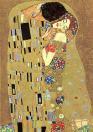
The Kiss. How many times have you seen the same old photo story: soldier/sailor going off to/coming home from duty, getting a departing/returning kiss from his wife/girlfriend? It's almost a cliche in Western press.

But Western values, by definition, apply in Western society. Great swaths of the world have different values, different cultural norms, different beliefs. We Westerners are shocked when we come face to face with some of these differences. No less are non-Westerners shocked when they come face to face with our differences.

So, I'm of two minds about this one. Aceh is an ancient province on the northern tip of Sumatra, an island in Indonesia. It was historically an independent islamic sultanship, but Indonesia has laid claim to it from the time of its independence emergence in the late 1940's. It has valuable oil and gas resources. The Aceh independence movement and the Indonesian government have been at war for years. The result has been that the outside world has basically been kept out of the region for decades, and it has remained more traditional than other places that have had greater absorption in "modern times".

The place may sound familiar. It was the place where the Great Tsunami and Earthquake hit first and hardest, temporarily pulling the sheets back from the bed of unrest and life in the formerly locked-down area.

Having made this short story long, what happened this last week was the Indonesian army was pulling back some of its forces. It was a publicity event for the army and a lot of press was present. A soldier and his girlfriend were being separated. They grabbed a quick kiss. The press grabbed a quick photo shoot. The local muslim hardliners went balistic. They want the soldier flogged. The traditional consequence for the girl is stoning.

It is not for me to tell them that their ways are wrong for them; you know: "when in Rome...." But they are certainly wrong for me. And it is the great conflagration that arises from these little incidents that will, I'm afraid, characterise the times ahead as the shrinking new world embraces more and more of the traditional, reclusive one. Cool heads on both sides will be required. We can either live through these times or kill through them.

Read about it: http://www.thejakartapost.com/detailheadlines.asp?fileid=20050928.B07&irec=6
and http://www.thecouriermail.news.com.au/common/story_page/0,5936,16747414%255E401,00.html

For a similar observation: http://www.smh.com.au/news/opinion/blind-faith-is-the-new-power-base/2005/09/28/1127804546995.html

Labels: , ,

Tuesday, September 27, 2005

But what is the question?

In his commentary today ("The 'ayes' have it on anti-terrorism laws", http://www.smh.com.au/news/opinion/the-ayes-have-it-on-antiterrorism-laws/2005/09/26/1127586796939.html), Gerard Henderson writes, "John Howard and the premiers - Morris Iemma, Steve Bracks, Peter Beattie, Geoff Gallop, Mike Rann and Paul Lennon - believe in the importance of national security. ... Conservative and social democratic leaders alike understand that there is a demand among a clear majority of Australians for a greater focus on national security at a time of terrorist threat."

So, if you asked any leader, "all in favour of national security?", don't you think the ayes would have it every time? Every where? He then spends the rest of a very long column poking the ayes out of anyone who objects to an unqualified endorsement of a "whatever it takes" approach to national security matters.

Those members of the public in favour of national security (and who isn't) must fall in line behind the country's leaders, because they are all clamouring over everyone to be at the front of this pack. "It's not only that the electorate demands security; if the worst eventuates, politicians do not want to be accused of having failed to act when something might have been done to thwart a terrorist attack.... It's about being in touch with the electorate, as most successful politicians are. The same cannot be said of many members of the intelligentsia."

"Sure, there is opposition among large section of the intelligentsia to the national security stance of both Howard and Beazley. Yet these politicians' slightly different positions are popular within the Australian electorate - which helps explain why the Labor leaders will possibly be inclined to give broad support to the Prime Minister in Canberra today."

And that is it in a nutshell. If you can scare enough nuts to shell out their votes to get you into office, it doesn't really matter if the issue passes muster with the folks who think about these matters -- the intelligentsia. To hell with them. Its the majority vote that counts. Has anyone stopped to consider, with due respect to my fellow and loved countrymen and women, that half of the population has an intelligence level that is less than average, and that it only takes those folks plus one to make a majority?

The really critical point of Henderson's appraisal is that at no point does he suggest that the intelligensia is wrong in its analysis. They are only wrong in their judgment of popular politics. And how stupid of them is that?

Labels: , ,