Thursday, March 16, 2006

Risque business

Say you're in your garage of a Saturday night, sitting around the card table with your mates, knocking back a few tinnies and playing a bit of cards. Most of the bets are done with coins.

When in walks a very savvy looking kinda bloke, with a big wad of notes and wants in. Do you reckon it would change the character of the game? You betcha it would.

In ways I cannot put together in a coherent, scholarly study, I have noticed a distinct change in the character of the equity markets over the last decade. It is becoming dominated by big, lightning quick money. Oh, the Big Boys have always had a major impact, and in that regard there is nothing new. They've always enjoyed their power to push the market this way or that. They've always enjoyed a clubiness that allowed for information to be shared in ways that didn't quite pass the "insider trading" bright lines. But they usually bought stuff to own it, to manage it, to work it, to put it in thieir trophy room.
But these new guys are not just big bullies; they're bold, cold Matrix-like machines. Just listen to CNBC at the number of times they mention how dominant block trading has become. Do you remember the term "hedge fund" being common parlance more than a decade ago? What about "black box" trading?

A black box is not some fatcat in a pin-striped suit and a big cigar. It is a streak of cyberdata, a stateless, motherless virus hellbent to ambush, arbitrage and retreat faster than a ninja. And they are everywhere, in to everything. Their bytes permeate every conceivable market, like a monstrous whale seiving the nutirients and little, bottom-of-the-food-chain

investors and small players from the oceans of cash that trade the world's goods. They derive their gains from diverse derivatives of incalculable numbers and varieties, trading the shadows of what used to be a currency or a commodity or a stock or a bond, but now come under the most obtuse and arcane of names that only financial rocket scientists can understand. Their trade is in ideas and concepts and notions and algorithms, not things and companies.

And, importantly, these new guys push around greater wads of money than the old fashioned pin-striped broker because they don't have to use as much (if any) of their own money, and the "products" they deal in control vastly greater amounts of the "real" underlying stuff than that stuff would cost in its own markets.

These new guys are taking over from the old Wall Street players, from the old bankers and brokers. Sure, they still go under the umbrella of the old guys (those old guys aren't that stupid), but they are refashioning them.

Take Goldman Sachs. (Thank you Henny Youngman, but no thanks.) These guys have been at or near the top of the American, and now world, Financial Yenta tree for yonks. But suddenly they are making a motza off this new stuff.

GAMBLIN' GOLDMAN'S PROFIT HITS WALL ST. RECORD $2.48B
By RODDY BOYD


March 15, 2006 -- Riding a wave of wild trading, a frenzied merger market and some savvy investments, Goldman Sachs rolled over investor expectations to rack up almost $2.5 billion in profits, the most lucrative quarter in Wall Street history.

Goldman's $2.48 billion in net income, or $5.08 a share, was a 64 percent increase over the previous quarter, a formidable bar to jump for its rivals.

Surging income in proprietary trading and at the merchant banking unit - where Goldman bet its own money on deals - led the profit rise, but all of the firm's units reported at least double-digit growth.

Goldman's return on equity - a measure of how profitably the firm invests shareholder capital - also broke records, hitting more than 36 percent on an annual basis.

The story behind Goldman's incredible gains appears to have been a willingness to take more risk - a lot more risk.

"Goldman is ramping up risk appetite to almost uncharted waters," said CreditSight's David Hendler.

Lehman Brothers and Bear Stearns also are expected to report strong quarters this week, as Wall Street's juggernaut continues to blow through even the loftiest expectations.

Goldman's results are a strong boost for its boss, Hank Paulson, who raked in more than $38 million in total compensation last year. Overall, analyst estimates proved next to useless: Thompson Financial's consensus profit estimate was $1.57 billion.

Investors, stunned by the earnings, bid the stock up to $149.42 in midday trading, a gain of more than $8.70.

Hendler said the profits may be coming from aggressive trading in sophisticated financial instruments devised by Goldman's own staff, including what he termed "new age" derivatives and complex "black box" structured products.

Up to 40 percent of Goldman's net income is currently at risk, up from an average of 30 percent last year, wrote Hendler in a recent report.

Ratings agency Standard & Poor's said this stellar performance came as all of Goldman's broader risk measurements - the so called VaR, or value at risk - increased.
Sounds like risque business to me.

Labels: , ,

Thursday, October 27, 2005

Targeting inflation

Even a casual reader will realize I ain't no economist. But I do share one trait with them: I'm not afraid to show my ignorance, either, gussying my opinions all up in a self-rationing construct that suggests science but screems art, especially the kind that is in the eye of the beholder.

And so, on the greatest authority of my own delusional observations, I'll put on my Great Carsony turban and offer my thoughts on inflation targets.

In Australia, the Reserve Bank has specified an acceptable inflation zone of 2 to 3%. If "it" stays in that range, don't expect them to be messing with interest rates.

In the US, there is much discussion and conjecture whether Bernanke will adopt a targeted inflation number or refuse to do so, as many suggest was Greenspan's preferred option. I'll try to paraphrase something I think I heard CNBC’s Senior Economics Reporter, Steve Liesman, say the other night in describing his view of Greenspan. He said Greenspan was of the view that economics is not physics (shock, horror: not SCIENCE?!), and that there was no speed-of-light benchmark that could be used at all times in all circumstances to set an "appropriate" inflation rate. As Peter Hartcher puts it, "His [Greenspan's] core objection, however, is that a formal target would rob him of the freedom to act as he sees fit.

Hartcher adds, "Many Fed watchers expect Bernanke will introduce a formal inflation target for the Fed of 2 per cent, plus or minus a percentage point.
But this is a distinction without a difference. Academics concluded years ago that the Greenspan Fed has been aiming for inflation of 1.8 per cent." (http://www.smh.com.au/text/articles/2005/10/25/1130239521908.html)

My contribution to this discussion is that, whether there is a fixation to a "target" or whether they reserve a royal perogative over interventionist discretion, in the real world the central bank actors will always fudge, prevaricate and prognosticate. This opinion is based on two observations.

First, notwithstanding what they say, they always reserve some "viggle" room about just what it is that they mean by the "inflation" they're targeting. Through various metrics they come up with different scores for inflation, including deflators, PPI, CPI, core and headline. By choosing one goalpost over another, they change the target. In the current climate, there is considerable doubt as to whether the recently preferred core rate "suitably" accounts for the "real" rate, or whether aspects of the headline rate are "spilling over" into the core. What that means is that, target or no target, they are feeling their way by the seat of their learned pants.

The second thing that matters is that inflation, real inflation, is not a static number. We measure it as a snapshot. We make a record of some kind at some point in time and call that inflation. In that way it looks like a fat, juicy bullseye target sitting on a archery range. That kind of static analysis gives some economists the chance to say, even though the accepted inflation figure is right up against the limits of the inflation target, "no worries, mate".

"With no hard evidence of a widespread petrol price spillover, economists expect interest rates will remain on hold for the rest of the year. But after that, they remain split on when, not if, the bank will lift rates. An interest rate strategist with Macquarie Bank, Rory Robertson said any rate rise remained a long way off, "maybe in 2006, maybe not", adding that the importance of the headline inflation rate had become "widely overstated"." http://www.smh.com.au/news/business/petrol-pushes-inflation-to-the-limit/2005/10/26/1130302838570.html

But inflation is not an archery range target, it is a duck on the wing. It has speed and direction and a proclivity to change one or the other that has to be taken into account. Any central banker has to have a good eye, steady trigger finger and a gut feeling for "Kentucky windage" to hit that kind of target.

And so, even though Australia has a targeted inflation zone and inflation which has not so far been measured outside the acceptable limits, today's inflation is playing duck if not chicken with the central bankers. My inclination is to go with the guys who feel inflation is heading off target, outside the zone.
"[S]ome expect the bank could reintroduce its tightening bias as soon as next month when it makes its next statement on monetary policy. The chief economist at Commonwealth Bank, Michael Blythe, said evidence was already mounting of a second wave of inflationary effects from petrol prices, pointing to increased airline surcharges, milk prices, employer wage expectations and a recent pay rise awarded to NSW contract drivers. "Higher fuel prices are filtering through … but the proverbial smoking gun is yet to be found," he said." (Id.)

And I'll be interested to see how this turns out: http://guambatstew.blogspot.com/2005/09/this-may-interest-you.html

Labels: ,

Saturday, October 22, 2005

As I see it, John Howard is a terrorist

Folks, things are getting terribly out of hand. The terrorists are winning and we have to fight back.

Let's start with taking control of our language; it's being stolen from us. Let's refer to terrorists as those people who want to wreck our accepted freedoms and way of life and spread fear. Some terrorists do that with bombs, some with laws.

We have to make sure we understand that the means of spreading terror is not the defining feature of a terrorist. Those men who flew planes into the twin towers and bombed the nightclubs in Bali and those women who carry bombs into cafes are murderers. First and foremost they are murderers. They intend to kill with malice aforethought.

We have laws against murder. In many part of the US and the rest of the world, the punishment for murder is death itself. We value life and we fear death and those who would take it from us are criminals, guilty of one of the oldest "crimes" (a legal concept after all) mankind has described. It has developed that it is a crime nearly as bad as murder itself to even attempt to murder. Beyond that, it is a crime of conspiracy for people to act in concert to even discuss and plan a murder even if no act is done in furtherance of the plan.

Why, then, don't we speak of this rabble who do the bombing as such as murderers or conspirators? Surely that is as reprehensible a judgment as mankind needs, has ever needed, to brand their anti-social behaviour.

Because politicians know that we are pretty much inured to the idea of murder. We don't accept it as a practice but are consigned to accept it as part of what we are. It doesn't really provide any kind of rally point, even though Fox news can take any old murder and turn it into a "theme" or "topic" of "news" and run with it for a year or two. It may sell papers or news time, but it doesn't really rally the voters.

Fear on the other hand is something that we are all hard-wired for, just like deer and prairie dogs and doves. As a social beast, we have leaders and poppas constantly heads up while others are heads down, to be on the look out, and to squawk at the first sight of danger. Any squawk rallies us together like a troop of baboons to fend of the real or imagined threat. When the threat passes, we harumph and beat our feet and scratch and settle back down to the business of heads down. It is a satisfying, socializing behaviour that helps define who and what we are. We are as hard-wired for it as chimpanzees.

So playing the fear thing is a means of leaders reminding us of who the leaders are. Really, they are just guards along the watchtowers, but they have come to believe that, since we all jump and dance and howl about whenever they bark, that they can control us. This has given them an overblown sense of self-importance.

This control business is really important to them, and has served us well in times long gone. It is the essence of the pecking order concept. It has been essential in our social evolution. In the deep past, when self selection was the go, it assured we had the strongest and smartest leaders so the troop survived.

The thing that we should remember, though, is that it is the troop that does it all together. Any watchtower guard who goes off in the face of danger alone without the support of the troop meets with disaster. The troop as a whole has no real interest in such adventure. In fact, if any watchtower guard (a description I prefer to "leader" since it really better describes the function) keeps the troop on too constant a state of alarm, the "heads down" business does not get done and the survival of the troop is put at risk by its very own organisation. Survival of the troop requires that both the heads up and the heads down business get done.

We no longer live in troops and we no longer organise ourselves around self-selecting leadership models. But the hard-wired fear response is still engrained in us and still forms part of our social reflexes. Just like horses, which have been domesticated from before the times when mankind first learned to paint and record their histories, we will react to fear spontaneously. Horses react by flight, we react by fight. Our adrenalin shoots up, we bare our teeth, our hair stands on end, we circle the wagons, we whoop, stomp our feet, agitate and fight back.

For the watchtower guards, this reaction is quite satisfying. It validates their position. It defines them individually from the rest. It keeps potential competitors for their job off balance. But for the rest, all the hoopla is tiring and distracting from the heads down business which is what their lives are all about. Still, time and again they will tend to respond to the squawk of the guard: they are hard-wired to do so, notwithstanding an intelligence system that learns from iteration that not all squawks are legitimate.

Which is where I'll stop this little story telling and get back to my point. As I see it, John Howard is a terrorist. The bombers are terrorists, too, but they are murderers first and foremost. They spread fear, and intend to do so, by killing innocent victims.


So maybe there is some enhanced and distinguishable "crime" they are commiting beyond "mere" murder that independently defines them. That can be the only intent of characterising them as "terrorists" rather than the murderers that they are. It must be the intent to spread fear and disrupt our accepted freedoms that is be meant by the term terrorist. If a rose is a rose is a rose, then a murderer is a murderer is a murderer, and a terrorist must be someone who is something distinguishable from a someone who simply kills with malice.

John Howard is a watchtower guard, and certainly no murderer, but by putting us in a constant state of fear (he did, after all, send us refrigerator signs reminding us to stay alert) and by disrupting our established sense of freedoms, he is, as near as I can tell, IMHO, a terrorist. And so it George Bush. They are not content to leave us to go about our heads down business, but seem compelled to raise the alarm needlessly and disrupt our heads down order. They are neglecting the murderers (
http://guambatstew.blogspot.com/2005/10/it-was-never-ists-it-was-always-ism.html) and are consumed by the alarm and the sense of power that gives them.

Which makes each of them very bad watchtower guards. John Howard has been too long at the watchtower. His absolute power is tending to absolutely corrupt him and he must be replaced.


The last straw is actually not the new terror laws he's trying to bring in. The new terror laws are what is spreading terrror and destroying our established sense of freedoms. Those are what paint him as a terrorist.

The last straw is his utter disregard for the whole notion and process of democracy. It is the hamfisted, tyrannical, spoiled bratish way he is foisting the new terror laws on us, like an enima. He has the power to bring them about in a democratic fashion, through a transparent and thoughtful debate. He has the power because he has total control of his party (http://guambatstew.blogspot.com/2005/09/unrepresentative-swill-part-one.html) and total control of the senate (http://guambatstew.blogspot.com/2005/09/unrepresentative-swill-part-2.html).

But that doesn't content him. He must prove to himself that there are no challengers to the watchtower. He must RAM the laws through. He has adopted a process and a mindset that will brook no dissenting (though eventually powerless) viewpoint. It is bravado and machismo of the worst political order and odour.

He is adopting a process that is non-transparent (http://guambatstew.blogspot.com/2005/10/mushies.html). When the ACT Premier released the proposed draft of the laws, Howard had some slight changes made and passed the revised drafts out to all the Premiers EXCEPT the ACT Premier (http://www.abc.net.au/news/newsitems/200510/s1487986.htm).

He is adopting laws that are completely alien to democracy (http://guambatstew.blogspot.com/2005/10/seven-bullets-to-head-should-be-enough.html) and family (http://www.smh.com.au/news/national/mums-the-word-in-terrorist-purge/2005/10/21/1129775959888.html). It's almost treasonous, at least in spirit if not in law.

John Howard is our duly elected watchtower guard. But he is spreading fear and interrupting our cherished freedoms and way of life, and in that respect he is not qualitatively different from those murderers who are trying to accomplish the same thing.

If he is not acting like a terrorist, then I need someone to give me a better explanation of what a terrorist is, different from what I've described above. Elsewise I will have to stick to my description and opinion: John Howard is a terrorist.

Labels: , , ,

Thursday, October 20, 2005

It was never the ISTs; it was always the ISM

What a bunch of silly gooses we are. We thought that the whole response to 9-11 and the other attacks both before and after the attacks on New York was to get the terrorists who were doing this. Bush told us he was going to get 'em, dead or alive.

But, as it is now emerging, that was never the plan, and the number of ways we have been lied to is just staggering. I suppose, if that had been the plan -- to get the guys what done us wrong -- they may have actually implemented it. There might have even been a mission accomplished by now.

After the attacks, it is fair to say the governments of the West had a bit of license to hunt down the killers and deal with them. But, under the guise of doing that, they have had something else in mind. Something that has never been openly debated in any hall of any congress. Something that is so broad, so challenging, so uncertain, so different to the ways things had been done in the past that you would think usual democratic principles would demand a debate and a specific democratically arrived at authority. It is the kind of major initiative that you think ought to emerge only after the people have been asked about it and given their approval.

What the Coalition of the Willing has had it in mind to do from the very beginning was to re-jig the very foundations of the ancient societies throughout the Middle East. The goal is to tear down all the halls of "oppression" wherever they might be and replace them with an American led "democratic"
putsch. Presumeably, that would mean replacing all the Kings and Princeses and Emirates and Sultans and Mullahs and Ayatollas and other tribal leaders with duly constituted, freely and popularly elected peoples' representatives and institutions. Even, perhaps especially, the Saudis.

Because, they assert, only a democratic society can eliminate terrorism. (The corollary being, terrorism cannot exist in a democratic society -- so why are we having all these anti-democratic terror laws being enacted?)


Here it is, straight from the horse's (US Secretary of State Rice) mouth:


"But the fact of the matter is that when we were attacked on September 11, we had a choice to make. We could decide that the proximate cause was al-Qaeda and the people who flew those planes into buildings and, therefore, we would go after al-Qaeda and perhaps after the Taliban and then our work would be done and we would try to defend ourselves.

"Or we could take a bolder approach, which was to say that we had to go after the root causes of the kind of terrorism that was produced there, and that meant a different kind of Middle East [not Iraq, not Afghanistan, the whole bloody Middle East]. And there is no one who could have imagined a different kind of Middle East with Saddam Hussein still in power. I know it's difficult, but we have ahead of us the prospect, and I think the very good prospect of a foundation for a democratic and prosperous Iraq that can solve its differences by politics and compromise, that becomes an anchor for a Middle East that is changing.

"If you look at Lebanon and you look at the Palestinian territories and you look at what is going on in Egypt, this is a Middle East that is in transformation to something far better than we have experienced for the last 60 years when we thought that we could ignore democracy and get stability and, in fact, we got neither. So yes, it's long, and yes, it's hard, but if we quit now, we are not only going to condemn generations of people of the Middle East to despair, we are going to condemn generations of Americans to continued fear and insecurity....
"What we are focused on is getting the Syrian regime to change its behavior. The Syrian regime is out of step with what is going on in the region.... They are stirring up difficulties in the Palestinian camps in Lebanon, which is a problem for the Palestinian territories and the work that Mahmoud Abbas is trying to do in bringing a Palestinian state to bear. And, yes, they are permitting the use of Syrian territory for terrorists to cross Syrian territory. And by the way, in many cases they're coming through Damascus airport. This isn't crawling across the border as they do in Pakistan or Afghanistan. And so, yes, they're using--that territory is being used to kill innocent Iraqis, innocent men, women and children, because suicide bombers are coming through there.
So this is about Syrian behavior...."

Labels: , , ,

Monday, October 17, 2005

Tongue in check

Back in the olden days when Saddam ran Iraq, a lot of Iraqis ran away to Australia, and now call Australia home. It is not inconceivable that some of them may still consider Iraq a home, too. And whilst they may not have had fond feelings for Saddam, it may be that they do not have fond feelings for the occupation forces now controlling the country, either.

And in no way need they be considered Al-qaeda sympathisers or terrorists merely because they support a free, un-occupied Iraq.

But if they were to say anything that supported an indigenous "insurgent" effort to expel foreign occupiers, they can easily find themselves up against the "terror" laws of John Howard.

It could play out like this: One guy says to his workmate, "you know, I have to admit that I hope those guys kick those American's out of Iraq because, you know, mate, it ain't right that they invaded Iraq the way they did. I don't like bin Laden, didn't like Saddam, but I don't like George Bush, either. I think I'm going to send my cousin in Iraq a couple of hundred dollars; he says he's thinking about helping those guys get the Americans out."

His "mate" is alert and alarmed and notifies authorities. The authorities consider this a case of, in John Howard's words, "very dangerous and difficult and threatening circumstances". They want to find out more, so they take the guy into custody and detain him, without charge, without warrant.

The following quoted items, and Howard's words above, are from http://www.smh.com.au/news/national/terrorist-laws-to-lock-up-objectors/2005/10/14/1128796712300.html:

"Last month the states agreed to allow extensions of up to 14 days for detentions when a terrorist act is believed imminent." [A terrorist act includes financing insurgent forces, so his statement he might send funds to a cousin who might support the insurgents is at least arguably an imminent terrorist act.] "The suspect must then be released if no terrorist act occurs." [When; how would you know? What's to stop the authorities from picking him right back up since he was prevented from performing the act while in custody and now that he's free the imminent act could occur?]

"Detentions are secret but suspects are allowed to contact a family member or employers to say they are safe but, "not able to be contacted for the time being". [So, let's say this guy disappears and no one from work or anywhere else knows where he is. His wife and family is distraught. He is allowed his call and tells his wife, "I'm in detention and you will not be able to contact me for the time being."]

Bingo; he's done the crime. "If they disclose the detention they can be jailed for up to five years [for the simple act of disclosing they're in detention, regardless of whether the things they're being detained for are "legitimate"]."

"Under the bill, the Government can apply to a court for control orders on terrorist suspects who have not been charged. These orders include house arrest, preventing them using the telephone or internet and restricting their social contacts and work opportunities. Suspects can also be fitted with tracking devices. The suspect's lawyer can be shown the control order but not necessarily the evidence or reasons behind it. The orders can last up to 12 months and can then be renewed any number of times."

The SMH separately reported: "The Law Society of NSW said the federal government's rush to pass the draft laws through parliament is a misuse of power. "It's of grave concern that such important legislation which intrudes on individual rights is not given adequate time for public consultation and parliamentary debate," Law Society of NSW president John McIntyre said.
"The government's lip-service to basic parliamentary procedure means that potential flaws in the proposed counter-terrorism legislation are likely to go undetected and could be an unnecessary erosion of the fundamental principles of the rule of law." http://www.smh.com.au/news/National/Antiterror-proposals-revealed/2005/10/14/1128796701861.html

Actually, it is a bit generous to even say the government paid any "lip-serve to basic parliamentary procedure." As Alan Ramsay explained, "What the Government is doing is killing any meaningful scrutiny of its proposed anti-terrorism measures, in alliance with state police forces .... The Government has not released the legislation. Parliament has adjourned for a fortnight. It resumes sitting on Monday, October 31. The new anti-terrorism bill will go before the House that week. What Hill was signalling on Thursday was a Senate inquiry - including a written report - restricted to, at most, eight days or, effectively, three days only. Hill made a three-minute speech in support of his announcement, offered his "regret" that there had been "very little consultation", then quickly left the chamber ...." http://www.smh.com.au/news/opinion/snide-sidestep-on-the-fast-way-home/2005/10/14/1128796703813.html

This is a government which is becoming corrupted by its absolute power. As my wife was saying last night, "I like John Howard. I've liked him. He seemed like such a nice guy. But this is very scary."

Labels: , ,

Monday, October 10, 2005

Crusader Rabbit and other hair-brained notions

When I was young, growing up in Texas, I remember occasional religious uprisings, with conservative Christians crushing Elvis Presley and other sinful records in mass demonstrations throughout the MidWest. We were severely disciplined if we showed up for school with our shirt tails untucked, and girls had to kneel on the ground to have the lengths of their skirts checked. I recall "Colored Only" and "Whites Only" on doors of restaurants, laundries and water fountains. Miscegenation was often spoken of in terms as God's law, but a "mixed marriage" could also refer to a Catholic married to a Protestant, and it was unkown for a Jew to marry other than a Jew. When I left Texas, I did so almost as much as a religious refugee from the conservatism of the Southern Baptists and other evangelical Christians as an adventurer.

A couple of years ago my wife and I toured Malaysia. As a predominantly Muslim country, the heads of the Muslim women were covered almost wherever you went. But in KL and over much of the West coast we saw billboards advertising shampoo, with pictures of women with long flowing hair. When we went to the East coast, which is much more conservative and Muslim controlled, the shampoo ads were sans hair. The dresses were longer, the women more covered. When we went shopping in the grocery store, my wife, who was admonished not to dress "sexy", and I had to check out in separate men's and women's lines, and there was a man standing behind the woman checking me out to make sure that there was no ontoward contact of any kind, eye or hand. Heaven help you if you wanted to buy a beer or get a quick hug and a kiss from your wife.

It seems whenever conservative religious practice prevails, the freedoms of people to come and go as they like, to eat and drink and sing and dance and make merry, is proscribed or strictly prescribed. Religious conservatism just does not seem capable of abiding tolerant difference, be it thought, dress or manner; particularly if the hair on your head on your face fails the required dress code. It ends up being the ultimate "for 'em or agi'n 'em" clique. Since they demand an absolute belief in only one way to commune with God, it follows that absolutely everyone else is repugnant in their view of God's sight.

If they would just stick with that view and withdraw to themselves, like the Amish or Jonestown fools, then they wouldn't cause too much difficulty. But they don't. They insist that everyone else be like them. They send missionaries out to the whole world to knock on your door, to camp on your parliament, to market and convert, from corner to billboard to radio to tv. You cannot escape them anywhere.

When you look at nation states and their histories, they come and go. Political boundaries are written and rewritten. Life goes on. Boundary grudges get forgotten for the most part. Are Romans still fighting the fall of Rome? Is England still fighting the Boston Tea Party? Are Christians and Muslims still fighting the Crusades?

When you look at the religions of the world, particularly the Houses of Abraham, you find that their battles are never clearly won or lost or forgotten and they battle on from generation to the next, and have been doing so since before they committed their beginnings to scrolls. Sometimes they go through periods of enlightenment and engage in intellectual dialogue and study and are willing to accept scrutiny of the orthodox and tolerance of differences. But then some little cleric with a Napoleon complex jumps up, demands a retreat to some nascent tribal past and stuffs it all up.

These religions, being absolutist by definition and proselytizing by nature are incipient tenderboxes of intolerance, bluster and mayhem, and succumb easily to the clairion calls of the disaffected or disenfranchised amongs them. The result is the disruption of civil affairs, which is to say, civilization, the laws of men and the ideal of those who prefer heaven on earth to the promised afterlife. So stoutly are the beliefs of the religious and so hotly contested are their Godly constructs that they engulf the non-religious civilians, who get dragged into their religious wars like the plants growing along the banks of a flooding wadi.

So, at this point, assuming you're still on the page and haven't hopped on to the next blog, you're probably wondering, "Gee, he hasn't been blogging for a week and now he comes the raw prawn with his same old religion rant -- what got up his nose?" Three same ole things: another Bali bombing, another Bush speech and another Al-qeada communique.

First, the communique: Assuming the story to be credible,

"Al-Qaeda's deputy leader has warned the top militant in Iraq that attacks on civilians and videotaped executions committed by his followers threaten to jeopardise the broader extremist cause.... The 6000-word letter, dated early in July, from Ayman al-Zawahiri to Abu Musab al-Zarqawi, was obtained by US forces conducting counterterrorism operations in Iraq, an official said on Thursday.
Zawahiri said that Iraq had become "the place for the greatest battle of Islam in this era" but that Zarqawi's forces should keep in mind that it was only a stepping stone towards a broader victory for militant Islam across the Middle East. "The mujahideen must not have their mission end with the expulsion of the Americans from Iraq, and then lay down their weapons and silence the fighting zeal," Zawahiri said in the letter...." (http://www.smh.com.au/news/world/alqaeda-tells-allies-to-tone-down-atrocities/2005/10/07/1128563003570.html) And see: http://english.aljazeera.net/NR/exeres/31E6BF7F-D644-45EA-9505-2D70E3FB1E7E.htm

The idea of tribal militants amongst some of the marginal Muslims that there ought to be a pan-Middle Eastern Islamic state governed by sharia custom is not a New Millenium idea. It's an old sandal that has been worn by many a foot. Successions of Sultans, Kings and Princes around the Middle East have been dealing with this bit of mutiny for centuries.

Indeed, it's an idea that has followed Islam across the Indian continent and down into South East Asia, where there are more Muslims than in all of Arabia, where the goal is a pan-Southeast Asian Islamic sharia state. There are proponents and adherents of this notion in the Southern Phillipines, Southern Thailand, Malaysia and Indonesia. Peter Hartcher discusses the Indonesian aspects of this movement in an article following the recent Bali atrocity: http://www.smh.com.au/news/opinion/their-democracy-vital-to-our-future/2005/10/07/1128562995750.html

Peter Hartcher writes, "The Islamic extremists in Indonesia have a far more ambitious goal and they have been working on it, violently, for 58 years. They aim to overthrow the Government of Indonesia and impose fundamentalist Islamic rule on the country. This project has a name - Darul Islam. And its devotees took on its name as the title of their group... And now the long-standing ideal of an Islamic revolution and an Islamic state in Indonesia was revealed to be too narrow, too limited, too unambitious. Inspired by al-Qaeda's message of a global jihad, Jemaah Islamiah dreamt the far grander vision of a pan-Islamic caliphate that would reach across South-East Asia. This caliphate would unite half a billion people and an entire region of the globe under the sharia, Islamic law. In some definitions this vision, known in South-East Asia as Nusantara Raya, even extends to northern Australia." (This is a small excerpt from a much larger explanation of the situation in Indonesia -- you should read the whole story.)

So, we've got a lot of hot-headed marginal Muslims really focused on their own back yards, trying to wrest control of fellow Muslims and institute conservative sharia custom. Normally, we wouldn't find ourselves involved in that kind of drama. The only thing that is new about this drama is that they have decided to take the show on the road. By getting media attention they hope to stir up more support for their cause. The West is a big, easy target, and nobody knows how to add dramatic flair to any cause like modern Western media. All they need is some big, dumb straw dragon to slay, and they look like hollywood heroes, attrack followers and gain political strength where they want it -- at home.

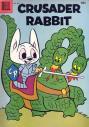
And what a big, dumb straw dragon they got. Crusader Rabbit posing as John Wayne. Instead of going after the guys who really were behind the bombing of the World Trade Center, and passifying the poppy fields and badlands of Afgahnistan in the process, Crusader Rabbit rocked and flawed the whole balance of Middle East religious stalemate. Instead of spending billions of dollars on creating separate safe and secure states of Israel and Palistine, he sends billions of dollars down crony rat-holes with nothing of substance to show for it after years of struggle and death and fatigue. He has squandered the political capital of the US, blunted the sword of our military might, and planted the seeds of doubt of our claim to superpower status.

Lying about weapons of mass destruction and ties to Al-qaeda, Crusader Rabbit turned the West from victims of marginal Muslim extremism to the perpetuators of it. Rather than marginalizing the extremists, he has marginalized the American military by bogging them down in an occupation of patently unsympathetic Iraqis. The occupation of Iraq has exposed the soft underbelly of democracy, which requires a minority willing to be governed by a majority. And he has evangelized one of the world's great democratic civilizations. (http://www.deccanherald.com/deccanherald/oct82005/foreign1628462005107.asp.)

And now he's about to make it all worse. While the usual lefties dismissed Bush's latest speech about Iraq as the "same old" "9/11 time warp" (http://www.truthout.org/docs_2005/100705J.shtml), the hard noses who more closely watch him for any deviation from approved rhetoric, the conservatives, noticed and approved the Bush's new intention to take Islam head on. The Heritage Foundation had this to say:

"By identifying the enemy specifically as Islamic radicalism, rather than the more generic “terrorism,” Bush’s latest speech is a step forward in the evolving U.S. approach to defeating al Qaeda. The change signifies a recognition that terrorism is only a part of bin Laden’s revolutionary strategy for imposing his harsh Islamic ideology on the Muslim world and that “bin Ladenism” will continue to pose a threat long after the terrorist leader has been captured or killed....
"The President described in detail the nature, goals, and strategy of the Islamic extremists: “This form of radicalism exploits Islam to serve a violent, political vision: the establishment, by terrorism and subversion and insurgency, of a totalitarian empire that denies all political and religious freedom....”
"Bush correctly (sic) pointed out that “We’re not facing a set of grievances that can be soothed and addressed. We’re facing a radical ideology with inalterable objectives: to enslave whole nations and intimidate the world.” He ruled out any attempt at appeasement and prepared the nation for a long ideological struggle against the militant network and its enablers, including Iran and Syria. However, the outcome of this struggle is not in doubt because “Islamic radicalism, like the ideology of communism, contains inherent contradictions that doom it to failure.” http://www.heritage.org/Research/MiddleEast/wm778.cfm
And if you think that reference to fighting Islam didn't raise a hackle or two in the land of Islam, have a read of http://www.jihadunspun.com/intheatre_internal.php?article=104698&list=/home.php

This statement paves the way for Bush to invade Iran and Syria (neither of which supplies bin Laden any significant support from anything I have read), all as part of a grand plan. It gives him more cover for his failure to snag bin Laden. It draws us closer into a Christian Crusade against Islamic "elements". Rather than further marginalizing Al-qaeda, this gives it greater power as the focus of all of our rhetoric, and humiliates us for our inability to deal with the criminals who invaded New York.

And all in the name of saving "the Muslim world" from the "harsh Islamic ideology" of "bin Laden-ism". Great. Just Great. Bush creates another religion, another "ism", where before there was just a bandit and then seeks to impose a Western, faith-based perspective and "solution" on an issue that, apart from the criminal terrorist acts, doesn't involve the non-Muslim world.

If this is to be an ideological battle, the last thing the West needs is to be led by an idiot-logical Christian. If this is to be a faith-based battle, it will have no solution, only more bluster, more battle, more victims, more scores on the same old scoreboard, more old scores to setttle at a later date. In a battle against a religious ideology, it is going to be all the more intractable if we nominate our side to be led by a competing religious ideology. Just remember what the author of the Jihad cite noted above said: "This [Bush's speech] is the best rallying point for all the young and energetic faithful who are struggling in the last global struggle between the good and the evil."

I am not denying that we are up against a religious ideology. I was up against one when I was growing up in Texas. Not as violent, but one intrusively concerned with the length or part of my hair, the sound of my music and the length of my sister's skirt, just the same. I accept that that is the nature of the problem. I do not accept that an evangelically-driven faith-based policy approach is one that will find the right nuances, the right compromises, the right sensitivities to reach a practicable solution. As our misadventure in Iraq showed, you can shock and awe the bodies, but you have got to find another way to win over the minds. I do not believe that an Onward Christian Soldier mindset can do that in this case. We cannot afford to have Crusader Rabbit go off on some kind of messianic throwback of religious glory. The situation does not even afford us the possibility of the appearance of it.

Going back to Peter Hartcher's piece on the Indonesian situation is instructive:
"Why was the Darul Islam movement so durable even after half a century of repression by successive tough dictators? It was not the brilliance of its members or the power of its international sponsors - for most of its life it hasn't had any. It has never had much money or many guns.
It endured because of the attraction of its vision. Its power is in its appeal as an idea. And now the Darul Islam movement has been electrified by its connections to the al-Qaeda ideal of a world united by the global rule of Islam.
"It is in the nature of Islam to dominate, not to be dominated, to impose its laws on all nations and to extend its power to the entire planet," wrote one of the leaders of the modern Islamist movement, Hassan al-Banna, who founded the Muslim Brotherhood in Egypt in 1928.
The terrorists are trying to engineer what the American political scientist Samuel Huntington foresaw as a "clash of civilisations" between Islam and the West.
"A delegation of Indonesian parliamentarians visited Australia recently, members of their foreign affairs committee and drawn from all the main political parties. They expressed bewilderment at Australia's misconception of the nature of the problem.
"The focus on counter-terrorism from Australia is all physical so far," said one MP, Untung Wahono from the Islamic-oriented Justice and Prosperity Party or PKS. "But it's really about belief. Perhaps Australia can invent a device that will detect terrorists' beliefs and go 'beep.' "
Another, Boy M.W. Saul of the Democratic Party, the party of the President, Susilo Bambang Yudhoyono, said: "It's an issue of belief. We have to force these people to change their views."
The first priority for Indonesia is to demonstrate that it can develop successfully as a democratic, stable and prosperous society within its existing constitutional framework as a secular, tolerant state where people are free to practise their religion but not to impose it on others.
This will legitimise the current system, and deprive the extremists of a platform for mass support. But this is by no means a certain outcome. Indonesia, only six years after the fall of its last dictator, is still a system in the experimental stage. And Islam, after being repressed in Indonesia for decades, is still trying to find its own natural level in Indonesian society. How the state and Islam come into balance is an open question.
The future of the Yudhoyono Government, less than a year old, is an important part of this experiment. Yudhoyono, a modern, secular leader who is working against terrorism and corruption and in favour of economic growth, is pro-Western and, specifically, pro-Australian. He is, in short, the best thing Australia has going at the moment.
He has just been obliged to cut fuel subsidies, effectively doubling the price of petrol. Raising the price of petrol is extraordinarily sensitive in Indonesia - it was one of the triggers for the downfall of both Soekarno and Soeharto.
The last thing Yudhoyono needs just now is to be undermined by Australia. Barton's advice: "He's vulnerable right now and Australia needs to recognise that in the way it engages him." It would certainly be a bonus for the terrorists if, by killing some Australian tourists in Bali, they can drive a wedge into Indonesian relations with Australia.
The unwavering aim for Australia must be to concentrate on helping the emergence of a secular, stable and successful Indonesia, to try, as the British are trying with Turkey, to bring all the world together on the side of civilisation. That way, we win and the terrorists lose."
I fear we must work against religious zealots on two fronts, both in our own homelands as well as in the homelands of the marginal Muslims, else they will consume us all in their flames and their gods' names.

Labels: , ,

Tuesday, October 04, 2005

Supply side economics

My Dad taught me all I need to know about supply and demand.

The classroom was the kitchen table, after a dinner meal of anything and biscuits (NB to Aussies: American biscuits are like unsweetened scones that are eaten as a bread at meals; a regular particularly at most meals in the South). Dad would set aside a few biscuits to have for desert. Then he'd get out his bucket of sorghum molasses and pour out just the certain amount of that delectable blackstrap in a pool on his plate to apply to the available biscuits. Most times he'd ritualistically blend the butter through the molasses, sometimes he'd just butter the biscuit.

Then he'd slice the biscuits in half and dollop some of the buttered molasses onto the biscuits with a knife, real judicious like, and and purr as he ate biscuit and molasses, with a careful eye ever on the remaining tarpits of blackstrap and halves of biscuit. When he got down to scraping the plate clean with just the right amount of molasses to ladle onto the last bite of biscuit, the world was in harmony, the stars shone, angels sang and Dad was in Heaven. It was a real art and served as a great dramatic performance I'll always remember. I'm sure there were times when things just didn't pan out quite as nicely as that, but I don't care to recall such matters.

In the world of commodities something similar is always going on. The miners try to supply just enough to satisfy the demand, to cover their costs and avoid an over-stock that drives down price and adds to warehousing costs. Any time you get a sudden change in either the supply or demand, your biscuits and molasses don't work out.

Lately, all the focus has been on the demand (apparently unending and not too squeemish about price) for commodities, especially energy and base metals, and the limited supply available to meet the demand. This has led to a land-rush to buy whatever commodity stock trades on the exchanges as a certain road to riches. Regular readers already know my take on this. Today's story is meant to reiterate my reminder that supply is not static; it is in constant search of equilibrium with demand. There may be a finite amount of oil, coal, iron ore, whatever, but we are far from it. If it is in short supply at the moment, it is due to an imbalance coming about from a sudden, unanticipated demand. Given the demand, supply will come on line and eventually the biscuits and molasses will balance out and the firmaments will bear gladtidings.

Tin is a base metal. But the supply of tin has now caught up with and outpaced the demand. The price of tin has dropped 33% in the last year. This has caused the closure of the Bluestone tin mining in Tasmania and the loss of a large part of the state's economy. See, http://www.smh.com.au/news/business/tin-price-fall-closes-renison-mine/2005/10/03/1128191658541.html If you have your eggs in a basket of Australian resources, that egg just broke.

Labels: ,

Monday, September 26, 2005

Unrepresentative swill (Part 2)

To my mind, in my short 17 years in Australia, the scariest thing I ever heard uttered by a major political leader was Keating's castigation of the Senate as a bunch of "unrepresentative swill". It was the upfront honestly uttered frustration that many other leaders have only hinted at. At its core it was the curse and scorn heaped by a hobbled monarch. It was symptomatic of the rot of corruption that all in power must at some point feel, if there is any truth to the observation that "power tends to corrupt". Mr Howard has shown similar frustrations, but he is both too much the political genius and ingenuous to say so in so many words. His Gollum-like cooing over his control of the Senate was not hubris; it was crowd control.

You see, once you're Prime Minister of Australia, and particularly if you have the usual control of your party and the unusual control of the Senate, there is not a lot of institutional checks on the balance of your power.

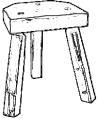
The traditional rough description of governmental checks and balances is the three legged stool concept consisiting of a tripartite arrangement of shared powers and responsibilities composed of the executive, legislative and judiciary. And typically you find ancilliary checks and balances within each of these parts to further ameliorate the tendency of power to concentrate and aggrandise.

I think the most classical embodiment of this system is the US system. (Hold on, I might think it is the best system, but I'm not saying that here. Just consider the framework.) The executive is the President, elected by the people, who has administrative control over the government. The President does not make law; does not declare it, vote for it or interpret it. While he has undoubted huge influence over it in the way it is administered or not, he cannot have any legislative authority to make law even if Congress were to try to delegate the power to him. This prohibition extends so far that executive departments (Ministries here) cannot make regulatory law that extends beyond the scope of the enacted law, and there are plenty of cases where this demarcation has been upheld by the courts. The power to make law lies independently with the Congress (which, being a federated republic of states, is bi-cameral with a proportionally popularly elected House and a Senate made up of equal representation from the various States).

History has shown that even when the President is from the same party as the majority of either the House or Senate, or both, the independence of the legislature is carefully and jeolously guarded by its members, often in contradiction to party loyalty to the President. There is the ancillary check that even within parties, there is a tradition of deferring to constituency over party, resulting in frequent cross-party line voting.

Compare that to the Australian system. The Prime Minister, as executive, controls the administration of law and, as leader of the governing party in Parliament, controls the making of law. This is so much concentration that nobody is surprised when a government "proclaims" law by press release to be backed up by written enactment later. My first introduction to this was when Keating, as Treasurer, issued a press release over night restricting foreign ownership of residential property during the 1980's property boom. No law was ever enacted to my knowledge; my enquiries to the then FIRB simply referred me to the press release!

Add to the lack of any checks and balances between the executive and the legislative branches the tradition of strict party control of members, and the government of the day has a pretty free hand to impose its whim. The only institutional obstacle in the way of a government is the Senate.

By definition, the executive controls the House, but often fails to muster the votes to control the Senate. In that case, there is a real contest for the making of laws. Real contests mean open debate, airing and consideration of minority opinions and interests, and the survival of more consensually agreeable law and the failure of more divisive law. In those times when the government does not control the Senate, then, there is a modicum of checks and balances that impede the concentration of authority, control and power. I believe the Westminster system also contains a check and balance that the US system doesn't hold up as an ideal, that of strict Ministerial responsibility. But I leave it to you to decide if that is truly alive and well and compatible with the ducking and weaving of the governments we have seen of late.

Since democracy is always a system of government by majority rule within the context of the consent of the minority, this messier rubric of checks and balances leads to a more robust democratic state. It's untidy, time consuming, frustrating, expensive and humbling, but it is more democratic than an autocratic system lacking in the checks and balances. We don't have to have a democracy. We can have autocracy if that is what we want or if that is what we allow to happen by default.

A word also ought to be said about the role the judiciary plays as a check and balance. The judiciary does not, in the first or last instance, make law. The legislature makes law, the executive enacts and admisters it, and the judiciary is there to enforce it, which involves a degree of interpreting it if is in need of clarity. Moreover, in a constitutional democracy, it is the final authority on the interpretation and application of constitutional law, not the legislature or the executive.

Have you ever read any of the laws of the land? Have you ever seen one that was imminently clear and concise? Some rare ones are, but more are obtuse if not internally inconsistent. This act of bringing meaning and interpretation and application of law to particular facts gives the courts an appearance of declaring law, but that is not what they are doing. Otherwise, they could just sit in the parliamentary library and declare away all day.

It is always within the power and right of the legislature to write clear and concise law to narrow the scope of judicial review. It is also always within the power and right of legislature to rewrite laws to correct perceived misinterpretation or misapplication of law. Those people who decry "judicial activism" fail to mention this, and I'll get to one reason shortly.

But first I want to mention "judicial activism" in the context of checks and balances. If a court never found that a government had exceeded its powers, if it always rubber-stamped the government's interpretation or application of law, it could never be accused of judicial activism. Neither would it fulfill its role as an independent review. Independent review is an essential part of checks and balances. Without it, the government sits on its own one legged stool.


And where a government controls the executive, the legislative and controls the Senate, the court stands as the last line of defense against potential tyranny. This is not a strident criticism of the government; I do not accuse Mr Howard of being a tyrant. It simply is meant to underscore that unchecked governmental powers do tend to lead to abuse, and that is a form of tyranny. A "strict constructionism" court does not constitute the robust check and balance that a more scrupulous court provides, but that may not be so necessary where other more democratic checks and balances prevail.

The usual fodder for whether a court is "interventionalist" or involved in "making law" is the constitution and cases based on it, because, as noted, the judiciary has the final say on matters constitutional. It is always a power of government to try to change the constitution, just as it may change any other law, but such changes involve political considerations that usually put it in the "too hard" basket. But it is not beyond its power. The government has the greater power if it can marshall its strength.

And the particulary contentious constitutional issues arise in the usual subjects found in bills of rights. Bills of rights give tend to protect individual rights from government interference, involving subjects such as freedom of or from religion, speech, association, due process, etc. In Australia, these are not subjects devoid of some form of protection now. But, the current protections are laws, not constitutional protections, and the government has much more latitude to alter the nature and extent of such protections than would be the case if enshrined in the constitution where, barring constitutional amendment, the constitution has the first say and the court has the last say.

All of which is a lead in to a discussion of an opinion piece in today's SMH, entitled "Let's draw a line through a bill of rights." (
http://www.smh.com.au/news/opinion/lets-draw-a-line-through-a-bill-of-rights/2005/09/25/1127586742586.html.) This piece is not so much about rights that individuals should have or not have as about checks and balances. And bear in mind that the Australian system, with a traditionally "laid back" (deferential) judiciary that often accepts form over substance, has relatively few checks and balances, at least as I've described it, anyway. If there are other checks and balances of significant order, I'm not aware of them, but would gladly acknowledge because I feel the more the merrier (to a point, a point that is far away from present circumstances).

The author's argument is that these personal rights are "messy" and the courts should not have any checks and balances over the government when it comes to the details of these rights. Let him say it:


"The case against bills of rights ... at core it is that these instruments ... transfer too much power to unelected judges." Why would that be? Because, as mentioned above, as such rights become a constitutional matter, the constitution has the first say and the courts have the last say over such matters, barring a constitutional amendment.

And why is that a bad thing? "Bills of rights offer us all an emotionally attractive statement of entitlements and protections in vague, very broad terms.... The problem, however, is that the effects of bills of rights are not felt up in these Olympian heights. They are felt down in the quagmire of detail .... Tough calls have to be made about where to draw lines."

His argument is that politicians are better equiped and prepared to make the tough calls and judges are not. Every day politicians weave and duck the tough calls. Every day politicians write laws that are vague, broad and require an ultimate judgment by a court. Every day politicians hand off the tough decisions to committees, study groups, their underlings, the courts, anyone but their own accountable selfs.

Take the case of negligence, since this has been in the political ball court for a while. Can politicians write laws that tell us if this particular person entering this particular beach under this particular set of circumstance is entitled to recover for this particular damage in this particular amount. No. But judges do that every day.

Take family law. Do politicians write laws making the tough calls, drawing the difficult lines about how this man and this woman will divide these particular assests and share the responsibility for their children in this particular way? Again, no, of course not. But judges do that every day.

Take terrorism laws. Do politicians write laws that tell us what "incite to violence" means, or do they leave that up to judges? Do politicians have trouble defining why someone might be a suspect, and is that the reason they want no interference if they want to "detain" someone for days on end? Do politicians who cannot even articulate what makes a person a suspect have any greater moral compass than a judge? Can politicians define when it is "malicious" to leave an unattended bag at an airport subjecting you to fine or imprisonment? Would you want that decision determined by politicians or a judge?

Do you want to leave it to politicians to determine for themselves if they have "credible evidence" of babies overboard, weapons of mass destruction, incitement to violence or an imminent terror event?

The argument against a bill of rights, and by extension, using the courts as a check and balance against executive power, is that judges cannot make moral judgments but politicians can: "What makes a bill of rights, and its transfer of power to judges, appear attractive is the unspoken assumption that the moral lines drawn by judges are somehow always the right lines...."

This is truly a fatuous statement; judges make, as best they can a legal judgment. Cutting judges out of that process raises the unspoken assumption that our politicians will be the ones to draw a moral line, the "right" moral line, rather than the politically expedient one, because they have such a great track record in drawing the right moral lines rather than politically expedient ones.

If I had my druthers, I would prefer a judgment based on reasoned legal lines that may be influenced by a judge's moral compass than one based along expedient or influence-peddled political lines that may be influenced by a politician's moral compass. What about you? Would you prefer your fate to be decided with the wisdom of a Solomon or the crowd-pandering of a Pilate?

As the Scott Parkin case showed us, the government doesn't have to explain itself to us. It doesn't have to give reasons. As the weapons of mass destruction arguments bear out, governments can play with the information that they officially "rely" on to make a decision. As the Rau and Solon cases demonstrate, governments do not have to bear responsibility for the tough lines wrongly drawn.

But for judges, their decisions must be legally reasoned and transparent and not driven by some philosophical dogma or ideological end. Even the author of that opinion piece acknowledged:
"Victory does not go to the judge writing the most moving judgement or the one with the most references to moral philosophy." And thank our lucky country for that.

Labels: , ,

Monday, September 19, 2005

Sticks & stones may break my bones but words can get you detained and deported

Just a couple more comments on the Scott Parkin bad deportment case (http://guambatstew.blogspot.com/2005/09/bad-deportment.html). First, it is interesting that the US MSM press (to the extent it takes notice), zeros in on Parkin's anti-Haliburton protest (e.g., http://www.chron.com/cs/CDA/ssistory.mpl/metropolitan/3357623 and http://www.kltv.com/Global/story.asp?S=3834280 and http://www.dfw.com/mld/startelegram/news/state/12619310.htm; and for a particularly partisan but-where-there's-smoke beat up see http://www.villagevoice.com/blogs/bushbeat/archive/001287.php).


Would Haliburton have friends in high Aussie places? http://www.halliburton.com/kbr/govServ/asiaPac/integratedSecuritySolutions.jsp And see: "An article published in the Sydney Morning Herald of March 1 stated:
Halliburton has quietly put down deep roots in Australia. Its operations include hundreds of secret Defence projects, the Adelaide-to-Darwin railway and managing the Australian Grand Prix. (read more here)
Halliburton KBR's Infrastructure Divsion Global Headquarters is located in Adelaide. For more details see my article Halliburton's Adelaide" (http://adelaidenewsblog.blogspot.com/2005/09/halliburton-activist-arrested-and.html)


But the more important issue is the unfettered use of executive whim shadowed by the sacrosanct veil of national security. As the SMH editorial today says (http://www.smh.com.au/editorial/index.html):
"Mr Parkin has said he is baffled by his deportation. US officials are, too. Immigration officials in Los Angeles waved him through when he arrived back. So grave is the threat he poses to security there that the FBI has said it will take no further interest in him. In the absence of detailed charges, the suspicion is that the Australian Government is acting in secret to silence a critic simply because it can. That may be wrong, but for security's sake, the Government should explain why it is wrong. If the Government wants public support for new laws which abridge fundamental democratic rights, it must say clearly why such rights must be curtailed in cases such as Mr Parkin's.
"Terrorism now occupies the place on the political stage once held by communism. It is the bogy for all seasons. That is not to say it poses no dangers - clearly it does. But those dangers can be exaggerated. Right now our politicians are playing on the electorate's fears by trying to look the toughest on terrorism. It is a risky road to popularity. While state governments outbid each other for the doubtful distinction of having the country's toughest police powers, the Leader of the Federal Opposition, Kim Beazley, has been egging on the Howard Government to match them in toughening Commonwealth laws and removing basic rights. Some in his party protest, but most are silent amid the clamour for more police and security powers. As the Parkin case shows, silence has its risks."
The Australian Government say the new laws are not unprecedented, that they are merely more or less copied from American and, more particularly, British laws. Yes, but: in Australia there is no counterbalancing consideration of restraint. The US has a bill of rights. And, as Dr Ben Saul, lecturer in the faculty of law at the University of NSW, points out (http://www.smh.com.au/news/opinion/without-safeguards-new-laws-are-suspect/2005/09/18/1126981942350.html):
"Since the adoption of its Human Rights Act in 1998, human rights principles now permeate British law in ways unknown in Australia, not least in controlling excessive responses to terrorism. The British courts can independently supervise the impact of terrorism laws on the rights and freedoms of people in Britain, whether citizens or foreigners. For example, last year the House of Lords found that the indefinite detention of suspected terrorists was unjustifiably discriminatory because it targeted only foreigners.
Human rights law does not prevent effective responses to terrorism, since it allows rights to be limited or suspended to protect other social values, including security. Indeed, British courts have accepted their Government's view that terrorism is a serious threat which may justify temporarily suspending some human rights. At the same time, human rights law does ensure governments are held to account for restrictions they place on rights, so that they do not abuse their power under the guise of protecting security. It provides a principled framework for evaluating terrorism laws, ensuring they are strictly necessary and proportionate to the threat. In the absence of similar protections in Australia, Parliament should proceed carefully before agreeing to further terrorism laws."
Meanwhile, I and others like me will have to give very careful consideration to whether our choice of words might be considered an incite to violence or an insight to violence.

Labels: , , ,

Friday, September 16, 2005

A question of priorities


The bizzoids here in Australia have gone ballistic. If you accept their take on it, the whole world of the relationship between company creditors and equity stakeholders has been thrown topsy-turvy in the arbitrary stroke of a judge's pen. For instance, Elizabeth Knight headlines her column in the print edition of today's SMH: "Judge alters balance between debt and equity" (http://www.smh.com.au/news/business/judge-shifts-debt-equity-balance/2005/09/15/1126750077006.html)

But before I go on, I need to put you in the picture as to what this is all about. There are facts and there are principles.

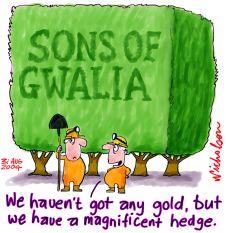
Take the "facts" first. The case arose out of the meltdown of gold miner Sons of Gwalia. I have previously refered to this case: http://guambatstew.blogspot.com/2005/08/got-shaft.html The mining company was apparently a great gold producer, but a lousy gold producer manager. Though there are denials of any negligent or intentional wrongdoing, for purposes of this issue spotting exercise, let's assume that the management tried to smooth income over time by entering into gold hedging contracts and that these contracts went horribly wrong to the tune of losses amounting into the millions and millions of dollars. Let's also assume that this was more than a minor embarrassment and inconvenience and that management decided that the losses were best kept "off balance sheet" so as not to detract from their excellent gold production record. Oh, and that they never told the shareholders or the market more broadly about that dirtly little secret. (See, http://www.smh.com.au/news/business/how-sons-of-lalor-built-then-sank-sons-of-gwalia/2005/08/21/1124562748347.html.)

OK, we're assuming a lot of "facts" here, but at this stage of the legal proceedings (a matter the commentators also overlook), we have to assume a few things. There's plenty of time down the track to sort out allegation from damage.

Now there are the principles. But first let's make the distinction between shareholders and creditors. When people buy company stock, they are buying ownership in the company. The company does not promise to pay it back. Their money is entirely at risk without legal expectation of payback. When people loan money to a company, the company does promise to pay it back. That money is also entirely at risk but comes with a legal expections of being paid back.

Now lets deal with principles relating to what happens when a company goes belly up. At that time there is an assessment made of how much value there is left in the company. The usual case is that there is not enough to pay back all the creditors in full and pay back all the money the stockholders paid for their shares.

Since the company never promised to repay shareholder money, but did promise to repay creditor money, the law provides that creditors get repaid in full before the shareholders get anything. There are many principles and rules as to other priorities amongst different types and classes of creditors, but we don't need to go into that in this discussion. Suffice it to say that the creditors as a group have priority over shareholder claims to company assests. This is the traditional, broadly accepted concept of the "balance between debt and equity".

But what are creditors? Creditors are people having a claim for money owed them. Obviously, someone who lends money is owed it back and is a creditor. And someone who has supplied goods or services to the company is owed for the value or agreed price of that and is a creditor. But there are other types as well. The government is owed for taxes it levies and is a creditor. And if the company injured anyone, the injured person is owed compensation and is therefor a creditor, also.

So, suppose one of the company's ore trucks negligently ran over someone. And suppose that person also just happened to be a shareholder. That person then became a creditor and a shareholder; a creditor to the value of his damages and a shareholder to the value of his shares. On winding up of the company, the creditor claim for injuries would be paid along with other creditor claims before any return in respect of the shareholding. Being a shareholder does not invalidate nor change the priority of his creditor claim.

Look, I'm sorry. I know this is all too elementary. You'd expect this even if you didn't already know it. Bear with me.

Now let's assume that the injured shareholder didn't sustain his injury by being run over by a company truck. Let's consider the case where the company was hiding mammoth losses in off-the-books transactions and the shareholding was purchased without knowledge of the losses; think Enron or think the assumed set of facts outlined above. Here you have a shareholder who is damaged by virtue of owning the shares. His damages are indistinguishable in effect from any other shareholder, but arose because of fraud committed on this shareholder.

The thing that has all the commentators commentating about the SoG case is that the judge has ruled that some of the shareholders, those who were defrauded, are creditors also. These commentators have grown up in a world where all shareholders, in their capacity as shareholders, were treated the same, even if some shareholders owned their share on the basis of information unknown to others, and even if, as is the case here, some shareholders bought their shares on the basis of misleading information supplied by the company.

For instance, SMH's Stephen Bartholomeusz writes in his column ("Bankruptcy pecking order overturned"), "In essence, the two judges have concluded that a claim by a shareholder on the basis of misrepresentation by the company isn't a debt owed by the company to the shareholder in their capacity as a member of the company but, if it is a debt, it arises from various consumer protection provisions that prohibit misleading and deceptive conduct. That opens a can of worms because it undermines the long-standing conviction that shareholders, in return for gaining limited liability, rank behind other creditors in the event their company goes into administration or liquidation." (http://www.smh.com.au/news/business/bankruptcy-pecking-order-overturned/2005/09/15/1126750077018.html.)

I'd have to guess that these commentators just never saw it coming. They just never considered that fraud was the basis of a creditor claim. Otherwise, you'd have to conclude that they consider fraud to be one of the risks that a shareholder assumed when buying shares.

It really shouldn't be a surprise nor any watershed moment. Consider the case where one company buys into another company; that is, becomes the shareholder of another company. Suppose they negotiate the purchase and then later discover they were sold a bag of goods (sound familiar? GIO? HIH?). Are they barred from recovery because the fraud involved the sale of shares? Of course not. If there is a difference, the only difference between such a case and the claims being made against Sons of Gwalia is that, in this example there was a "direct" fraud on that shareholder and in the Sons of Gwalia case the fraud is "on the market".

Courts have struggled with and developed the notion of fraud in shareholder suits. In traditional fraud analysis it was usually the rule that there was no fraud without intent and the intent was limited to only applying to either the intended victim or the proximately, reasonably foreseeable victim, and the common garden variety shareholder was not seen as part of that crowd. But the courts developed the theory to include them in cases of fraud on the market, otherwise particularly eggregious cases of shareholder loss went unremediable. (See, e.g., http://www.canoe.ca/MoneyBreXSaga/oct20_lawyerinbr.html and http://corplawcenter.bna.com/pic2/clb.nsf/id/BNAP-5YAUBK?OpenDocument.)

And that's all that is happening here. The court is applying the traditional concept of fraud in the new context of specific legislation which makes it easier to make out the fraud in fact. The judges are not creating new law, they are merely applying it with the aid of new legislation.

And it bears pointing out that the cases involving the Sons of Gwalia shareholders is not anywhere near making a finding of fact of fraud nor damages. The case is only at the stage of trying to determine if the shareholders will have the opportunity to try to prove they were defrauded and the damages to flow from it. Tis still a long way twixt cup and lip.

The hue and cry is that lender creditors are now somehow disadvantaged because they may have to share some spoils with defrauded shareholders. In simplest form that argument is that the shareholder should be stripped of modern market, corporate and consumer protections and made subject to the ancient test of caveat emptor, and that the risk of breach of promise is more rewardable than the risk of breach of trust.

As Elizebeth Knight said the the article cited above, "Suffice to say, if the shareholders were not misled in the lead-up to a corporate collapse they might be considered just garden variety shareholders that rank at the bottom of the pack and normally never see a cent of their money again. The funny thing is that it's hard to remember a corporate collapse that didn't involve some kind of deceptive and misleading behaviour in the lead-up to the ultimate demise. The way these things usually play out is that the companies get into financial strife and begin a campaign of hiding the facts in an attempt to claw their way out of it. The truth is usually the first victim in a corporate collapse and shareholders run a close second. If that is all shareholders need to establish to elevate their status to that of a creditor, it's pretty predictable a class action to establish a trade practices claim of false and misleading conduct by the company will almost always follow the appointment of an administrator."

The worry and woe expressed is that this ruling will increase the cost of debt funding. On the other hand, it may just give all the banks and other lenders the incentive they need to make sure their borrowers are fair dinkum with their use of funds and discourage those same lenders from creating and marketing all those clever little hedging schemes, special purpose vehicles and other tricks that have facilitated the kinds of off-balance-sheet shenanigans in the first place: see http://guambatstew.blogspot.com/2005/08/we-did-nothing-wrong-mind-you-but.html


Meanwhile, if anyone tries to argue that defrauded shareholders should be subordinated to other creditors, they should get their priorities straightened.

Case citation: http://www.austlii.edu.au/au/cases/cth/federal_ct/2005/1305.html

Labels: , ,