Thursday, April 14, 2011

Why even think about nuclear energy?

Guambat had a post about this several years ago. But a story in the NYT caught attention and, in light of the huge dislocation, without, so far, any deaths, from the Fukushima nuclear energy facility, Guambat reckoned as how the topic might again be lightly, or briefly if lightly is offensive, touched upon.

The NYT story took Guambat back to the days in the late '60's when he was a VISTA Volunteer, and spent a bit of time in the tri-State coal country of Ohio/W.Virginia/Kentucky. It is a unique place in America, the Appalachian Achilles Heal of health, education and pursuit of happiness. Guambat can still remember the smell, the silence, almost haunting, but in an enticing way, the base humanity of the place.

It will do no justice to excerpt the story, but Guambat must not, either, provide too much of it for you, so you'd be better off just clicking the link to it and reading it yourself. To tempt you, here's this:

As the Mountaintops Fall, a Coal Town Vanishes
Here in Boone County, coal rules. The rich seams of bituminous black have dictated the region’s destiny for many generations: through the advent of railroads; the company-controlled coal camps; the bloody mine wars; the increased use of mechanization and surface mining, including mountaintop removal; the related decrease in jobs.

In recent years, surface mining has eclipsed underground mining as the county’s most productive method. This includes mountaintop removal — or, as the industry prefers to call it, mountaintop mining — a now-commonplace technique that remains startling in its capacity to change things.

Various government regulations require that coal companies return the stripped area to its “approximate original contour,” or “reclaim” the land for development in a state whose undulating topography can thwart plans for even a simple parking lot. As a result, the companies often dump the removed earth into a nearby valley to create a plateau, and then spray this topsy-turvy land with seed, fertilizer and mulch.

The coal industry maintains that by removing some mountaintops from the “Mountain State,” it is creating developable land that makes the state more economically viable.

“We got to have coal,” says Mr. Cook, a retired miner. “What’s going to keep the power on? But I believe with all my heart that there’s a better way to get that coal.”

Labels: ,

Saturday, January 08, 2011

Eating out of house and home

As if we weren't troubled enough by banks trying to force us out of our houses and homes (see prior post), now comes the news from Peter Boockvar over at the Big Picture, that we're about to eat ourselves out of house and home:
The CRB foodstuffs sub index last night rose to exactly match its record high reached in July ’08. The index dates back to 1981 and includes butter, cocoa, corn, hogs, lard, soybean oil, steers, sugar and wheat. Also, the Journal of Commerce index today is rising to a record high

Labels: ,

Tuesday, November 17, 2009

China hogging commodities?

Guambat is in his second read of John Mauldin's Outside the Box report for this week, and reckons he'll need another read or two to have it soak in to the dry sponge which is Guambat's brain. This week it is an eclectic piece from Eclectica November Fund Commentary by Hugh Hendry.

It covers a lot of ground, as does Guambat's not insignificant ruminative midsection.

The bits that stuck out to Guambat concern China, the US dollar and the Australian market's stock in trade, commodities. Some of those bits:
Ten years ago it was unthinkable that the dollar would prove so fragile. Recall that back then, when the euro was first launched in 1999, it promptly lost 31% of its value against the greenback. The subsequent reconstruction of modern China, though, intervened. In order to finance the emergence of a new economic superpower, an abundance of dollars was needed. Have no doubt that had we not had the dollar as a reserve currency, the rise of China would not have been as swift nor as decisive.

America's trading partners have come to rely upon the bounty of dollars necessary to recycle their trade surpluses and thus finance their growing prosperity. This was done even at the expense of domestic American job losses.

Do not forget that the Chinese could replicate equivalent currency baskets to SDRs at any moment. Instead, they continue to recycle almost three quarters of their trade surplus back into dollars. This is not coercion but simple commercial pragmatism. They know full well that neither Europe nor Japan nor Britain nor Switzerland nor the rest of Asia are willing to sacrifice the implicit loss of manufacturing jobs. They understand that it is only the US that is willing to embrace the benefits of comparative advantage that arise from international trade.

Another popular argument is that the emerging economies have to urgently diversify their immense dollar reserves. And so the Chinese are colonising the African continent in the pursuit of commodities and the Indian government has just agreed to buy 200 tons of the IMF's gold hoard.

Is this not a reincarnation of the 1980 trade of the brothers Hunt? It is hardly an exaggeration to suggest that China, for all intents and purposes, is already the commodity market. For despite providing less than 8% of global GDP, China accounts for more than half of the world's steel production and more than half of global seaborne iron ore freight.

Accordingly, China shares the same risk as the world's largest pension schemes. An over- leveraged American consumer does not return to his/her manic buying of old. As William White, former chief economist of the BIS, has argued:
Many countries that relied heavily on exports as a growth strategy are now geared up to provide goods and services to heavily indebted countries that no longer have the will or the means to buy them.

The Chinese have opted, like the Hunt brothers did, to double up.

Much is made of the comparison between today's balance sheet recession and Japan's demise back in 1989. Despite their bubble never coming close to matching China's prominence in industrial commodities, the loss of Japanese economic growth in the 1990s was nevertheless a major factor in the waterfall crash in commodities. This plunge ultimately saw oil trade for as little as $10 per barrel in the next decade. Just consider how much more devastating the experience would have been had they gone very long the commodity market in 1989 rather than golf courses.

Over the last decade, each marginal dollar of debt has generated less and less marginal income. We knew that there would be a "zero-hour" for the economy when the creation of new debt would not contribute to GDP growth. The government's reaction to last year's demand shock has been to increase its own leverage. But, with the economy operating at its zero-hour, we believe this incremental leverage will actually have a negative impact. That is to say, the public sector will fail in its attempt to bring the economy back to its previous level of nominal GDP. In this scenario, the outcome will disappoint the market's expectations, which are rampantly bullish as evidenced by this year's dramatic re-pricing of risk assets.

Japan has championed both Friedman and Keynes. They have built bridges to nowhere and dropped Yen notes from helicopters for twenty years and still they have nothing to show for it. Clearly the additional return from Yen debt in Japan is close to zero and it exposes the nightmare of interventionists everywhere.

It all really comes down to your take on the ratio of total debt-to-GDP. If you believe, like I do, that it peaked in 2007 then the repercussions are enormous. The leverage does not necessarily have to come down (after peaking in 1932 at 300% it troughed 20 years later at 150%). Rather, it may well be that low interest rates allow the mountain of debt to continue to be serviced. This has been the Japanese experience to date. However, everything in our economic life exists at the margin, and the consequences of just maintaining the leverage constant would be a very low delta in nominal GDP growth. Consider that the Japanese, under these very circumstances, have managed to grow nominal GDP at just 1% compound since 1990.

This is why China's mad dash for commodities and its investment splurge this year is so worrying. The Chinese are building capacity to meet a world where US nominal GDP is $25trn in ten years time from its $14trn today. I fear they could be in for a nasty shock.

Consider the steel market. Now with China having been on such an expansionary tear, it may not surprise you to hear that finished Chinese steel prices today trade below their production cost. It is quite chilling to note that steel production in America is on a par with output back in 1938, when GDP was a mere 7% of its current size.

However, with an active steel futures market in China turning over $15bn a day (consult the Bloomberg page ), speculative fears concerning the dollar have overcome the paucity of industrial demand in the west.

Of course, it is not just steel. Consider the aluminium market. the aluminium situation mimics that of steel, but with an even mightier inventory overhang. Four and a half million tons reside at the London Metal Exchange, perhaps 20% of world ex-China annual capacity. It is probable that 75% of this surplus stock is accounted for by financial players exploiting a contango.

To make matters even worse, the Chinese have stopped importing and are eager to ramp up domestic aluminium production. They have the capacity to produce another 13mt annually, which is equivalent to 52% of global production.

Now remember I have been describing a positive macro scenario: a world in which low interest rates make the debt load manageable and that we muddle through with lower growth rates in nominal GDP. But clearly the consequences for corporate profitability are very poor. The alarming thing is that my opponents (see Ferguson et al.) believe that government bond yields are going much higher. Effectively, the world's bond vigilantes are going to punish the Fed and tighten monetary policy. It is almost as if the world's greatest speculators are agitating for their own demise. It is my contention that the leverage of the economy is only tenable if interest rates stay low and yet, whilst I believe some of them agree, they still fervently expect a rise.

The anecdotal evidence of the doubling up of US Treasuries with hard commodities assets has been reported around the web, but without any traction in MSM.

China’s Pig Farmers Amass Copper, Nickel, Sucden Says (Update1
)
Private investors in China, the world’s largest metals user, have stockpiled “substantial” quantities of copper as the government ramps up stimulus spending to spur the economy, according to Sucden Financial Ltd.

Pig farmers and other speculators may have amassed more than 50,000 metric tons, Jeremy Goldwyn, who oversees business development in Asia for London-based Sucden, wrote in an e- mailed report after a visit to China. That’s about half the level of inventories tallied by the Shanghai Futures Exchange, which stood last week at a two-year high of 97,396 tons.

Sucden’s estimate underscores the difficulty analysts face in gauging metals demand in China amid increased speculation by retail investors, whose holdings remain outside the reporting framework undertaken by exchanges. Private investors in China also had as much as 20,000 tons of nickel, Goldwyn wrote.

“People who have nothing at all to do with the copper trade have been buying copper as a store of value, much like they would with gold,” said Jiang Mingjun, an analyst at Shanghai Oriental Futures Co.

The metals holdings by pig-farmer investors and other private speculators give “the impression that there is strong demand in China,” said Jiang at Shanghai Oriental. “But it is actually those who take a pessimistic view of the economy and are looking to preserve their wealth who are buying.”

For more specific anecdotes, have a look at this post: Pig Farmers and China Monetary Inflation Are Making Brent Nervous. It includes pictures and anecdotes "excerpted from a China Central Television Channel (CCTV) program documenting private speculation and hoarding of metals throughout the country," together with a link to a Chinese version of the text. The blog post concludes,
I do not know how or when the base metal prices will re-equilibrate to the reality of end demand—whatever that is. What is obvious is that gold and now base metals have become speculative investments that in addition to being bought as hedges against inflation and a falling US dollar are the latest get rich quick scheme. The end result is that absent the faith that metals and markets are all headed higher, we here at Exploration Insights are finding it difficult, although not impossible, to find value in junior mining and exploration companies.

Hot money on the other hand is not.

Michael Pettis, in Asia EconoMonitor, looks at China's railroads as well as its pig farmers and comes away unimpressed with the state of the bally-hoed Chinese economic recovery.
This is a large part why many analysts are not impressed by China’s investment-driven growth. Not only is much of it explicitly aimed at increasing production, much of the rest of it is implicitly likely to reduce consumption.

Although not as particularly analyzed, some of the nagging doubts about the China-led global recovery are being expressed.

Doubts emerge on China's domestic growth
The emerging giant's demand for Australian iron ore and other commodities has been crucial to keeping Australia’s economic expansion on track through the financial crisis.

“They’ll continue to consume commodities at a higher than normal rate and that will be good for commodities,” said ANZ head of commodity research Mark Pervan. “But at some stage, there has to be someone using these commodities. And that is a risk.”

Looking at official statistics, a sudden drop-off in demand would seem to be the last thing for Australian resource companies to worry about.

Chinese industrial production grew 16.1 per cent in the year to October, according to the National Bureau of Statistics of China, in data released this month. The official data also showed heavy industrial output rose 18.1 per cent year on year.

But even these numbers have caused analysts to question the sustainability of China’s growth.

At this pace, heavy industrial output would be doubling every four years, said Fat Prophets commodities analysts Nick Raffan.

“If it held at that level for a decade, you'd be looking at four times the current level of imports in eight years time, and I don't think any country is ready for that in terms of infrastructure."

Ah, yes. Those inscrutable official Chinese statistics.

Meanwhile, the US and China are playing a game of pot and kettle. The US wants China to devalue its yuan, which would lead to some unpopular labor issues as its exports become less competitive, and China wants the US to raise its interest rates to strengthen the dollar, which would implode whatever there is in the way of green shoots in the US housing and other credit markets, not to mention the strung out commercial real property sector and the overleveraged private equity guys.

Obama Prods China on Yuan But Hu Silent on Issue

China Trade Ministry Says Yuan Gains Call ‘Not Fair’ (Update1)

A Dollar Warning From Asia
Federal Reserve officials sometimes sound as if their only worry is the domestic U.S. economy, but their gusher of dollars is starting to have serious consequences for the rest of the world. Nowhere is this more evident than in Asia, where President Obama is getting an earful from leaders this week about what all those greenbacks are doing to their economies.

Many of these nations peg their currencies, formally or informally, to the greenback. So they are getting a huge dollar liquidity kick from the carry trade, in which people borrow U.S. dollars at exceptionally low U.S. interest rates and invest them for higher returns elsewhere.

As a result, Asia's stock markets are outstripping U.S. and European bourses by a country mile. Shanghai alone is up nearly 80% this year-to-date. Hong Kong property is climbing through the roof, with one recent apartment sale mooted at $57 million. Foreign investors are even getting enthusiastic again about one of the most corrupt emerging markets around—Indonesia—and dubbing it the "new China."

Lest we forget, it was the use of the cheap-ass yen as the beast of burden for the carry trade that was instrumental in propelling the West's markets to bubble bursting proportions, just a very few years ago.


MORE ON THIS:

John Mauldin has also revisited the world's experience with the Yen carry trade in his Thoughts from the Frontline, Nov 20th. His conclusion is that the dollar has been down so long it looks like up to him, maybe, perhaps, sometime or other or not:
Whenever sentiment gets too strong in one way or the other, it is usually setting up the markets for a rally in the despised asset. Mr. Market like to do whatever he can to cause the most pain to the largest number of people.

I am not predicting a near-term crash or imminent precipitous bear, although in this environment anything can happen. I am merely noting that there is an imbalance in the system. The longer this imbalance goes on, the more likely it is that it will end in tears.

Labels: ,

Tuesday, October 04, 2005

Supply side economics

My Dad taught me all I need to know about supply and demand.

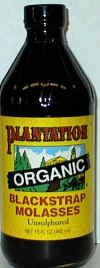
The classroom was the kitchen table, after a dinner meal of anything and biscuits (NB to Aussies: American biscuits are like unsweetened scones that are eaten as a bread at meals; a regular particularly at most meals in the South). Dad would set aside a few biscuits to have for desert. Then he'd get out his bucket of sorghum molasses and pour out just the certain amount of that delectable blackstrap in a pool on his plate to apply to the available biscuits. Most times he'd ritualistically blend the butter through the molasses, sometimes he'd just butter the biscuit.

Then he'd slice the biscuits in half and dollop some of the buttered molasses onto the biscuits with a knife, real judicious like, and and purr as he ate biscuit and molasses, with a careful eye ever on the remaining tarpits of blackstrap and halves of biscuit. When he got down to scraping the plate clean with just the right amount of molasses to ladle onto the last bite of biscuit, the world was in harmony, the stars shone, angels sang and Dad was in Heaven. It was a real art and served as a great dramatic performance I'll always remember. I'm sure there were times when things just didn't pan out quite as nicely as that, but I don't care to recall such matters.

In the world of commodities something similar is always going on. The miners try to supply just enough to satisfy the demand, to cover their costs and avoid an over-stock that drives down price and adds to warehousing costs. Any time you get a sudden change in either the supply or demand, your biscuits and molasses don't work out.

Lately, all the focus has been on the demand (apparently unending and not too squeemish about price) for commodities, especially energy and base metals, and the limited supply available to meet the demand. This has led to a land-rush to buy whatever commodity stock trades on the exchanges as a certain road to riches. Regular readers already know my take on this. Today's story is meant to reiterate my reminder that supply is not static; it is in constant search of equilibrium with demand. There may be a finite amount of oil, coal, iron ore, whatever, but we are far from it. If it is in short supply at the moment, it is due to an imbalance coming about from a sudden, unanticipated demand. Given the demand, supply will come on line and eventually the biscuits and molasses will balance out and the firmaments will bear gladtidings.

Tin is a base metal. But the supply of tin has now caught up with and outpaced the demand. The price of tin has dropped 33% in the last year. This has caused the closure of the Bluestone tin mining in Tasmania and the loss of a large part of the state's economy. See, http://www.smh.com.au/news/business/tin-price-fall-closes-renison-mine/2005/10/03/1128191658541.html If you have your eggs in a basket of Australian resources, that egg just broke.

Labels: ,

Thursday, September 29, 2005

Nearology

When did the tech boom become the dot.com boom? When anyone with any kind of "business model" slapped a ".com" to the end of their business name, and their stock took off by association, not by analysis or valuation.

When does a commodity boom become a dot.commodity boom? It's when former ".com" types start popping up in the mining index (http://guambatstew.blogspot.com/2005/09/khan-you-say-dot-com-odd-itty.html).

And when "explorers" are ramped up by the company they keep, not the company they are: "Executives at uranium explorer Redport are proving to be devotees of the fad of "nearology". Nearology is a mining industry theory that if a big miner like BHP Billiton or Rio Tinto has a good deposit, each surrounding tenement could be just as good. That seems to be the only explanation as to why Redport shares rose 0.5c to 7.3c yesterday on extremely high volume after acquiring an option on a Kintyre uranium project in Western Australia." (http://www.smh.com.au/news/xchange/managers-5050-on-valuation/2005/09/28/1127804549072.html.)

And when, "A senior vice-president for commodities trading with three or more years of experience would probably get a bonus of more than $US500,000, up 20-30 per cent...." (http://www.smh.com.au/news/business/wall-st-bonuses-heading-for-the-sky/2005/09/28/1127804549084.html.)

It's when "... the Australian sharemarket clocks up gains for a 10th consecutive quarter - having risen more than 60 per cent in the past 2½ years - [and] investment managers are again wondering just how long this run can last.

Nearly one in two investment managers believes the sharemarket is overvalued, the Russell Investment Manager Outlook survey revealed yesterday. The survey of 50 managers found that half think the market is fairly valued, 46 per cent think it is overvalued and only 4 per cent think it is undervalued. Despite this cautious outlook, 36.7 per cent of the managers have a bullish outlook for equities over the next 12 months...." (Id.)

It's when things like this happen: "South African millionaire Brett Kebble, who helped create two of the country's four largest gold producers, was shot dead on Tuesday.... "He was one of the brightest corporate financiers I ever met, and I've met some clever ones in my time...." As a result of derivative contracts Western Areas holds, it sold its gold at $US308 an ounce in the quarter ended June 30, compared with an average market price of $US427.88. Production costs were $US426 an ounce." http://www.smh.com.au/news/business/former-chief-of-african-gold-miner-shot-dead/2005/09/28/1127804549075.html

It's when insiders get the gold and outsiders get the shaft. (http://guambatstew.blogspot.com/2005/08/got-shaft.html)

Now, I don't want to sound like the demand for commodities is going to suddenly disappear (though the normal careful balance of supply that has been upturned by the sudden surge in demand [http://guambatstew.blogspot.com/2005/09/at-coal-face-of-dotcommodity-supply.html] will eventually work out that bit of disequilibrium). I certainly would not question anyone's estimation that BHP or Rio Tinto might be worth a gazillion dollars today or tomorrow. I'm just saying that the rush to the few proven commodity stocks is both driving money into wannabees and into other sectors of the stock market that just do not have the growth potential, and maybe not the valuation, of the big miners. It will come unstuck. It happened before, once in October 1987, right here in downtown Sydney, not that past performance is any prediction of future value.

But in the mean (and boy do I mean mean) time, as Randy Newman sang, short people go no reason to live.

Labels: ,

Saturday, September 24, 2005

At the coal face of the dot.commodity demand problem


"At 17, Wang Binyu left his village of Kangu in the arid mountains of Gansu in China's north-west, where his family slept in a single bed in their tiny cottage, and joined the millions of other rural labourers seeking work in the cities.
He started on one building site for 7.5 yuan (Aus$1.21) a day, with his younger brother Wang Binyin, then aged 15, working alongside him for just five yuan a day. With just a fourth-grade education, they were at the bottom of the ladder.

"The years passed by with the Wang brothers working at various mills and building sites, or pedalling rickshaw carts around markets, and gradually they were able to send money back to Kangu to add a few brick rooms to the family home, although not yet to add glass windows. Two years ago, Wang Binyu began working for a contractor called Chen Jiwei, who was installing insulation at a new factory at Weinong in the neighbouring Ningxia region. It was hard and unpleasant work, as the Rockwool insulation irritated their unprotected skin.

"Wang became a team leader on 35 yuan a day [tad over A$5/day]. But his wages piled up in unpaid arrears. Chen refused to pay medical bills as agreed and began making deductions for board and meals that were supposed to be part of the deal.

"In May came a financial crisis. Their father needed urgent medical treatment, no longer free in China's hospitals. Wang Binyu spoke to Chen, his boss, and to the foreman, Wu Xinguo, about getting his estimated 5000 yuan in back pay. They refused."

After many attempts to get paid without any success, Wang Binyu went into a rage and killed one of the recalcitrant foremen.

"Then he went to a bridge over the Yellow River, threw his knife into the water, washed the blood off his hands, and took a taxi to the nearest police station, where he turned himself in. In June a court sentenced him to death.

"The popular newspaper Southern Metropolitan News wrote extensively about the background to the killing, and it became emblematic of the frequent exploitation of China's 200 million migrant workers, who the government admits are owed billions of dollars in unpaid wages.

"Whether Wang makes his lonely final walk out onto a bleak execution ground and gets a pistol bullet in the head remains to be seen.

"This week, the official Xinhua news agency issued a commentary headed "Media, let the facts talk, not the sentiment."
(http://www.smh.com.au/news/world/chinese-riveted-by-tragic-tale-of-worker-exploitation/2005/09/23/1126982230858.html)

Labels: ,

At the coal face of the dot.commodity supply problem

When the full force of a bubble-in-making is happening, it is easy to think, it's different this time. It's usually not. Commodities have always been cyclical, the pendulum has always swung from excess supply to excess demand. Currently, we have excess demand and it is putting stress on supply, thus the boom.

"If you ask any industry professional, whether a geologist, engineer or company executive about the current demand for iron ore, they'll say it's more than just strong. Nearly every one of them will use the word "unprecedented".
"If you spoke to us three years ago, no one would have predicted this," says Ralph Holmes, manager of iron ore processing for CSIRO's minerals division."
"Dylan Morgan, a plant process engineer at Rio Tinto's Mt Tom Price mine in the Pilbara, says there is a lot of pressure for workers to deliver. "Anything we can produce, China will take at the moment," he says.But now that demand is finally high enough to put the equipment in full gear, Rio is facing a different constraint: the skills shortage.

"We can't get enough tradesman to keep the equipment running as well as possible," Morgan says. "And every minute the plant is down is critical."
Rio's problem is that there are a finite number of mechanics and electricians in Australia.... And the problem isn't limited to maintenance workers. Geologists and engineers are also in high demand these days.

"It was a different story back in 2002 when Morgan completed his degree. He applied for positions with 30 different companies and got one interview. He accepted a job in early 2003 in the remote Pilbara town of Tom Price, then the home of about 3000 company employees. Flash forward two years, and more than 4500 live in Tom Price. Rio recently converted Marandoo, a mine near Tom Price, to a fly-in, fly-out operation with workers based in Perth to stem the housing crunch and to accommodate growing lifestyle demands from mining workers who now have the upper hand in negotiations with employers. The shortage of workers is so severe that contracted truck operators can easily demand salaries above $100,000.

Recruitment of skilled mining workers is tough because geology and engineering aren't "trendy" subjects to study at university. And universities have therefore cut back on courses in those areas, creating a downward spiral.
Offering huge amounts of money to young miners only helps to a limited extent. It's the convenience of living in capital cities close to family and friends that attracts more Australians to fields such as finance or law or IT rather than mining. As Rio chief scientist Dr Robin Batterham notes: "The population you can call on to work in iron ore [in industrialised nations] has been diminishing since 1920."

The skills shortage is so severe that Australian recruitment agencies are setting up shop in places like South Africa to attract mining personnel to Western Australia. Mining hotbeds in the Americas such as Canada and Chile have also been targeted. And as Dr Tapan Majunder, an professor of applied geology at the Indian School of Mines, told the Herald at the Iron Ore 2005 conference in Fremantle earlier this week, some companies are recruiting from less traditional regions. "A lot of [Indians] have come to Australia," he said. "There are two [former] students of mine in this room."

"Matthew Cobbett, mining business development director at engineering services firm Fluor, says employment at his company's iron ore division, which does work for BHP, has jumped from 200 to 450 in the past few years.
"The skills shortage is certainly an issue in all of the projects we are chasing," he says. Dr Stuart Ratcliffe, Cobbett's counterpart at rival Sinclair Knight Merz, says Perth's engineering capability is close to capacity. "The demand on engineering resources in Western Australia, and mirror-imaged in Brisbane for coal, is unprecedented," he says. His firm has 600 people based in Perth working on iron ore projects for Rio and BHP, up from about 300 a few years ago.
Cobbett says the current resources boom is hardly the first, but there are signs it is different from earlier ones." http://www.smh.com.au/news/business/iron-awe/2005/09/23/1126982229167.html

Labels:

Friday, September 23, 2005

Khan you say dot com odd itty?

That guy, Farooq Khan, sounds like one of those never-say-die sort, who can always be counted on to bounce back, judging by this report:

"Farooq Khan must be thinking the dotcom days are back. Khan's Fast Scout, which started life as an internet search engine, surged 112 per cent yesterday, following a 627 per cent gain on Wednesday after it announced an acquisition in the fashionable uranium sector. The stock is now trading at 17c, up from 1.1c a week ago, and in the past two days more than 50 million shares have changed hands, compared to its typical volume of less than 100,000 (before the U word was mentioned.) So what's the deal? A 75 per cent interest, acquired from Hume Mining, in "a suite of uranium exploration tenement applications" in the Northern Territory. Fast Scout's evolution from an internet company to a corporate raider was triggered by the tech wreck, which saw many dotcoms reduced to little more than cash boxes. Khan has used Fast Scout as one of his main investment vehicles, with a list of acquisitions including bigshop.com.au, DVT Holdings (formerly Davnet) and Sofcom, which at one time featured Jeff Kennett as chairman. He's also taken the chair at $13 million investment fund Bentley, which was a listed fund once run by BT. Khan graduated to biotech with a bid for Biota and was also associated with a long running battle for control of Rene Rivkin's Rivkin Financial Services last year." http://www.smh.com.au/news/xchange/khans-fast-scout-makes-swift-fortune/2005/09/22/1126982176265.html
Did anyone mention dot.commodity boom? Yeah, I did: http://guambatstew.blogspot.com/2005/08/dotcommodity-boom.html
And on that subject, here is the market wrap from yesterday:
"Commodities propped up the Australian sharemarket which ignored a weak overseas lead yesterday. After dipping at the start of trading, the ASX 200 benchmark rallied through the day to close up 9.5 points at 4561.9, while the All Ordinaries gained 9.8 points to close at 4511.6. These gains were made despite poor signals from the US markets, which are nervously awaiting the onslaught of category five storm Hurricane Rita on the Texan coast. "It certainly is a resilient market," Macquarie Bank's Lucinda Chan said. "It is amazing with high oil prices and two hurricanes - the market is just ignoring everything at the moment." Goldminers, oil stocks and energy stocks were the beneficiaries on the Australian market. "Resources are the drivers at the moment. Strong cash flow is allowing people to stay overweight in the commodities. You can play banks all your life to be defensive if you're scared but if you're looking for growth then resources are where the strength will be," Ms Chan said." http://www.smh.com.au/news/business/buoyant-resources-keep-market-afloat/2005/09/22/1126982176268.html
I'm sure she'd add: past performance is no prediction of future profit. She might also be so kind as to point out that, of the whole rising market, resources and energy combined only account for roughly one-quarter of the market value. Does the other three-fouths of the market have the same growth value? http://guambatstew.blogspot.com/2005/09/oils-aint-oils.html
And one more item following this commodity boom thread:
"Chinese metals companies such as Beijing Shougang are in talks to spend as much as $10 billion on Australian mines to ensure their mills don't run out of raw materials.
As competition for minerals increases, steel makers and traders including Beijing Shougang and Sinosteel Corp are going to the source to ensure they have enough iron ore and coal.
Overseas investment "is a necessary and natural step for Chinese metal producers because the country is short of natural resources," said Lin Hai of Guotai Asset Management. "With these investments they can lower costs and take pre-emptive rights on the raw materials."

Labels:

Monday, September 12, 2005

The whine cellar


Just got a call from a friend who mentioned he recently began to lay down several bottles of petrol in his cellar and had already recognised quite nice returns. He is quite chuffed with himself.

Some folks are always just thinking ahead. Makes me wonder how those poor kids outback can afford the sniffing. Is there a silver lining in this cloud?

Labels:

Hasty Visit, baby

"At the tail end of a strenuous nine-day trip to Chile, Mexico and the US last month, Ian Macfarlane, the Minister for Industry, Tourism and Resources, sauntered into a conference room in California's historic capital building in Sacramento to meet the state's second-most powerful official.... After 45 minutes of heated discussion, the meeting ended badly...."

Australia wants to give California gas. "BHP's petroleum division has been shrinking in size in comparison to its carbon steel and base metals divisions, and the company believes operating both ends of an LNG project would be a good way to expand its business.... ...[T]he Prime Minister, John Howard, flew to California with BHP chairman Don Argus to meet Governor Arnold Schwarzenegger in support of the plan."

http://www.smh.com.au/news/business/california-dreaming-draws-flak-for-bhp/2005/09/09/1125772689504.html

Labels: ,

Thursday, September 08, 2005

The River to Jordan


"The single largest oil consignment smuggled out of Iraq by Saddam Hussein under the U.N. oil-for-food program took place with U.S. approval just weeks before the April 2003 invasion, according to a report published on Wednesday...." http://today.reuters.com/business/newsarticle.aspx?type=tnBusinessNews&storyID=nN07210533&imageid=&cap=

Labels: , ,

Monday, September 05, 2005

"Oils ain't oils"


I reckon that's a phrase from some old Australian advertisement. It's used frequently Down Here (just google it to see) with the connotation of "don't mix your apples with your oranges" mixed with "what you see isn't always what you get", and with a dash of the "parts, what parts" question. But that's not what this post is about.

Barry Ritholtz, the first blogger I read every day, and my second most favourite blogger after yours truly, puts up some very interesting charts, one offered by leading mining company BHP Billition, showing the nearly 2 century decline in commodity prices, and asks the somewhat cheeky question, "Are Real Commodity Prices at multi-century Lows?" at this post:
http://bigpicture.typepad.com/comments/2005/09/are_real_commod.html. (I won't put them up here, so please have a squidge of them there to better understand what follows.)

Since I've been expressing my agro at the way the dot.commodity boom has been distorting the Oz market broader index (
http://guambatstew.blogspot.com/2005/08/dotcommodity-boom.html), these charts and that question have really unsettled me.

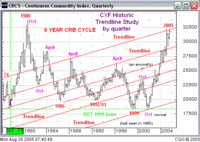
First of all, that cheeky little question, are commodities at their low? When you suggest something that we think of as cyclical (e.g. this CRB chart
http://www.chartingyourfutures.com/historic.htm) is at a low, you anticipate it will reverse higher. But Barry is way too bright to say so. Indeed, his question is merely are they at multi-century lows, and it is I who infers the anticipation of reversal, and that's what makes his question so cheeky. Well, h*ll yes, anyone can look at the charts and see they are indeed at multi-century lows, or nearly so, but that alone shouldn't be taken as an implication that things are any time soon about to change the multi-century trend in lower and lower commodity prices that the charts reveal.


Moreover, stop to look at the links he adds to the words 'real' and 'commodity' and 'prices' in the quote:
"...we find ourselves at a period of time which is, or rather close to it anyway, 2001/2002 when real commodity prices were the lowest they’ve been in the last 200 years ...." This is really where he gets cheeky, because the links do not support any implication of reversal.

The 'real' link leads to an article referring to the mulitfarious factors impacting on commondity prices, highlighting interest rates as a prime factor, and concluding "...the Fed's continued action to increase short-term interest rates this year and move them back towards a neutral setting could eventually dampen real commodity prices. In other words, it is not just real estate, junk bonds and emerging market debt that are vulnerable. Commodities are, too. "

The 'commodity' link leads to a study examining commodity prices over the period 1862-1999 as determined by The Economist's index of industrial commodity prices, and concludes, as stated in the abstract,
"First, while there has been a downward trend in real commodity prices of about 1 percent per year over the last 140 years, little support is found for a break in the long-run trend decline in commodity prices."

Finally, oils ain't oils. BHP produced the chart, one would surmise, to suggest that there is a liklihood that commodities have bottomed, and that would have positive ramifications for its stock price, since it is a major producer of coal, iron ore, copper, oil and other minerals and metals. There may be evidence that such "hard" commodities have indeed bottomed. But I am not sure that you can tell that from the proferred charts. Just as I've reminded those who would buy the whole Oz market index to get exposure to the materials sector that they are buying 75% "junk" (non-materials and energy sectors), the whole commodity universe that is reflected in the charts consists of soft and agricultural products as well as base metals and minerals (see the Appendix to the study at the 'commodity' link), so if you are buying BHP based on the charts of the broad commodity index, you could find yourself way off beta.

That said, I'm not sure I'm any the less unsettled. I'll just have to turn the other cheeky.

Labels:

Tuesday, August 23, 2005

Dot.Commodity Boom


I've blogged on previously about how the Aussie market is being carried along by a boom in resources underwritten by the China/India growth story. (http://guambatstew.blogspot.com/2005/08/got-shaft.html and
http://guambatstew.blogspot.com/2005/08/its-sure-thing.html) This chart picture is the proverbial 1000 words essay on that story. Since the 2003 lows at 2700 (about time the smart money became aware of the pending China boom), the ASX200 index has risen to 4500. That's a gain of 166.6%. In other words, in the last 2 1/2 years, the Aussie market has added two-thirds of the value it had grown over its prior entire history. It's going for the gold metal, and the silver and the bronze and the iron and the copper and the coal.... It is instructive to note that commodities make up about one quarter of the index. Almost three quarters of the rest of the market has been taken along for the ride. How many of the "investors" have been taken for a ride as well? Is this a bottomless pit? Will "the market" take profits on this almighty big bet? Or on the 3/4s non commodity part? If so, when?

And while we're on a resources theme, have a "peak" at the oil story: http://www.nytimes.com/2005/08/21/magazine/21OIL.html?pagewanted=all

Labels: , ,

Saturday, August 20, 2005

Got the shaft


Just cause you got commodities doesn't mean you've got a goldmine. Those folks blindly chasing the commodity rush need to be wary. (Heard one fundie on CNBC saying he's buying iShares of Canada and Australia, which are basically index plays -- like the SPI -- even though commodities only account for less than a quarter of the whole market; now that is truly a desparate way to chase the bull.)
First of all, the business has to be properly managed. And there can be plenty of mismangement, such as Sons of Gwalia, a former market darling. See: http://www.theage.com.au/news/alan-kohler/why-did-gwalia-fail-ask-the-lalor-brothers/2005/08/19/1124435144575.html?oneclick=true
Second, shares ain't stuff. The old commodity bull, Jim Rogers, makes that point explicitly, at the following blogsite: http://trading-online.blogspot.com/2005/08/update-interview-jim-rogers-co-founder.html

Investment U: Should there be a hard landing in China, do you anticipate a major consolidation in commodities?
Jim Rogers: Yes, I do. Something’s going to cause consolidations in commodities. We always have consolidations in every bull market in history.
Again, I wish I were smart enough to tell you exactly what’s going to cause them, and the timing, but I’m not. It’s pretty obvious to me that if we suddenly see headlines in the Wall Street Journal of some kind of turmoil in China, that commodities would be having a correction, or would go into a correction...
Investment U: Commodities seem so simple on that level - supply and demand... How does investing in commodities compare with stock investing in terms of the average investor?
Jim Rogers: It couldn't get any simpler. And if you start looking into commodities, you'll see that commodities are a lot simpler and easier to analyze than stocks.
For instance, natural gas is pretty dumb stuff. If there's too much gas, it's going to go down. If there's too little, it's going to go up.
Natural gas doesn't know who Alan Greenspan is, or care; it just cares about supply-and-demand. And once you've made that analysis, it's a lot easier to buy and sell natural gas than to start analyzing 300 natural gas companies around the world, where you have to worry about management and balance sheets and stock markets and unions and environmentalists and dozens of other things.
Investment U: And you believe commodities can be less risky than stocks, too?
Jim Rogers: Well, Enron was a natural gas company. Enron went to zero. Natural gas can never go to zero. It can go down, obviously, but it can never go to zero.

Labels: